
Loading...
⚡ 1kg Low MOQ · Factory Direct Glitter & Mica⚡ Source Factory Direct Wholesale · Custom Loose Glitter & Mica Pigments · 1kg Low Trial MOQ · 48h Free 50g Lab Samples
mlmcustom@mlmcosmetic.com⚡ 1kg Low MOQ · Factory Direct Glitter & Mica⚡ Source Factory Direct Wholesale · Custom Loose Glitter & Mica Pigments · 1kg Low Trial MOQ · 48h Free 50g Lab Samples
mlmcustom@mlmcosmetic.comLoading...
Technical formulator evaluation of global chameleon flakes and multi-chrome optical variable pigments. Direct synthesis factory pricing, vacuum metallizing layers, 1kg lab trial MOQs, and batch consistency.

Formulator Advisory & Upstream Raw Material Notice: MLM Cosmetic Pigments is an upstream raw material manufacturer. US FDA and international health authorities do not certify or approve raw material chemical plants or finished consumer formulations. Finished cosmetic compliance (including US MoCRA safety substantiation, FDA 21 CFR § 73/74 colorant listings, and EU Regulation 1223/2009) remains the legal responsibility of the cosmetic brand owner. Lot-specific documentation on request (TDS, SDS, and Agilent 7800 ICP-MS heavy metal COAs) is provided for benchtop pilot qualification.
Slug: chameleon-flakes-optical-pigment-manufacturers-guide
Primary Keyword: chameleon flakes optical pigment manufacturers direct factory
Authored by: Senior Technical Directorate & Analytical Chemistry Lead, MLM Cosmetic (深圳市美联美科技发展有限公司)
Revision: 2026 Q1 | Bao'an Cleanroom Facility, Shenzhen, PRC
⚠️ Regulatory Boundary Notice: This dossier covers upstream raw material ingredients only — cosmetic-grade effect pigments, optical variable chameleon flakes, and precision-cut glitters as supplied in bulk powder/flake form. MLM Cosmetic does not perform finished cosmetic Raw Material filling, bottling, palette assembly, or contract manufacturing of any finished cosmetic product. All compliance references (MoCRA, EU 1223/2009, 21 CFR § 73/74) pertain exclusively to raw ingredient regulatory status. Finished-product regulatory responsibility rests with the formulating brand or CMO.
Chameleon flakes — also termed optical variable pigments (OVPs) or color-travel effect pigments — are thin-film interference structures built on phlogopite or synthetic fluorphlogopite mica substrates, coated with precisely controlled TiO₂, Fe₂O₃, or SiO₂ nanolaminate layers to produce angle-dependent hue shifts across 60–120° viewing arcs. Their optical behavior is entirely thickness-dependent at the nanometer scale, which means batch-to-batch refractive-layer consistency is non-negotiable for formulators targeting reproducible color travel in lip toppers, eyeshadow duochrome shifts, or nail lacquer flake effects.
Yet the procurement pathway most formulators encounter in 2026 remains structurally inefficient and analytically opaque.
The multi-tier broker problem. The majority of "chameleon pigment suppliers" listed on B2B aggregator platforms are not manufacturers. They are second- or third-tier trading intermediaries purchasing from Chinese calcination facilities at ex-works factory prices, then applying 200–400% markups before reselling in repackaged polyethylene bags with no traceable batch COA, no ICP-MS data, and no substrate origin documentation. A pigment that exits a Fujian calcination hall at ¥180/kg routinely reaches a European formulator at €85–140/kg — not because of superior quality, but because of compounded brokerage margin stacking.
MNC minimum order quantity barriers. Multinational effect pigment conglomerates — Merck KGaA, BASF/Sun Chemical, Eckart Altana — enforce commercial minimums of 25 kg to 100 kg per SKU, with some specialty OVP grades requiring 50 kg floor orders. For a formulator benchtop-qualifying a new duochrome eyeshadow at 3–5% pigment loading, a 25 kg commitment represents 500–800 finished-product batch equivalents before a single stability panel is run. This MOQ architecture is designed for automotive coatings and industrial plastics procurement, not cosmetic R&D iteration cycles.
Lead time compression failure. Standard lead times from MNC distributors and authorized trading houses run 8–14 weeks from purchase order to delivery, encompassing factory allocation queues, export documentation, freight forwarding, and customs clearance. In a cosmetic product development calendar where trend-reactive launches operate on 12–16 week total timelines, an 8–14 week raw material lead time consumes the entire development window before formulation trials begin.
Heavy metal variability — the silent quality risk. Natural phlogopite mica carries geogenic heavy metal burdens that vary by quarry seam. Without in-house ICP-MS quantification on every production batch, formulators sourcing through brokers have no validated assurance that Pb, As, Hg, or Cd levels comply with EU 1223/2009 Annex II prohibitions or MoCRA guidance. Broker-supplied "COAs" frequently cite heavy metal limits from a reference batch tested months prior — not the specific lot shipped. This creates a latent regulatory liability for any formulator submitting a Responsible Person notification under EU regulation or filing a MoCRA Facility Registration.
| Manufacturer / Brand | Location | Substrate Base | Heavy Metal Limits (Verified) | Trial Pilot MOQ | Bulk Drum Standard | Lab Sample SLA | Best Suited For |
|---|---|---|---|---|---|---|---|
| Merck KGaA (Afflair / Colorstream) | Darmstadt, DE | Synthetic fluorphlogopite | Proprietary spec; lot COA available via distributor | 25 kg (distributor minimum) | 25–100 kg fiber drum | 4–8 weeks via authorized distributor | High-budget prestige brands; automotive-grade OVP |
| BASF / Sun Chemical (Sicopearl / Reflecks) | Ludwigshafen, DE / US | Natural & synthetic mica | Internal QC; no public ICP-MS protocol disclosed | 25 kg minimum | 25–50 kg bags/drums | 6–10 weeks | Mass-market personal care; industrial coatings crossover |
| CQV Co., Ltd. | Cheonan, KR | Synthetic mica (Sericite) | KS standard compliance; limited public data | 10–20 kg | 20 kg bags | 3–6 weeks | Korean K-beauty supply chain; sericite-dominant formulas |
| Eckart Altana (Prestige / Mirage) | Hartenstein, DE | Aluminum flake + mica hybrid | Internal spec; distributor-mediated COA | 25 kg | 25 kg tins/drums | 6–12 weeks | Nail lacquer; high-gloss automotive effect coatings |
| Coloray / Ruicheng Mica | Lingshou, CN | Natural phlogopite mica | Supplier-declared; no in-house ICP-MS cited | 5–10 kg | 25 kg woven bags | 2–4 weeks | Budget cosmetic fillers; domestic CN market |
| Generic Alibaba Trading Brokers | Variable (CN) | Unknown / mixed substrate | Unverified; reference batch COA only | 1–5 kg (repackaged) | 25 kg non-UN bag | 1–3 weeks (no sample kit) | Spot-buy testing only; high regulatory risk |
| MLM Cosmetic Factory Direct | Bao'an, Shenzhen, CN | Synthetic fluorphlogopite + phlogopite | In-house Agilent 7800 ICP-MS, EPA 3052; Pb < 2.0 ppm, As < 1.0 ppm, Hg < 1.0 ppm, Cd < 1.0 ppm, Sb < 0.5 ppm — every production batch | 1 kg nitrogen-backfilled vacuum foil pouch (MVTR < 0.5 g/m²/day) | 25 kg UN-rated poly-lined fiberboard drum | 48-hour worldwide air express dispatch, 50g complimentary kit with TDS, SDS, batch COA | Cosmetic R&D pilot runs, indie brands, CMOs, prestige formulators needing ICP-MS-verified OVP |
Merck's Colorstream® series represents the benchmark optical variable pigment for cosmetic-grade color travel. Built on synthetic fluorphlogopite substrates with SiO₂/TiO₂/Fe₂O₃ multilayer interference stacks, these grades achieve color travel arcs of 60–100 nm wavelength shift across viewing angles. Particle size distributions are tightly controlled (D50 typically 15–50 µm), and the substrate's synthetic origin eliminates geogenic heavy metal variability inherent in mined mica. Merck's INCI documentation and REACH dossiers are comprehensive.
Commercial friction: Merck does not sell direct to formulators below enterprise account thresholds. Access is mediated through authorized distributors (Univar, Azelis, Brenntag), who enforce 25 kg minimums and carry 6–10 week order-to-delivery cycles. Sample qualification requires a formal account application. For indie brands or CMOs in early-stage development, this architecture is prohibitive.
BASF's effect pigment portfolio spans both natural mica and synthetic substrate grades, with Reflecks™ multidimensional effect pigments targeting cosmetic duochrome applications. Sun Chemical's integration post-acquisition expanded colorant breadth. Technical data packages are thorough, and BASF's internal QC infrastructure is well-resourced.
Commercial friction: Distribution through Sun Chemical's commercial network imposes similar 25 kg floor constraints. Heavy metal compliance documentation references internal standards rather than disclosing specific ICP-MS methodology or per-batch quantification limits to external buyers. Lead times through North American and European distribution nodes routinely extend to 8–14 weeks for specialty OVP grades.
CQV is a South Korean manufacturer specializing in sericite-based and synthetic mica effect pigments, with a strong supply position in the K-beauty formulation ecosystem. Their product range covers standard pearlescents through moderate color-travel grades. MOQs are more accessible than European MNCs (10–20 kg), and lead times to Asian buyers are compressed. CQV's compliance documentation targets KS and KCII standards primarily.
Commercial friction: International (non-Korean) buyers face distribution intermediary layers. English-language technical documentation depth is variable across SKUs. ICP-MS methodology and per-batch heavy metal quantification are not publicly disclosed in the same granularity required by EU RP or MoCRA documentation workflows.
Eckart's aluminum-flake and mica-hybrid pigments occupy a specialized niche in high-gloss metallic and interference effects, with strong positioning in nail lacquer and color cosmetics requiring specular brightness. The Mirage® series offers legitimate color-travel behavior. Eckart's technical service team is well-regarded for application support in coating systems.
Commercial friction: Eckart's commercial structure mirrors other European MNCs: 25 kg minimums, distributor-mediated access, and extended lead times. Aluminum-flake substrates introduce distinct formulation considerations (pH sensitivity, incompatibility with certain preservative systems) that require careful technical vetting before scale-up.
The Lingshou, Hebei mica processing cluster supplies a significant volume of natural phlogopite-based pearlescent and color-travel pigments at competitive ex-works pricing. Coloray and similar regional producers serve as primary supply for numerous trading intermediaries. MOQs are relatively accessible (5–10 kg), and pricing is aggressive.
Commercial friction: Natural phlogopite substrates carry inherent geogenic heavy metal variability. Without disclosed in-house ICP-MS infrastructure, per-batch quantification cannot be independently verified from COA documentation alone. Packaging standards (woven polypropylene bags) provide inadequate moisture barrier for hygroscopic mica substrates during international transit, risking agglomeration and color travel degradation.
Trading intermediaries aggregated on Alibaba, Global Sources, and Made-in-China represent the highest-volume but highest-risk procurement channel for chameleon flakes. These entities rarely manufacture; they purchase from calcination facilities (often Lingshou or Fujian cluster), repackage, and resell with rebranded documentation. The 200–400% markup over factory price provides no corresponding analytical or regulatory value-add.
Risk profile: Substrate origin is frequently undisclosed or misrepresented. COAs cite reference batches, not shipped lots. INCI nomenclature on documentation may not match actual substrate composition. For any formulator operating under EU 1223/2009 RP obligations or MoCRA Facility Registration, broker-sourced pigments without traceable per-batch ICP-MS data represent an unacceptable regulatory liability.
MLM Cosmetic's chameleon flakes are manufactured in Bao'an cleanroom calcination halls using high-temperature fluidized-bed chemical vapor deposition (CVD) processes operating at 750–950°C. Synthetic fluorphlogopite mica substrates (KMg₃(AlSi₃O₁₀)F₂) are selected for their chemically inert fluorine-terminated surface, absence of geogenic heavy metal burden, and consistent refractive index baseline (n = 1.54–1.56).
TiO₂ interference layers are deposited via controlled hydrolysis of TiCl₄ in aqueous suspension, with layer thickness modulated from 50 nm (silver/white interference) through 130 nm (blue/violet) to 200 nm+ (gold/bronze) to achieve target color travel arcs. Fe₂O₃ overcoats are applied in a secondary calcination step at 820°C to introduce warm-shift color travel (green-to-red, violet-to-copper) characteristic of our OVP chameleon grades.
Shear delamination of substrate platelets prior to coating achieves aspect ratios of 60:1 to 120:1, optimizing the flake geometry for maximum reflective surface area per unit mass while maintaining particle thickness uniformity critical for interference color consistency.
Every production batch of chameleon flakes and OVP grades undergoes quantitative heavy metal analysis on our in-house Agilent 7800 ICP-MS system. Sample digestion follows EPA Method 3052 closed-vessel microwave-assisted acid digestion (HNO₃/HF matrix, 180°C, 1600 kPa), ensuring complete dissolution of silicate mica matrices that resist open-vessel acid digestion.
Per-batch quantification limits and compliance thresholds:
| Element | MLM Cosmetic Limit | EU 1223/2009 Annex II | MoCRA Guidance |
|---|---|---|---|
| Lead (Pb) | < 2.0 ppm | Prohibited (impurity tolerance) | < 10 ppm (FDA) |
| Arsenic (As) | < 1.0 ppm | Prohibited (impurity tolerance) | < 3 ppm (FDA) |
| Mercury (Hg) | < 1.0 ppm | Prohibited | < 1 ppm (FDA) |
| Cadmium (Cd) | < 1.0 ppm | Prohibited (impurity tolerance) | < 3 ppm (FDA) |
| Antimony (Sb) | < 0.5 ppm | Prohibited (impurity tolerance) | — |
Batch COAs citing these values are issued with each shipment and cross-referenced by lot number to the ICP-MS instrument run log — not to a reference batch or product-family certificate.
Chameleon flake substrates are hygroscopic; moisture uptake above 0.8% w/w induces surface hydrolysis of TiO₂ coating edges, shifting interference color and degrading color travel performance. MLM Cosmetic's 1 kg trial pilot pouches and 25 kg drum liner inner bags are manufactured from seven-layer aluminum foil laminate with MVTR < 0.5 g/m²/day (ASTM E96 Method B, 38°C/90% RH). Pouches are nitrogen-backfilled to < 0.5% O₂ headspace before heat-seal, preventing oxidative surface modification during transit and storage.
25 kg commercial drums are UN-rated fiberboard construction (UN 4G/X/S) with polyethylene liner, compliant with IATA Packing Instruction 956 for air freight of non-hazardous cosmetic raw materials.
Color travel arc verification uses Konica Minolta CM-36dG multi-angle spectrophotometer measurements at 15°/25°/45°/75°/110° geometries. Delta E (CIE 2000) against customer target shade must be < 0.8 at all measurement geometries before a production batch is released for shipment.
Precision-cut hexagonal glitter grades are produced on high-speed rotary slitting lines with ±0.005 mm dimensional tolerance, using passivated cutting tooling that eliminates burr formation on particle edges — critical for ocular-area safety in eyeliner, eyeshadow, and mascara applications where sharp-edged particles represent an EU 2023 microplastics-adjacent safety consideration.
MLM Cosmetic's chameleon flakes are supplied as cosmetic raw material ingredients only. INCI nomenclature documentation, 21 CFR § 73 and § 74 colorant listing status, EU 1223/2009 Annex IV permitted colorant references, and China GB 7916 compliance documentation are provided with each qualification sample kit. Finished-product safety assessment, Responsible Person designation, and MoCRA Facility Registration obligations remain with the purchasing formulator or brand.
Stage 1 — Optical Characterization (Days 1–3): Evaluate 50g qualification sample under multi-angle spectrophotometry. Confirm color travel arc (hue at 15° vs. 110° geometry), particle size distribution (laser diffraction D10/D50/D90), and aspect ratio against TDS specification.
Stage 2 — Compatibility Screening (Days 4–10): Disperse at 3%, 5%, and 8% w/w in target base (anhydrous oil, pressed powder binder, water-in-silicone emulsion). Assess agglomeration, wetting behavior, and color travel retention post-dispersion. Note: avoid high-shear homogenization above 3,000 RPM for flake grades > 50 µm D50 — shear delamination degrades aspect ratio and attenuates color travel.
Stage 3 — Stability Panel (Days 11–42): 45°C/75% RH accelerated stability per ICH Q1A(R2) adapted protocol. Monitor Delta E at 2-week intervals. Acceptable drift: Delta E < 1.5 at 6-week accelerated endpoint.
Stage 4 — Heavy Metal Verification (Days 1–5, parallel): Cross-reference MLM batch COA ICP-MS data against your finished formula's regulatory jurisdiction limits. For EU market: confirm Pb, As, Hg, Cd impurity tolerance compliance under EU 1223/2009. For US MoCRA: confirm alignment with FDA cosmetic ingredient safety guidance.
Stage 5 — Scale-Up Order: Transition from 1 kg pilot pouch to 25 kg UN-rated commercial drum. Lead time from confirmed purchase order: 5–7 business days ex-works Shenzhen with DHL/FedEx air freight tracking provided.
Begin your formulation qualification today with factory-direct access — no distributor intermediary, no 25 kg MOQ barrier, no 8-week wait.
📦 Order 1kg Trial MOQ Pilot Pouch *Nitrogen-backfilled, vacuum-sealed, MVTR
MLM Cosmetic Pigments (Shenzhen Meilianmei Technology Development Co., Ltd.) is an upstream primary manufacturer of cosmetic effect pigments, synthetic mica powders, optical chameleon flakes, and biodegradable glitter. The US FDA does not certify or approve cosmetic raw material facilities or finished cosmetics. Intended use suitability (eye area, lip area, wash-off vs leave-on) depends on SKU-specific colorant listings (21 CFR § 73/74) and target market regulations. Batch test documentation on request (TDS, SDS, and in-house Agilent 7800 ICP-MS heavy metal reports: Lead < 2ppm, Arsenic < 1ppm, Mercury < 1ppm) is provided to assist finished product safety evaluations conducted by qualified safety assessors through pilot testing.
Target Formulation Material:
Chameleon Flakes & Optical Variable Pigments: Direct Factory Sourcing vs Trading Intermediaries (2026 Formulator Guide)
Includes 50g sealed lab pouch, lot-specific COA, Technical Data Sheet (TDS), and ISO 22716 regulatory package.
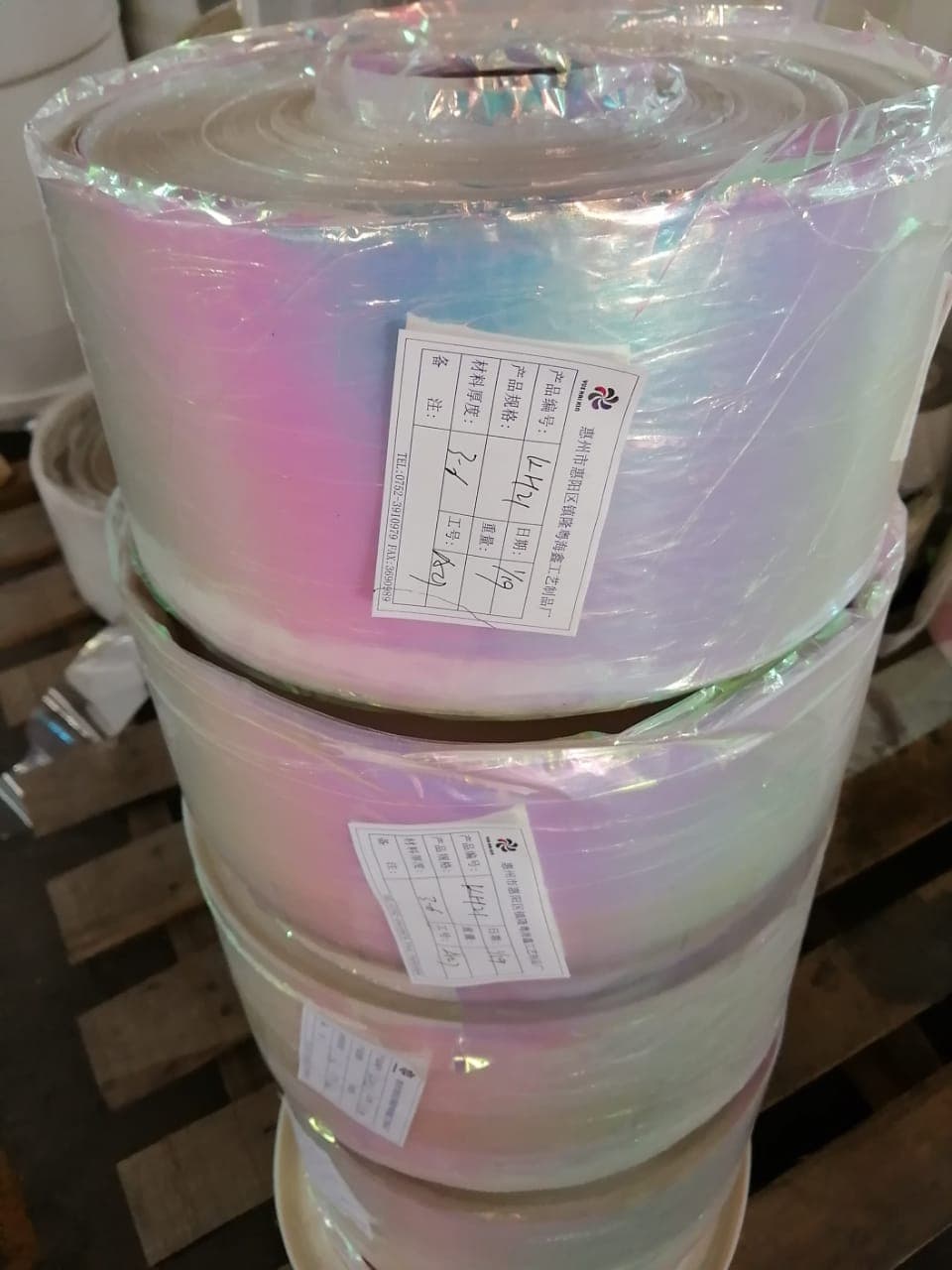
Whether formulating eyeshadow palettes, lip glosses, nail polishes, or compounding industrial epoxy resin, start with our 1kg low trial MOQ or complimentary 50g qualification sample with complete TDS and batch COA.