
Loading...
⚡ 1kg Low MOQ · Factory Direct Glitter & Mica⚡ Source Factory Direct Wholesale · Custom Loose Glitter & Mica Pigments · 1kg Low Trial MOQ · 48h Free 50g Lab Samples
mlmcustom@mlmcosmetic.com⚡ 1kg Low MOQ · Factory Direct Glitter & Mica⚡ Source Factory Direct Wholesale · Custom Loose Glitter & Mica Pigments · 1kg Low Trial MOQ · 48h Free 50g Lab Samples
mlmcustom@mlmcosmetic.comLoading...
Technical formulation guide to cosmetic chameleon flakes: substrate architecture, solvent bleed data, ICP-MS limits, benchtop protocols. 1kg trial MOQ from MLM Cosmetic.
If you have run chameleon flakes through a nail lacquer pilot batch and watched the color-shift die within 72 hours of bottle fill, you already know the problem. If you have opened a 25kg drum of flakes after ocean freight and found half the contents electrostatically clumped into a solid disc, you know it too. And if your toxicologist has ever received a Certificate of Analysis that lists heavy metals as "compliant" without a single ppm figure or instrument reference, you understand why sourcing color-shift pigment flakes requires more than a product catalog and a price quote.
This document is written for cosmetic chemists, procurement directors, and regulatory affairs teams evaluating chameleon flake suppliers. It covers substrate chemistry, real thermal and solvent failure modes we have documented on our production floor, formulation compatibility data, QC instrumentation, and a practical benchtop qualification protocol you can run before committing to bulk.
MLM Cosmetic (mlmcosmetic.com) is an OEM cosmetics raw material factory in Shenzhen. We supply the flakes and provide batch-level test documentation — CoA, ICP-MS reports, FTIR spectral fingerprints — upon request to support your regulatory filings. Finished formulation safety assessment remains the responsibility of the brand owner's qualified safety assessor. That distinction matters, and we will not blur it.
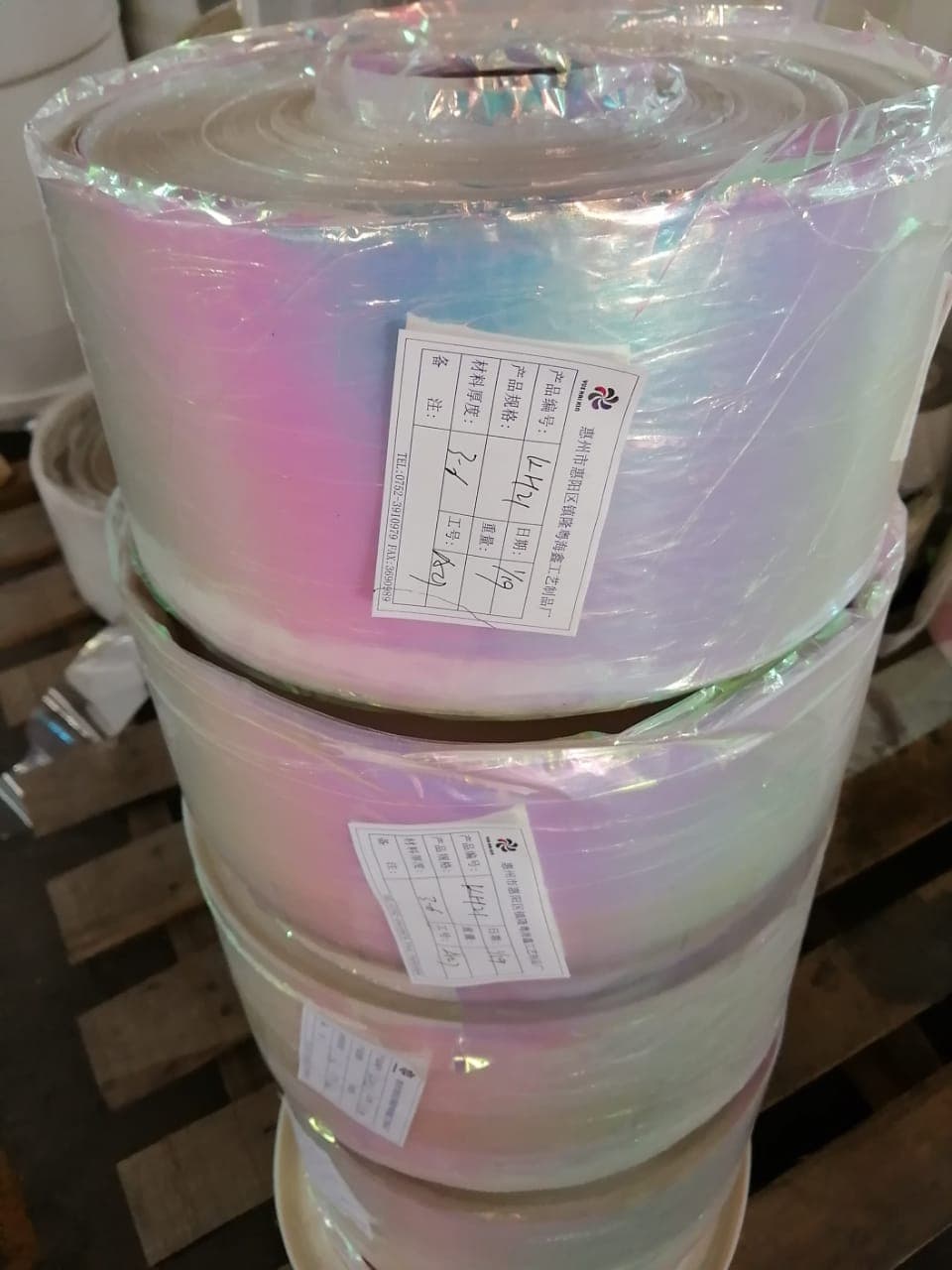
Chameleon flakes produce angle-dependent color through thin-film interference, not through conventional pigment absorption. A multilayer stack — typically a high-refractive-index metal oxide (TiO₂ or Fe₂O₃) vacuum-deposited onto a carrier substrate, sometimes with an intermediate SiO₂ spacer layer — creates constructive and destructive interference as the viewing angle changes. The perceived color shift (e.g., green-to-gold, red-to-copper) is governed by the optical thickness of each deposited layer, measured in nanometers. A 5nm drift in deposition thickness during PVD coating changes the dominant reflected wavelength by roughly 10–15nm, which is enough to push a green-gold shift into a green-blue shift. This is why batch-to-batch color consistency is a real manufacturing challenge, not a marketing talking point.
1. BOPET (Biaxially-Oriented Polyethylene Terephthalate)
This is the workhorse substrate for nail lacquer and high-wear applications. The biaxial orientation process increases crystallinity to approximately 35–45%, which is what gives PET flakes their mechanical toughness and solvent resistance. The failure mode to watch: if the BOPET film supplier ships material with crystallinity below 30% (measurable via DSC — differential scanning calorimetry — look for the melting enthalpy at ~250°C), the flakes will swell and curl in butyl acetate within 48 hours. We reject incoming BOPET film lots that fall outside our 36–44% crystallinity window.
Rotary slitting is where edge quality is determined. Dull or burred slitting knives produce micro-fibrillated edges that act as nucleation points for solvent ingress. We replace tungsten carbide rotary blades every 80 production hours and inspect cut edges under 40× stereomicroscopy. If your current supplier's flakes show visible fraying at the perimeter under 20× magnification, that is a slitting quality problem, not a substrate problem.
Regulatory note: BOPET is a synthetic polymer. Under EU Regulation 1223/2009 and REACH Annex XVII Entry 78, intentionally added microplastic particles face restriction with transitional deadlines. Rinse-off cosmetic products containing synthetic polymer microparticles ≤ 5mm had an October 2023 compliance date. Leave-on products have later transition windows (2027–2029 depending on category). Brands targeting EU distribution need to track these deadlines and assess whether PET-substrate flakes in their specific product category require reformulation to cellulose or mica substrates. We supply all three substrates specifically so you can make that transition without changing your color-shift palette.
2. Regenerated Cellulose
Plant-derived, biodegradable, and outside the Annex XVII microplastic definition. The trade-off is reduced solvent resistance — regenerated cellulose swells in ethyl acetate and will delaminate the vacuum-deposited metal oxide layers in straight nail lacquer solvent systems. It works well in water-based formulations, glycol-containing emulsions, pressed powders, and wax-based sticks. Thermal ceiling is lower: we rate cellulose-substrate flakes to 160°C maximum, which is adequate for most lipstick and balm pours (typical pour temperature 75–85°C) but marginal for baked powder processes that expose product to 140–155°C for extended dwell times. If your baked powder oven runs above 155°C, test first.
3. Synthetic Fluorphlogopite (Synthetic Mica)
Mineral-based, not classified as a microplastic, excellent optical clarity, and thermally stable to 200°C+. The coating adhesion challenge is different here: synthetic mica platelets are inherently smooth and non-porous, so the vacuum-deposited interference layers rely entirely on surface energy matching. Poor PVD chamber hygiene (residual pump oil vapor, for example) reduces coating adhesion, and you will see delamination as a milky haze in the finished product. ASTM D1003 haze measurement on a flake-loaded clear lacquer drawdown is a fast screen — we hold internal haze delta to < 2% versus the unloaded control. If a competitor's synthetic mica chameleon flakes push haze delta above 5%, suspect coating adhesion failure.
We run accelerated thermal aging on every new production batch: flakes are held at target temperature in a forced-air oven for 4 hours, then evaluated for color shift retention (visual against master standard under D65 illuminant + 45°/0° geometry) and physical integrity (stereomicroscopy at 40×).
| Substrate | Rated Max Temp | Observed Failure Mode Above Rating | Test Method |
|---|---|---|---|
| BOPET | 190°C | Film shrinkage >3%, edge curling, interference layer cracking | Forced-air oven, 4hr hold, dimensional measurement |
| Regenerated Cellulose | 160°C | Browning/yellowing of substrate, delamination of oxide layers | Forced-air oven, 4hr hold, colorimetry ΔE measurement |
| Synthetic Mica | 200°C+ | No failure observed up to 220°C at 4hr | Forced-air oven, 4hr hold |
Flakes are immersed in neat solvent at 25°C for 72 hours, then evaluated for dye migration (visual bleed into solvent), dimensional change, and color shift retention.
| Solvent System | BOPET Substrate | Cellulose Substrate | Synthetic Mica Substrate |
|---|---|---|---|
| Butyl Acetate (neat) | Pass — no bleed, no swell | Fail — substrate swelling, layer delamination by 24hr | Pass — no bleed, no swell |
| Ethyl Acetate (neat) | Pass — no bleed, no swell | Fail — visible curling by 12hr | Pass — no bleed, no swell |
| Isododecane | Pass | Pass | Pass |
| Water (deionized) | Pass | Pass — slight softening at 72hr, no delamination | Pass |
| Propylene Glycol (neat) | Pass | Pass | Pass |
| Ethanol 95% | Pass | Marginal — monitor for edge softening | Pass |
The butyl acetate and ethyl acetate failures on cellulose substrate are not defects — they are inherent material limitations. If a supplier tells you their cellulose-based chameleon flakes are "nail lacquer compatible" without qualification, ask for their 72-hour immersion data. We have not seen cellulose survive neat nail lacquer solvents, and we will tell you that directly rather than let you find out during stability testing.
| Product Type | Recommended Substrate | Typical Loading (% w/w) | Key Formulation Notes |
|---|---|---|---|
| Nail Lacquer (solvent-based) | BOPET or Synthetic Mica | 1–5% | Confirm crystallinity of BOPET lot. Pre-disperse in a portion of solvent blend before addition to mill base. Monitor Brookfield RVT viscosity — flakes above 1.0mm can increase apparent viscosity by 8–15% at spindle #4, 20 RPM. |
| Pressed Eyeshadow | Any substrate | 5–25% | Electrostatic clumping in powder hoppers is a real production issue at >15% loading. Ground your hopper, control RH to 40–55%, and consider ionizing air bars at the feed throat. |
| Lipstick / Lip Gloss | Cellulose or Synthetic Mica | 2–8% | Pour temperature must stay below substrate rating. For cellulose, keep pour ≤ 85°C. For synthetic mica, no practical concern. |
| Liquid Foundation / Emulsion | Cellulose or Synthetic Mica | 0.5–3% | Larger flakes (>0.5mm) will settle in low-viscosity systems. Target continuous phase viscosity > 3,000 cP (Brookfield RVT, spindle #4, 20 RPM, 25°C) or use rheology modifiers. |
| Gel Polish (UV-cure) | BOPET or Synthetic Mica | 1–4% | Verify flake does not attenuate UV transmission enough to cause under-cure at the substrate interface. Run cure-through testing per your lamp manufacturer's protocol. |
| Body Lotion / Wash-Off | Cellulose (preferred for EU) | 0.5–2% | Cellulose substrate supports biodegradability and microplastic-free claims. |
Every production batch is tested on an Agilent 7800 ICP-MS (or equivalent quadrupole ICP-MS) for heavy metal content. Our internal release limits:
| Element | MLM Internal Limit | Typical Batch Result | Reference Standard |
|---|---|---|---|
| Lead (Pb) | < 2 ppm | 0.3–0.8 ppm | USP <232> / ISO 17294-2 |
| Arsenic (As) | < 1 ppm | < 0.2 ppm | USP <232> / ISO 17294-2 |
| Mercury (Hg) | < 1 ppm | < 0.05 ppm | USP <232> / ISO 17294-2 |
| Cadmium (Cd) | < 1 ppm | < 0.1 ppm | USP <232> / ISO 17294-2 |
| Antimony (Sb) | < 5 ppm | 0.5–1.5 ppm | USP <232> / ISO 17294-2 |
We report actual measured values on every CoA, not just "pass/fail" or "compliant." If your current supplier's CoA does not list the instrument used, the detection limits, and the actual measured concentration, you are not receiving adequate analytical documentation.
Each substrate type has a characteristic FTIR absorption profile. We run attenuated total reflectance (ATR) FTIR on every incoming substrate lot and on finished flakes to confirm substrate identity and detect contamination or substitution. The BOPET carbonyl stretch at ~1715 cm⁻¹ and the cellulose O-H broad band at ~3300 cm⁻¹ are unambiguous identifiers. We archive all spectra and can provide them on request for your incoming QC verification.
We offer controlled cuts from 0.05mm (50µm) up to 3.0mm. Sieve analysis per ISO 3310-1 on every batch. The D50 and D90 values are reported on the CoA. If you are running pressed powder and your hopper feed is inconsistent, check whether your supplier's PSD is tighter than ±15% on D50 — wider distributions cause segregation during blending.
Before you commit to a 25kg bulk order from any supplier — including us — run these three tests on a 1kg trial sample.
Place 2g of flakes in a sealed glass vial with 20mL of your primary formulation solvent (e.g., butyl acetate for nail lacquer, water for emulsion). Hold at 25°C for 72 hours. Evaluate:
Spread 5g of flakes in a single layer on an aluminium tray. Place in a forced-air oven at your maximum expected process temperature (e.g., 85°C for lipstick pour, 150°C for baked powder). Hold for 4 hours. Evaluate:
Formulate a small batch (50–100g) of your target product at your intended flake loading percentage. Fill into your intended packaging. Place one unit at 45°C/75% RH and one at ambient (25°C/50% RH) for 14 days. Evaluate:
This three-step protocol takes roughly 16 days from sample receipt to data. It will catch 90% of the compatibility failures that would otherwise surface during formal 12-week ICH stability testing — and it costs you nothing but bench time and a 1kg sample.
MLM Cosmetic is registered under US FDA MoCRA facility requirements. We provide:
We do not provide finished product safety assessments, CPSR (Cosmetic Product Safety Reports), or challenge test data for your finished formulation. That work belongs to your qualified safety assessor or Responsible Person under EU 1223/2009. We will give your assessor everything they need from the raw material side. We will not overstep into finished product claims.
Pilot / Lab Trial Quantities: 1kg per color, per substrate. Vacuum-sealed in aluminium foil barrier bags (MVTR < 0.5 g/m²/day per ASTM F1249) to prevent moisture ingress during transit. This matters — chameleon flakes exposed to >60% RH during shipping can develop surface haze from moisture condensation on the metal oxide interference layers. The vacuum-sealed barrier bag is not premium packaging theater; it is a quality control measure.
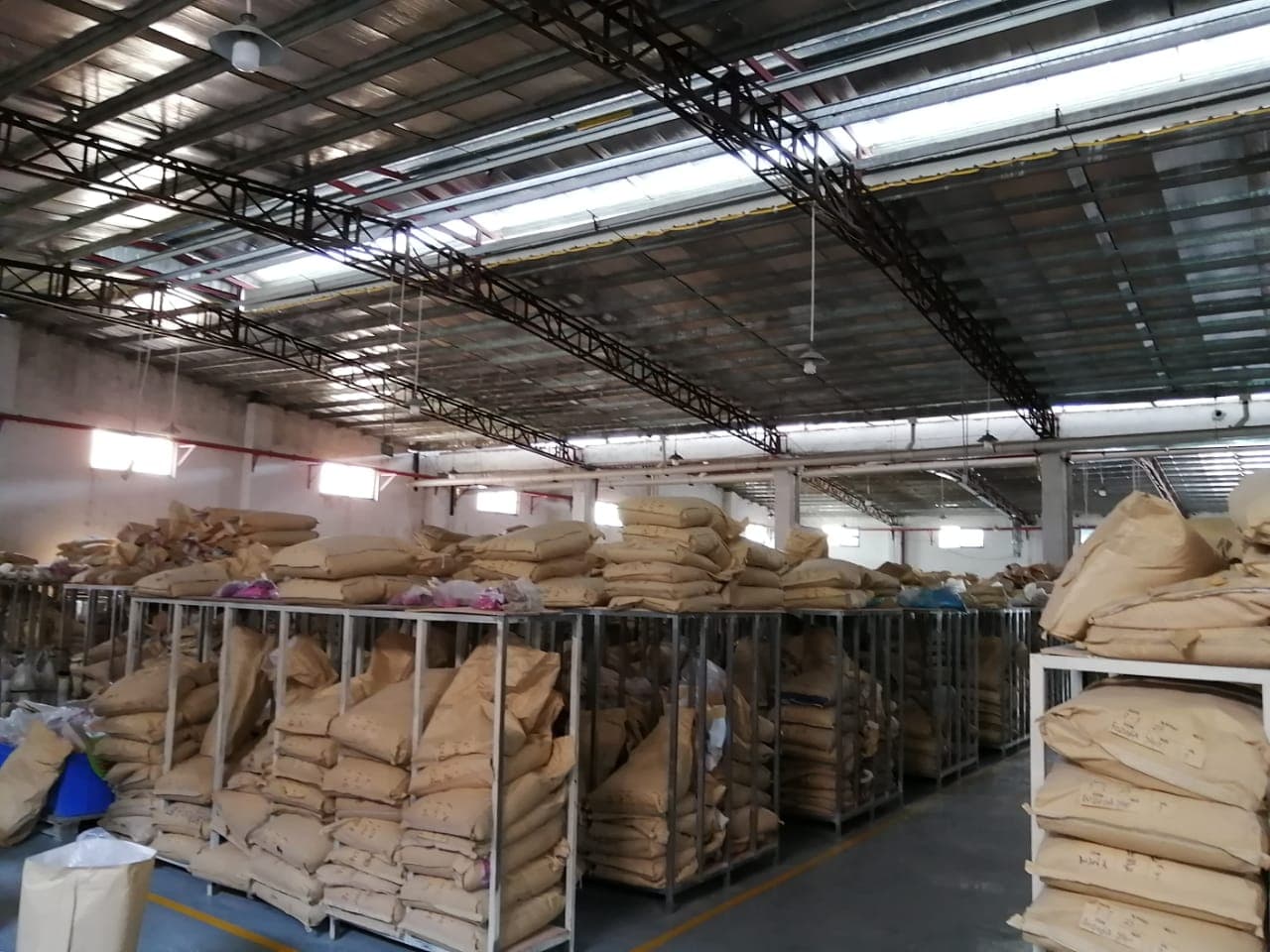
Bulk Production Quantities: 25kg net weight in UN-rated fibre drums with polyethylene liner. Palletized, stretch-wrapped, suitable for ocean freight. Each drum carries a batch-traceable label with lot number, manufacture date, substrate type, particle size cut, and CoA reference number.
Minimum order for pilot trials: 1kg. No minimum for color sampling if you are evaluating substrate options before committing to a formulation direction.
Seven questions that separate serious raw material manufacturers from traders reselling repackaged bulk:
If a supplier cannot answer these questions with specific numbers and documentation, you are buying on faith. That is not how you build a stable supply chain for color cosmetics.
MLM Cosmetic supplies chameleon flakes across all three substrate platforms, with full analytical documentation, from our Shenzhen facility. Request 1kg trial samples and batch documentation through mlmcosmetic.com. For formulators evaluating biodegradable effect pigment options alongside chameleon flakes, our Cosmetic Grade Biodegradable Glitter line uses the same regenerated cellulose substrate technology with equivalent QC protocols.
Disclaimer: Technical data and regulatory references provided herein (including EU Regulation 2023/2055, EU Regulation 1223/2009, and US FDA MoCRA) are based on current legislative texts and laboratory test parameters for raw materials manufactured by MLM Cosmetic. This documentation is intended solely to support independent brand formulators and Responsible Persons in compiling their Cosmetic Product Safety Reports (CPSR) and product filings. Final formulation compliance, toxicological risk assessment, and finished product registration remain the responsibility of the brand owner.
Looking for custom formulation or laboratory testing samples? Contact our MLM Cosmetic technical engineering team or request a free sample kit directly.
Target Formulation Material:
Chameleon Flakes for Cosmetics: Substrate, Solvent & QC Data
Includes 50g sealed lab pouch, lot-specific COA, Technical Data Sheet (TDS), and ISO 22716 regulatory package.
Whether formulating eyeshadow palettes, lip glosses, nail polishes, or compounding industrial epoxy resin, start with our 1kg low trial MOQ or complimentary 50g qualification sample with complete TDS and batch COA.