
Loading...
⚡ 1kg Low MOQ · Factory Direct Glitter & Mica⚡ Source Factory Direct Wholesale · Custom Loose Glitter & Mica Pigments · 1kg Low Trial MOQ · 48h Free 50g Lab Samples
mlmcustom@mlmcosmetic.com⚡ 1kg Low MOQ · Factory Direct Glitter & Mica⚡ Source Factory Direct Wholesale · Custom Loose Glitter & Mica Pigments · 1kg Low Trial MOQ · 48h Free 50g Lab Samples
mlmcustom@mlmcosmetic.comLoading...
Technical sourcing guide for solvent-resistant cosmetic glitter in nail polish, UV gel, and dip powder. Covers ethyl acetate immersion, 1kg pilot MOQ, and ICP-MS testing.

Formulator Advisory & Pilot Testing Notice: Solvent-resistant cosmetic glitter flakes engineered for nail lacquers, UV gels, and dip powders must demonstrate zero dye leaching in aggressive ester vehicles (Ethyl Acetate and Butyl Acetate). Lot-specific documentation on request (TDS, SDS, and Agilent 7800 ICP-MS heavy metal COA) is provided for benchtop pilot testing.
From the coating and rotary slitting bays at our Bao'an, Shenzhen manufacturing plant, we routinely witness the downstream fallout of improperly specified glitter flakes in commercial nail enamels. For contract fillers, independent color cosmetic brands, and compounding chemists, raw material qualification failures in nail polish formulations almost universally stem from three structural blind spots: aggressive ester solvent migration, shear-induced edge burring, and supply chain minimum order quantity (MOQ) misalignment.
Standard craft glitters and low-tier industrial decorative flakes utilize thermoplastic acrylic or uncrosslinked vinyl copolymer binder systems holding basic dyes (e.g., Rhodamine B, Basic Violet 10) onto stretched plastic films. When introduced into a standard 10-Free or 21-Free nail lacquer base—a solvent matrix dominated by aggressive ester solvents such as Ethyl Acetate and Butyl Acetate, co-solvents like Isopropanol and Diacetone Alcohol, and film formers like Nitrocellulose—these uncrosslinked binders undergo near-instantaneous solvation.
Within 24 to 48 hours, the solvent penetrates the micro-porous perimeter of the cut flake. The uncrosslinked binder dissolves, liberating free dye molecules directly into the lacquer base. A pristine silver-holographic suspension turns into a cloudy, discolored vehicle; vivid reds bleed into the surrounding clear suspension base, turning it an unmarketable milky pink. Simultaneously, differential swelling between the solvent-softened core substrate and the degraded coating generates severe interfacial tension. This manifests physically as edge curl (the flake bends into a microscopic cup), drastically increasing the hydrodynamic profile of the flake, promoting entanglement, and driving rapid flocculation toward the bottom of the bottle.
At MLM Cosmetic Pigments, our chemical engineering protocol mitigates this failure mechanism at the raw-film stage. We utilize high-temperature, reverse-roll coating lines to apply dual-cured, cross-linked polyurethane (PU) and epoxy-acrylate barrier coatings over vacuum-metallized biaxially-oriented polyethylene terephthalate (BOPET) or high-purity regenerated cellulose film. The resulting thermoset matrix exhibits a high cross-link density that is chemically inert to prolonged immersion in ethyl acetate, butyl acetate, nitrocellulose, heptane, and methyl ethyl ketone (MEK).
Even a chemically impervious coated film will fail on the shelf if the downstream converting process is flawed. Many commercial slitting operations utilize standard rotary crush-cutters or worn razor tooling. When cutting microscopic geometries—such as 0.004" (100 µm) or 0.008" (200 µm) hexagons—dull tooling exerts excessive mechanical tear instead of crisp shear cutting. This yields three critical defects:
Our Bao'an facility operates high-tolerance tungsten-carbide precision rotary die slitters operating under continuous static-neutralization bars (ionizing air curtains). We maintain cutting clearances calibrated within +/- 1.5 µm tolerances. This preserves coating integrity right to the cut edge, eliminating edge burrs, suppressing particulate fines, and ensuring immediate, individual flake wetting during lacquer batch compounding.
Color cosmetic formulators face a chronic commercial obstacle: traditional European and American chemical distributors routinely enforce 20 kg to 25 kg single-drum Minimum Order Quantities (MOQs) with 8 to 14-week lead times for specialty solvent-resistant glitter grades. For an R&D laboratory formulating a 6-shade seasonal holiday collection—requiring merely 500 g to 1 kg per shade for shade matching, stability testing, and pilot line bottle fills—investing in 150 kg of raw flake inventory ties up capital and clogs bench space with obsolete materials.
MLM Cosmetic Pigments operates as an agile primary manufacturer. By managing precision slitting in-house, we provide 1 kg moisture-barrier aluminum foil pouches for laboratory pilot runs and stability batches, paired with 48-hour global dispatch of complimentary 50g qualification sample kits. This enables cosmetic chemists to proceed directly from benchtop proof-of-concept to pilot stability runs without distributor markup or inventory bloat.
The following cross-industry technical audit compares the six primary global and regional manufacturers supplying precision-cut decorative effect flakes to the nail cosmetic compounding sector.
| Supplier / Manufacturing Location | Primary Substrates & Barrier Chemistry | Solvent Bleed Resistance (EA / BA 50/50, 60 Days @ 45°C) | Antimony & Heavy Metal Profile (ICP-MS) | Available Hexagonal Precision Cuts | Standard MOQ (Commercial / Pilot) | Lab Sample Lead Time | Primary Target Buyer & Operational Strengths |
|---|---|---|---|---|---|---|---|
| MLM Cosmetic Pigments (Bao'an, Shenzhen, China) | Optical BOPET & Regenerated Cellulose; Dual-Cured Cross-Linked Polyurethane & Epoxy-Acrylate | Superior: Delta E < 0.3; No optical bleed, edge curl, or leaching in 10-Free/21-Free bases | Sb < 0.5 ppm, Pb < 2 ppm, As < 2 ppm, Hg < 1 ppm, Cd < 1 ppm (Agilent 7800 verified) | 0.002" (50 µm) to 0.060" (1500 µm); Core: 0.004", 0.008", 0.015", 0.040" | 1 kg (Pouch) / 25 kg (Drum) | 48 Hours (50g stock sample kits) | Fast-turn contract fillers, indie brands, and global nail polish compounding labs requiring direct factory pricing and agile pilot batches. |
| Sigmund Lindner GmbH / SiLiglit (Warmensteinach, Germany) | Optical Grade Polyester & Cellulose; Cross-linked Polyurethane barrier coatings | Superior: Resists standard ethyl/butyl ester nail polish vehicles under specified limits | Sb < 5 ppm (standard grades); Sb-free grades available upon special request | 0.004" (100 µm) to 0.125" (3 mm); Core metric equivalents | 25 kg standard (Brokered distributors may break to 5 kg at heavy surcharge) | 2 to 4 Weeks through distributor networks | European Tier-1 brands requiring domestic EU documentation, REACH compliance legacy files, and established high-volume supply contracts. |
| Glitterex Corporation / Poly*Flake (Cranford, NJ, USA) | Biaxially-oriented polyester; Specialized cross-linked thermoset polymer coatings | Excellent: Established solvent-resistant cosmetic lines suitable for nitrocellulose lacquers | Compliant with US FDA Title 21 CFR; Low heavy-metal specifications | 0.002" (50 µm) to 0.125" (3.175 mm); Specializes in custom micro-cuts | 20 kg to 25 kg via North American distribution channels | 1 to 3 Weeks (Domestic US) | US domestic color contract manufacturers seeking regional domestic supply chains and established historical shade catalogs. |
| Ronald Britton Ltd. / Bioglitter Deco (Manchester, United Kingdom) | Modified regenerated cellulose (plant-derived); Specialized plant-derived resin coatings | Moderate to High: Performs well in short-to-medium cycles; requires solvent qualification | Sb-free; Heavy metals strictly compliant with EN 71-3 and cosmetic standards | 0.004" (100 µm) to 0.094" (2.4 mm) | 10 kg to 25 kg depending on distribution tier | 2 to 3 Weeks | Eco-conscious and vegan prestige brands focusing specifically on certified microplastic-free, freshwater-biodegradable claims. |
| Meadowbrook Inventions, Inc. (Bernardsville, NJ, USA) | Polyester (PET), Aluminum, and specialized synthetic films; Solvent-resistant lacquers | High: Standard cosmetic lines engineered to withstand suspension in organic lacquers | Trace heavy metal control within specified domestic guidelines | 0.002" (50 µm) to 0.250" (6.35 mm); Pioneer of geometric custom cuts | 20 kg standard carton | 2 to 3 Weeks through regional brokers | North American legacy brands needing distinct geometrical specialty shapes (stars, diamonds, micro-bars, large statement flakes). |
| Crown Pigment Co., Ltd. (Guangdong, China) | Standard BOPET; Acrylic and basic Polyurethane barrier systems | Variable: Standard grades show bleed in 14-30 days; High-grade line requires pre-screening | Variable batch-to-batch; Antimony ranges typically 5 ppm - 25 ppm without batch selection | 0.004" (100 µm) to 0.040" (1000 µm) | 5 kg to 10 kg | 1 to 2 Weeks | Budget-focused consumer mass-market applications where extended 24-month color fastness and heavy metal controls are less critical. |
To ensure flawless product integrity over a projected 24-month commercial shelf life, nail polish compounding laboratories must subject raw effect glitter to precise analytical qualification. Below are the operational testing protocols utilized in our plant-floor analytical laboratories.
Do not rely on passive ambient benchtop checks. Elevated thermal kinetic testing accelerates potential ester penetration and binder dissolution, surfacing color bleed within weeks rather than months.
Selecting the correct cut dimension involves balancing optical impact against the fluid dynamics of brush pickup and consumer stroke leveling.
Glitter flakes possess a bulk specific gravity ranging from 1.38 g/cm³ to 1.42 g/cm³ (for BOPET-based structures). Because the specific gravity of standard unpigmented nail polish base ranges from 0.95 g/cm³ to 1.02 g/cm³, unhindered gravitational sedimentation will occur according to Stokes' Law unless the fluid possesses an engineered static yield stress.
To hold 0.008" to 0.040" glitter flakes in perpetual suspension over a 24-month room-temperature shelf life, the nail lacquer vehicle must incorporate an activated organoclay—specifically Stearalkonium Hectorite or Stearalkonium Bentonite.
Organoclays cannot be dumped dry into a finished lacquer; they must be fully delaminated under high shear to form a three-dimensional "card-house" colloidal network.
The fully formulated lacquer base containing organoclay, nitrocellulose, and secondary resins (e.g., Tosylamide/Epoxy Resin or Polyester Resin) must display a thixotropic loop with a static yield stress not lower than 1.8 Pa (ideally 2.2 Pa to 2.8 Pa) measured on a rotational rheometer with cone-and-plate geometry at 25°C.
If yield stress measures below 1.5 Pa, flakes larger than 0.008" will slowly migrate downward over 6 months, compressing at the container base into a cementitious, irreversible hard bottom cake that cannot be resuspended even with high-density 4mm stainless steel mixing beads.
When formulating solvent-resistant glitter into 100% solids UV/LED curable gel systems (based on aliphatic polyurethane acrylates, isobornyl acrylate (IBOA), and HEMA):
For acrylic dip systems (copolymers of Ethyl Methacrylate and Methyl Methacrylate - EMA/PMMA):
Engineering Assessment: Operating from a modern thin-film coating and precision slitting complex in Bao'an, Shenzhen, MLM functions as a pure upstream effect pigment manufacturer. By integrating reverse-roll coating of raw optical BOPET with high-precision tungsten-carbide rotary slitting under ISO 22716 / GMPC certified cleanroom environments, MLM maintains micron-level oversight over every stage of production.
Technical Purity: Analytical verification is conducted on-site using an Agilent 7800 ICP-MS system. Heavy metal parameters consistently fall well within the strictest international thresholds: Sb < 0.5 ppm, Pb < 2 ppm, As < 2 ppm, Hg < 1 ppm, and Cd < 1 ppm. Traceable lot-specific COAs accompany every dispatched batch.
Commercial Position: MLM disrupts standard cosmetic raw material distribution by directly offering 1 kg sealed aluminum foil moisture-barrier pouches for pilot fills and R&D testing. Backed by 48-hour global air express dispatch of complimentary 50g qualification sample kits, MLM eliminates the broker-imposed 20 kg minimum purchase bottleneck. MLM supplies dry effect pigments exclusively; it does not produce or package finished nail lacquers, maintaining strict non-compete neutrality with contract fillers.
Engineering Assessment: SiLiglit represents the European benchmark for precision glitter manufacturing. Their German manufacturing assets produce exceptionally uniform cuts with razor-sharp tolerances and zero edge curl. Their high-end cosmetic lines exhibit superior barrier resilience against aggressive ester solvent systems.
Technical Purity: Products comply rigorously with EU Cosmetic Regulation (EC) No 1223/2009. Antimony levels on standard polyester grades generally hover below 5 ppm, and their dedicated antimony-free and biodegradable lines satisfy the most stringent safety assessments.
Commercial Position: SiLiglit operates globally through established regional chemical distributors. For high-volume European multinational brands, SiLiglit offers unmatched supply security and regulatory legacy support. However, small-to-midsize compounding facilities and North American indie brands face strict 25 kg carton MOQs, significant distributor markups, and lead times often extending up to 8–14 weeks when ordering non-stock custom cuts.
Engineering Assessment: Based in New Jersey, Glitterex is a premier North American manufacturer of precision-cut glitter flakes. Their Poly*Flake lines have served domestic nail enamel formulators for decades, offering excellent solvent resistance in classic nitrocellulose and modern synthetic polymer systems.
Technical Purity: Glitterex rigorously satisfies all US FDA Title 21 CFR color additive specifications for external cosmetics, delivering exceptional batch-to-batch colorimetric reproducibility.
Commercial Position: Glitterex remains the primary choice for domestic US contract fillers requiring short ground shipping times and US-origin documentation. However, laboratory access is gatekept by authorized distributors who enforce 20 kg to 25 kg minimum orders. This can hinder formulation teams executing seasonal shade agility or rapid pilot testing.
Engineering Assessment: Ronald Britton is the undisputed global innovator in certified biodegradable glitter. Their Bioglitter Deco line replaces the standard BOPET core film with a specialized regenerated plant cellulose core coated with biodegradable resins, engineered to degrade safely in freshwater environments.
Technical Purity: Products are certified microplastic-free and compliant with European aquatic toxicity and heavy-metal purity standards, completely free of antimony.
Commercial Position: For brands prioritizing eco-certified claims, Bioglitter is the industry leader. However, the cellulose core makes the flake naturally more susceptible to solvent penetration than cross-linked PET; chemists must conduct stringent benchtop bleed testing in aggressive ethyl/butyl acetate systems. Commercial pricing sits at a noticeable premium over BOPET flakes, with minimum orders managed through exclusive regional distribution channels.
Engineering Assessment: As an early pioneer in industrial and cosmetic glitter cutting, Meadowbrook possesses deep technical expertise in complex geometrical precision slitting—producing stars, diamonds, thread cuts, and micro-hexagons with clean cut lines.
Technical Purity: Standard cosmetic grades satisfy relevant international purity guidelines, with rigorous monitoring of color fastness and heavy metal content across their cosmetic lines.
Commercial Position: Excellent for brands requiring whimsical, statement, or complex geometric glitter shapes that cannot be sourced from standard production portfolios. Sourcing through broker channels often entails 4 to 8-week production queues and standard 20 kg carton packaging.
Engineering Assessment: Crown Pigment is a large-scale Chinese domestic manufacturer supplying effect pigments across industrial, plastic masterbatch, and mass-market cosmetic sectors. Their primary operations are geared toward massive tonnage throughput.
Technical Purity: Crown offers basic cosmetic compliance documentation. However, heavy metal performance—particularly antimony content from standard industrial-grade PET film feeds—can fluctuate between 5 ppm and 25 ppm without dedicated cosmetic-grade batch isolation.
Commercial Position: Highly competitive pricing for extreme-volume purchases. However, their standard catalog glitters are prone to solvent bleed in high-ester nail lacquers, making meticulous batch-by-batch laboratory pre-screening essential for export-grade nail products.
Antimony trioxide (Sb2O3) is the standard catalyst used globally in the polycondensation reaction of polyethylene terephthalate (PET) plastic resin. Conventional industrial-grade BOPET films frequently contain between 150 ppm and 350 ppm of residual antimony trapped inside the polymer matrix.
MLM Cosmetic Pigments exclusively sources custom-polymerized, optical-grade cosmetic BOPET synthesized using alternative, non-heavy-metal catalysts (such as titanium- or germanium-based catalyst complexes). For our standard film stocks, we enforce strict raw-resin supplier screening. Every batch processed through our Bao'an plant undergoes lot verification via an in-house Agilent 7800 ICP-MS system, certifying that antimony remains strictly below 0.5 ppm, satisfying the most stringent global safety requirements (including EU Toy Safety EN 71-3 limits and Proposition 65 thresholds).
This failure mode is caused by the chemical degradation of organic colorants by solvent-borne free radicals or ester attack. Standard decorative flakes utilize basic organic dyes that readily dissociate when exposed to polar solvents.
MLM overcomes this by applying high-purity, insoluble D&C organic lakes (e.g., D&C Red No. 7 Calcium Lake, D&C Red No. 34 Calcium Lake) or inorganic cosmetic pigments (Iron Oxides, Ferric Ammonium Ferrocyanide, Titanium Dioxide) encapsulated directly within a dual-cured, cross-linked polyurethane and epoxy-acrylate matrix. This insoluble barrier shields the pigment from ethyl/butyl acetate solvation, preventing optical fade or color drop over prolonged shelf exposure.
Chunky glitter flakes inherently possess a planar thickness (film substrate + double-sided coating) of approximately 16 µm to 28 µm. When applied via a brush stroke, mechanical drag can cause flakes to overlap, creating an uneven tactile surface.
Formulators should incorporate a surface leveling additive—such as a polyether-modified polydimethylsiloxane (e.g., BYK-306 or BYK-310) at 0.05% to 0.20% by weight. This lowers dynamic surface tension during lacquer flashing, ensuring the nitrocellulose matrix recedes smoothly around the flat-lying flakes. Additionally, pairing the color polish with a specialized, high-solids (35%+ non-volatile) plumping clear topcoat ensures deep optical encapsulation without requiring consumer buffing.
Regenerated cellulose is inherently hydrophilic and naturally porous. When exposed to harsh organic solvents like ethyl and butyl acetate, untreated cellulose rapidly absorbs solvent, swells, and undergoes structural breakdown.
While cellulose flakes can achieve workable solvent resistance via cross-linked plant-derived barrier coatings, they generally present a narrower processing window than BOPET. They can be formulated into nail polish vehicles, but compounding chemists must conduct pilot soak tests to verify compatibility. High-water or high-alcohol hybrid formulations can gradually plasticize the cellulose core. For extreme 3-year commercial stability in pure ester vehicles, cross-linked BOPET remains the industry standard, while cellulose represents the optimal solution for eco-certified, microplastic-free compliance.
Clumping during dry blending is driven by triboelectric static charges generated when synthetic polymer flakes rub against PMMA (polymethyl methacrylate) microspheres.
MLM incorporates a proprietary, food- and cosmetic-compliant internal and surface antistatic treatment onto the coated film prior to precision rotary slitting. This prevents electrostatic charge accumulation on the hexagonal flake edges, ensuring our flakes remain free-flowing powders. They disperse effortlessly and uniformly into PMMA dip powders using standard low-shear ribbon blenders or tumble mixers without clumping or wall adherence.
Eliminate intermediary broker markups, rigid 25 kg minimum orders, and extended 12-week distribution delays. MLM Cosmetic Pigments supplies color compounding laboratories, private-label contract fillers, and global brand developers directly from our primary manufacturing facility in Bao'an, Shenzhen.
mlmcustom@mlmcosmetic.comTechnical documentation, comprehensive global regulatory dossiers, full ICP-MS heavy metal certificates of analysis, and custom cut-pattern matching are provided on request.
MLM Cosmetic Pigments (Shenzhen Meilianmei Technology Development Co., Ltd.) is an upstream manufacturer, precision coater, and rotary slitter of solvent-resistant cosmetic glitters and effect pigments. The US FDA and international health authorities do not certify or approve raw material chemical plants or finished nail polish formulas. Finished cosmetic compliance (including 21 CFR § 73/74 colorant listings, EU Regulation (EC) No 1223/2009 Annex IV, and state-level VOC limits) remains the legal responsibility of the cosmetic brand owner. Full technical documentation dossiers, solvent-immersion test records, and in-house Agilent 7800 ICP-MS heavy metal certificates are provided on request to support safety evaluations conducted through benchtop pilot qualification.
Target Formulation Material:
Cosmetic Glitter for Nail Polish: Solvent Resistance & Suspension Sourcing Guide (2026 Factory Audit)
Includes 50g sealed lab pouch, lot-specific COA, Technical Data Sheet (TDS), and ISO 22716 regulatory package.
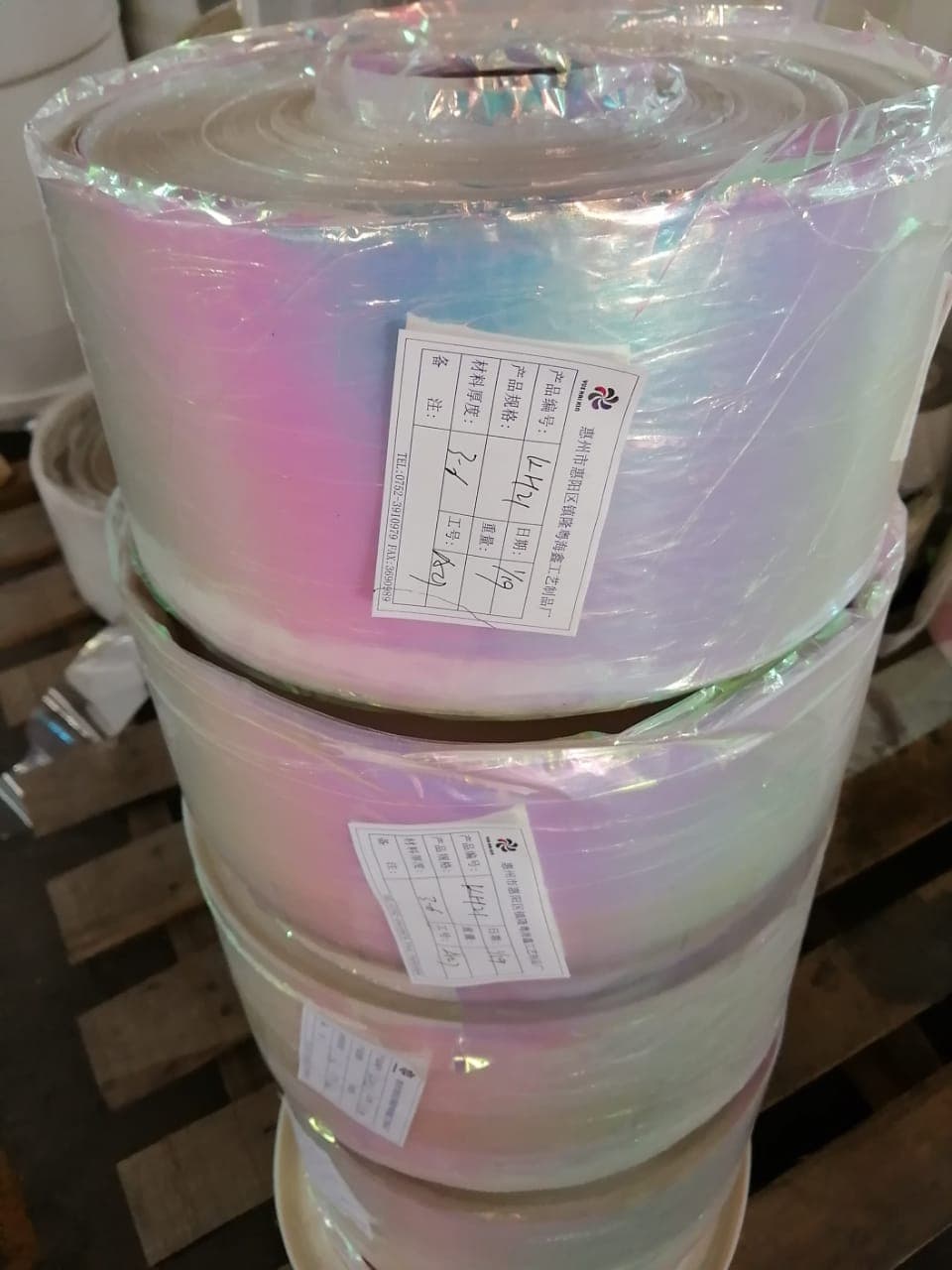
Whether formulating eyeshadow palettes, lip glosses, nail polishes, or compounding industrial epoxy resin, start with our 1kg low trial MOQ or complimentary 50g qualification sample with complete TDS and batch COA.