
Loading...
⚡ 1kg Low MOQ · Factory Direct Glitter & Mica⚡ Source Factory Direct Wholesale · Custom Loose Glitter & Mica Pigments · 1kg Low Trial MOQ · 48h Free 50g Lab Samples
mlmcustom@mlmcosmetic.com⚡ 1kg Low MOQ · Factory Direct Glitter & Mica⚡ Source Factory Direct Wholesale · Custom Loose Glitter & Mica Pigments · 1kg Low Trial MOQ · 48h Free 50g Lab Samples
mlmcustom@mlmcosmetic.comLoading...
Technical sourcing guide for CPNP registered cosmetic raw material suppliers. ICP-MS limits, FTIR batch auditing, substrate specs, and benchtop protocols.
You've sourced a cosmetic-grade effect pigment or glitter from a supplier who claims EU compliance. The CoA looks clean. You drop the material into a nail lacquer base at 4% loading and within 72 hours your QC bench pulls a retain sample that looks like a crime scene — dye migration has turned your butyl acetate/ethyl acetate solvent system pink, the flake edges have curled, and your Brookfield RVT reading at spindle #4 / 20 RPM has drifted 18% from your target viscosity window.
Or maybe it's a pressed powder. Your hopper operator reports electrostatic clumping above 35% RH. The material bridges in the feed throat, your tablet press starts producing crowns with visible voids, and your batch reject rate climbs past 6%.
These are not hypothetical failures. They happen routinely when the raw material supplier treats "CPNP registered" as a marketing checkbox rather than an engineering discipline. This document is written engineer-to-engineer, chemist-to-chemist, to lay out exactly what we control at MLM Cosmetic (Shenzhen) and what you should be verifying before any material enters your formulation pipeline.
Regulatory responsibility disclaimer: MLM Cosmetic supplies cosmetic raw materials and provides batch test documentation (CoA, ICP-MS, FTIR) upon request to support brand filings. Finished formulation safety assessment remains the responsibility of the brand owner's qualified safety assessor under EU Regulation 1223/2009 Article 10, or equivalent local regulation.
The performance ceiling of any cosmetic effect material — glitter, shimmer, pearlescent pigment — is set by its substrate. Choosing wrong here cascades into every downstream failure mode.
Our Cosmetic Grade Biodegradable Glitter uses regenerated cellulose film as the carrier. The cellulose is cast from a viscose process, yielding an amorphous film with a typical thickness of 20–25 µm. Key things to understand:
Conventional PET glitter. Still the workhorse for nail lacquer and gel polish where solvent resistance is non-negotiable.
KMg₃(AlSi₃O₁₀)F₂ — lab-synthesized to eliminate the heavy metal contamination issues endemic to natural mica deposits.
Here is where sourcing decisions get made or broken. Below is real performance data from our internal testing lab (Shenzhen facility, Q1 2024 validation runs).
| Substrate | Sustained Temp Limit | Transient Limit (< 30s) | Failure Mode Above Limit | Test Method |
|---|---|---|---|---|
| Regenerated Cellulose | 160°C | 170°C | Yellowing (ΔE* > 2.0), embrittlement | Oven aging, colorimeter CIE Lab* |
| BOPET (high crystallinity) | 200°C | 220°C | Curl/shrinkage > 2%, haze increase | ASTM D1003 haze, dimensional measurement |
| Synthetic Fluorphlogopite | 800°C | >800°C | Delamination of coating layers (not substrate) | TGA ramp 10°C/min |
| Substrate / Coating System | Butyl Acetate | Ethyl Acetate | Isopropyl Alcohol | Water | Propylene Glycol |
|---|---|---|---|---|---|
| Regen. Cellulose, epoxy-coated | Moderate swell (8–12% mass gain) | Moderate swell | Stable | Slight swell (4–6%) | Stable |
| BOPET (>45% cryst.), cross-linked coating | Stable (< 1% mass change) | Stable | Stable | Stable | Stable |
| Synth. Mica, metal oxide coated | Stable | Stable | Stable | Stable | Stable |
| BOPET (< 35% cryst.), standard coating | Dye migration visible at 24h | Dye migration visible at 8h | Slight bleed | Stable | Stable |
The bottom row is what you get from a low-cost supplier who skimps on film quality. If you're formulating nail lacquer, demand the IPA and ethyl acetate soak data from your supplier's CoA. If they don't test it, they don't control it.
Practical guidance for formulators — which substrate works in which product category, and where the known failure risks sit.
| Product Category | Recommended Substrate | Max Loading (% w/w) | Known Risk | Mitigation |
|---|---|---|---|---|
| Nail Lacquer (solvent-based) | BOPET, high crystallinity | 3–5% | Dye migration, viscosity drift | Verify crystallinity > 45%; 72h solvent soak QC |
| Gel Polish (UV-cure acrylate) | BOPET or Synth. Mica | 2–4% | Flake curl during UV exposure | Pre-test cure shrinkage at your lamp intensity |
| Pressed Powder (eyeshadow, blush) | Regen. Cellulose or Synth. Mica | 5–15% | Electrostatic clumping in hopper | Ground hopper, control RH 30–45%, add 0.2% silica flow aid |
| Lip Gloss (hot pour, oil-based) | Regen. Cellulose (if < 155°C pour) | 1–3% | Yellowing if pour temp too high | Verify pour temp; switch to synth. mica if > 160°C |
| Body Gel (aqueous, carbomer-based) | Regen. Cellulose | 1–3% | Sedimentation in low-viscosity systems | Target base viscosity > 8,000 cP (Brookfield RVT, spindle #4, 20 RPM) |
| Bath Bomb / Rinse-off | Regen. Cellulose ONLY (EU market) | 1–5% | Premature biodegradation if stored wet | Keep finished product moisture < 5% |
Every production batch is tested on an Agilent 7800 ICP-MS (or equivalent validated instrument at our third-party lab partner, SGS Shenzhen). Our CoA reports the following analytes against these internal specifications:
| Analyte | MLM Internal Spec | Typical Result | EU 1223/2009 Impurity Guidance | California Prop 65 Concern Level |
|---|---|---|---|---|
| Lead (Pb) | < 2 ppm | 0.3–0.8 ppm | < 10 ppm (trace impurity) | 0.5 µg/day exposure |
| Arsenic (As) | < 1 ppm | < 0.5 ppm | < 5 ppm | 10 µg/day (inorganic) |
| Mercury (Hg) | < 1 ppm | < 0.1 ppm | < 1 ppm | — |
| Cadmium (Cd) | < 1 ppm | < 0.2 ppm | < 5 ppm | 4.1 µg/day |
| Antimony (Sb) | < 5 ppm | 0.5–2.0 ppm | Not specified (cosmetics) | — |
We report actual measured values, not just "pass/fail." If your safety assessor needs the raw instrument data (calibration curves, spike recoveries, method blanks), we provide them. This is non-negotiable for a credible CPNP product information file.
Every incoming film substrate lot is scanned against a reference library (Nicolet iS50 FTIR-ATR, 32 scans, 4 cm⁻¹ resolution). We're checking for:
Standard cosmetic raw material micro panel per ISO 17516:
Before you commit to a 500 kg purchase order, run these three tests on your 1 kg trial sample. Total bench time: approximately 5 working days.
If the material passes all three steps, you have a qualified raw material. If it fails Step 1, do not proceed — the substrate or coating system is incompatible with your chemistry.
Let's be direct about boundaries.
What MLM Cosmetic provides as your CPNP registered cosmetic raw material supplier:
What remains your responsibility (brand owner / safety assessor):
We are not your Responsible Person. We are not your safety assessor. We are your raw material supplier, and we take that role seriously by giving you data that actually holds up under regulatory scrutiny — not marketing fluff dressed up as a CoA.
Contact our technical sales team through mlmcosmetic.com with the following information and we'll shortcut the back-and-forth:
A few things I want to flag based on recurring issues we see from brands switching suppliers to us mid-production:
Color matching across substrates is not 1:1. A "red" on PET film will not look identical on regenerated cellulose, even with the same colorant batch. Cellulose has a warmer, softer refraction. PET has a sharper, more metallic reflection. If you're migrating from PET to cellulose for EU microplastic compliance, budget time for a color re-approval cycle with your brand team. We provide Lab spectrophotometer data (D65/10°) to quantify the difference, but the final call on visual acceptability is yours.
Electrostatic discharge (ESD) in powder filling lines is a real ignition risk with fine particle sizes (< 100 µm). Ground your hoppers. Ground your operators. Use conductive HDPE liners in your drums, not standard PE. We've had customers report static discharge events during powder transfer in low-humidity winter conditions. This is a safety issue, not just a quality issue.
Don't store opened cellulose glitter bags in your warehouse without resealing. We've seen brands leave bags open on a shelf for weeks, then complain about clumping and elevated moisture content. The aluminium barrier bag exists for a reason. Reseal it, or transfer to an airtight container with desiccant.
We built MLM Cosmetic's quality system around the principle that a CPNP registered cosmetic raw material supplier should hand you data that makes your safety assessor's job easier, not harder. Every CoA, every FTIR scan, every ICP-MS report is generated to survive regulatory audit — because eventually, one will come.
Reach out at mlmcosmetic.com. Send us your formulation brief. We'll send you material that works.
Disclaimer: Technical data and regulatory references provided herein (including EU Regulation 2023/2055, EU Regulation 1223/2009, and US FDA MoCRA) are based on current legislative texts and laboratory test parameters for raw materials manufactured by MLM Cosmetic. This documentation is intended solely to support independent brand formulators and Responsible Persons in compiling their Cosmetic Product Safety Reports (CPSR) and product filings. Final formulation compliance, toxicological risk assessment, and finished product registration remain the responsibility of the brand owner.
Looking for custom formulation or laboratory testing samples? Contact our MLM Cosmetic technical engineering team or request a free sample kit directly.
Target Formulation Material:
CPNP Registered Cosmetic Raw Material Supplier: OEM Tech Guide
Includes 50g sealed lab pouch, lot-specific COA, Technical Data Sheet (TDS), and ISO 22716 regulatory package.
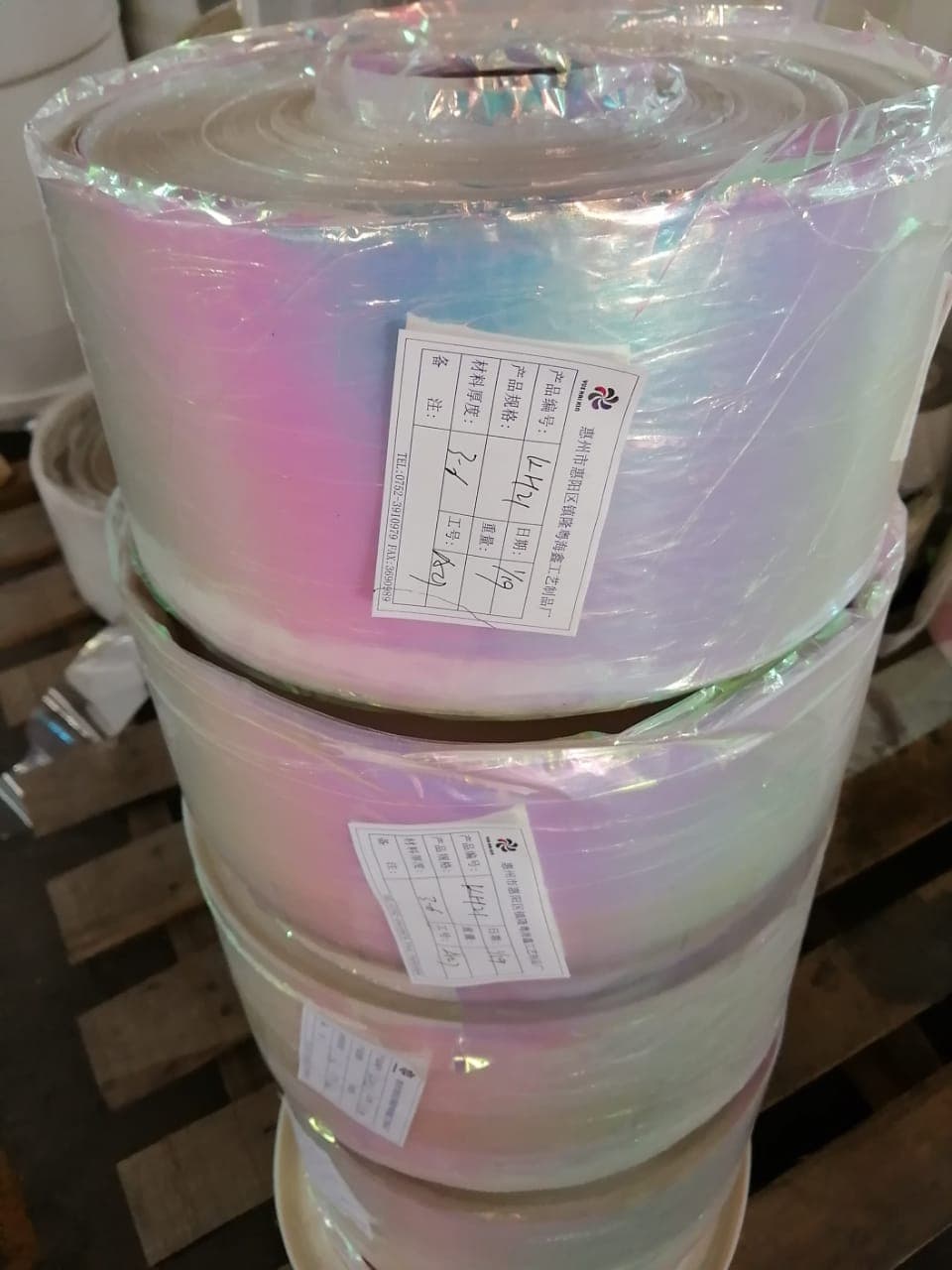
Whether formulating eyeshadow palettes, lip glosses, nail polishes, or compounding industrial epoxy resin, start with our 1kg low trial MOQ or complimentary 50g qualification sample with complete TDS and batch COA.