
Loading...
⚡ 1kg Low MOQ · Factory Direct Glitter & Mica⚡ Source Factory Direct Wholesale · Custom Loose Glitter & Mica Pigments · 1kg Low Trial MOQ · 48h Free 50g Lab Samples
mlmcustom@mlmcosmetic.com⚡ 1kg Low MOQ · Factory Direct Glitter & Mica⚡ Source Factory Direct Wholesale · Custom Loose Glitter & Mica Pigments · 1kg Low Trial MOQ · 48h Free 50g Lab Samples
mlmcustom@mlmcosmetic.comLoading...
B2B procurement guide for EU microplastic regulation 2023/2055. Technical comparison of plant cellulose vs PET/PLA, OECD 301B aquatic biodegradability, 1kg pilot MOQ, and ICP-MS testing.

Formulator Advisory & Pilot Testing Notice: Commission Regulation (EU) 2023/2055 restricts synthetic polymer microparticles in cosmetics, necessitating the transition towards certified freshwater-biodegradable plant cellulose substrates. MLM Cosmetic Pigments is an upstream raw material manufacturer; US FDA and global regulatory authorities do not certify or approve raw material chemical plants or finished consumer formulations. Finished cosmetic compliance remains the legal responsibility of the cosmetic brand owner. Lot-specific documentation on request (TDS, SDS, OECD 301B aquatic biodegradation reports, and Agilent 7800 ICP-MS heavy metal COAs) is provided for benchtop pilot qualification.
From our precision coating and rotary slitting lines in Bao'an, Shenzhen, we monitor the compounding shifts of the European cosmetic market in real time. Following the European Commission's adoption of Commission Regulation (EU) 2023/2055 on September 25, 2023, amending Annex XVII to REACH concerning synthetic polymer microparticles (SPM), raw material selection has transformed from a purely aesthetic evaluation into a high-stakes toxicological and supply-chain survival matrix.
While loose plastic glitter faced an immediate sales prohibition at retail level, commercial cosmetic formulators are managing explicit phase-out deadlines:
Formulation development cycles require 18 to 36 months for accelerated shelf-life studies, preservative efficacy testing, safety assessments, and PIF (Product Information File) updates. Therefore, brands engineering formulations for 2026 and 2027 launches cannot source legacy polymers without incurring stranded inventory liabilities.
The most pervasive point of confusion among procurement heads and contract manufacturing organizations (CMOs) is the regulatory status of polylactic acid (PLA). Multiple brokers continue to market PLA glitter under vague 'compostable' banners. Under Regulation (EU) 2023/2055, an organic polymer is classified as an SPM unless it is either a natural, chemically unmodified polymer, or demonstrates verifiable mineral degradation in environmental open systems.
PLA requires an industrial composting environment characterized by thermophilic temperatures exceeding 58°C, maintained relative humidity above 90%, and controlled microbial communities (EN 13432). In natural freshwater or marine habitats at ambient temperatures (12°C–20°C), PLA exhibits virtually zero molecular breakdown over 180 days. Under standardized testing (OECD 301B / ISO 14851), PLA achieves negligible mineralization into carbon dioxide, meaning PLA is legally defined as a non-biodegradable synthetic polymer microparticle under EU REACH. Formulators using PLA in cosmetic products face inevitable regulatory disqualification during downstream member-state competent authority audits.
True compliance demands an intrinsically biodegradable backbone: regenerated plant cellulose derived from sustainably harvested, FSC-certified eucalyptus and hardwood pulp. When subjected to vacuum metallization (using pure aluminum or biocompatible inorganic oxides) and coated with cross-linked natural resin binders, modified regenerated cellulose satisfies TÜV OK biodegradable WATER requirements, mineralizing to CO2, water, and biomass within 28 to 90 days across natural ecosystems without generating ecotoxic persistent residues.
At MLM Cosmetic Pigments, we operate as a primary upstream substrate coater and slitter. We do not manufacture consumer lipsticks or bottle cosmetic hydrogels. Our plant manufactures high-purity bulk effect flakes, executes in-house ICP-MS elemental validations, and supplies chemical engineering dossiers directly to cosmetic contract manufacturers and color brands globally. To resolve the friction of legacy chemical distribution—where Western brokers enforce 20kg to 25kg rigid drum MOQs that paralyze benchtop validation runs—we supply our PolyFlake Bio Series in 1kg hermetic moisture-barrier aluminum pouches, supported by a 48-hour global air dispatch protocol for 50g qualification sample kits.
| Supplier / Manufacturing Base | Primary Substrate & Metallization Architecture | EU REACH 2023/2055 Exemption Status | Aquatic Biodegradability Compliance Standard | Heavy Metal Purity Verification (ICP-MS) | Minimum Order Quantity (MOQ) | Lab Sample Dispatch Speed | Optimal Procurement Profile / Target Buyer |
|---|---|---|---|---|---|---|---|
| MLM Cosmetic Pigments (Bao'an, Shenzhen, China) | FSC-certified regenerated cellulose; low-temp vacuum Al vapor deposition; styrene-free protective cure | Compliant; exempt from microplastic restriction as verified natural/biodegradable polymer | OECD 301B > 60% ThCO2 in 28 days; ISO 14851; satisfies TÜV OK biodegradable WATER parameters | In-house Agilent 7800 ICP-MS: Pb < 2 ppm, As < 2 ppm, Hg < 1 ppm, Cd < 1 ppm, Sb < 0.5 ppm | 1 kg (Hermetic foil barrier pouch) | 48 Hours (Complimentary 50g qualification kit) | High-growth cosmetic brands, indie formulators, CMOs requiring fast R&D iterations and flexible pilot validation |
| Ronald Britton Ltd. (Bioglitter) (Cheshire, United Kingdom) | Regenerated plant cellulose web; micro-thin aluminum metallization; plant-derived shellac/resin topcoat | Compliant; pioneer of OK biodegradable WATER certified glitter structures | Certified TÜV Austria OK biodegradable WATER; ISO 14851 complete freshwater mineralization | Batch-released external testing: Pb < 5 ppm, As < 2 ppm, Cd < 1 ppm, Hg < 1 ppm, Sb < 1 ppm | 20 kg - 25 kg (Rigid industrial drum via local distributors) | 10 - 20 Business Days (Subject to distributor regional stock) | Large multinational beauty conglomerates with established European distributor contracts and high volume baselines |
| Sigmund Lindner GmbH (SiLiglam PURE BIO) (Warmensteinach, Germany) | Cellulose/Cellulose acetate matrix; specialty cross-linked natural biopolymer coatings | Compliant under specific 'PURE BIO' lines; standard lines require grade differentiation | DIN EN ISO 14851; freshwater aquatic test validation; selected grades certified industrial compostable | Comprehensive European testing dossiers: Pb < 2 ppm, Sb < 1 ppm, total heavy metals within EU Annex II | 10 kg - 25 kg (Standard factory MOQ per specific particle cut) | 7 - 14 Business Days (Handled through authorized technical agents) | European prestige contract packagers needing regional German production provenance and legacy REACH documentation |
| Glitterex Corporation (Cranford, NJ, USA) | Conventional Polyethylene Terephthalate (PET) and expanding Polyhydroxyalkanoates (PHA) lines | Non-compliant (PET lines); Pending / transitioning on select developmental biopolymer lines | Standard PET: Non-biodegradable; Experimental PHA lines: meeting ASTM D6691 marine benchmarks | Standard cosmetic release: Meets US FDA Title 21 CFR heavy metal thresholds; Pb < 10 ppm | 22.68 kg (50 lbs) (Standard domestic US cardboard master pack) | 5 - 10 Business Days (Domestic US focus; extended transatlantic transit) | US domestic mass-market lines manufacturing color cosmetics exclusively for non-EU territories through 2030 |
| Meadowbrook Inventions, Inc. (Bernardsville, NJ, USA) | Specialty precision-cut polymers; PET, metal foils, and specialty bio-derived starch blends | Non-compliant on legacy PET lines; Bio-lines restricted by industrial degradation limitations | Variable by grade; commercial starch/PLA hybrids primarily pass ASTM D6400 / EN 13432 industrial compost only | Compliant with US 21 CFR cosmetic standards; heavy metal release certificates supplied per batch run | 25 kg (Standard export drum packaging) | 10 - 15 Business Days (Export documentation clearance required) | Industrial, craft, and conventional US color cosmetics; formulators prioritizing exotic custom particle geometries |
| Crown Pigment Co., Ltd. (Guangdong, China) | Standard PET, secondary PLA blends; conventional thermal transfer vacuum metallization | Non-compliant (Standard PET); PLA lines do not meet EU open aquatic degradation criteria | Meets EN 13432 (industrial composting); fails OECD 301B aquatic freshwater standard (< 20% ThCO2) | Standard export documentation; external AAS testing: Pb < 10 ppm, As < 3 ppm, Cd < 1 ppm | 5 kg - 10 kg (Standard packaging configurations) | 5 - 7 Business Days (Regional courier dispatch) | Budget-focused consumer color brands supplying non-regulated markets and low-cost seasonal cosmetics |
The fundamental chemical challenge when shifting from biaxially-oriented polyethylene terephthalate (BOPET) to regenerated cellulose is hygroscopic moisture dynamics. PET is structurally hydrophobic, demonstrating equilibrium moisture contents below 0.4%. It presents high tensile modulus under thermal stress and negligible outgassing in vacuum deposition chambers.
In contrast, regenerated plant cellulose film (derived from eucalyptus pulp) is naturally hydrophilic, with standard equilibrium moisture content ranging from 6.0% to 9.5% depending on ambient relative humidity. If an unconditioned cellulose web is mounted directly onto a standard high-vacuum thermal roll coater operating at standard commercial temperatures (chamber pressure 10^-4 to 10^-5 mbar), rapid, explosive outgassing of water vapor occurs. This triggers three distinct failure modes on the plant floor:
To counter this, MLM Cosmetic Pigments employs a proprietary Low-Temperature Electron-Beam Web Evaporation Process inside a dual-zone cryogenic chamber. The cellulose web passes over an active cryogenic cooling drum maintained between -8°C and -12°C. This chilling mitigates thermodynamic web shock while the aluminum deposition rate is precisely metered in an ultra-high vacuum environment (10^-6 mbar).
Directly following metallization, the web undergoes an in-line protective treatment using an ultra-thin, cross-linked natural resin coating. This preserves the specular shine of the aluminum core without relying on synthetic styrene or non-biodegradable polyurethane lacquers. The coated sheet is subsequently cut on high-precision rotary carbide slitting blocks into hexagonal geometries ranging from 0.002” to 0.040” (50 µm to 1,000 µm) with clean edge profiles and minimal thermal burrs.
Every production master roll undergoes rigorous analytical validation on an in-house Agilent 7800 ICP-MS. Cosmetic regulatory compliance requires absolute control over toxic trace metals that can leach into mucous membranes or aqueous formulations. Our process delivers reliable analytical purity metrics against industry standards:
Transforming raw effect flakes into compliant, visually stable cosmetic products requires benchtop vigilance. When shifting from PET to regenerated cellulose, formulators must recognize that cellulose is a living, hydro-active substrate. Treating bio-glitters identical to inert plastic flakes leads to hydrolytic degradation, rheological thinning, and microbial colonization.
To satisfy EU REACH Annex XVII (Regulation 2023/2055) exemptions for non-synthetic or mineralizing microparticles, raw materials must provide comprehensive laboratory validation. The primary reference protocol is OECD Guideline for Testing of Chemicals 301B (CO2 Evolution Test), harmonized with ISO 14851 (Water quality — Determination of the ultimate aerobic biodegradability of organic compounds in an aqueous medium).
Under this system, standard PET registers 0% to 1% ThCO2. Industrial compostable PLA registers 2% to 8% ThCO2 (failing compliance). MLM's PolyFlake Bio regenerated plant cellulose achieves 68% to 78% ThCO2 mineralization within 28 days, converting into gaseous CO2, water, and organic microbial cellular mass without aquatic eco-toxicity.
Uncrosslinked regenerated cellulose flakes suspended in unbuffered, high-water content cosmetic serums absorb ambient water molecules over extended stability windows, precipitating edge softening, dimensional expansion, and matrix clouding.
Cosmetic formulas rely heavily on volatile carrier solvents. Nail coatings utilize aggressive organic esters (Ethyl Acetate, Butyl Acetate); long-wear matte lipsticks utilize branched hydrocarbons (Isododecane); clear sanitizers employ high-proof alcohols. Bio-glitter topcoats must resist core extraction or pigment bleeds.
Unlike biologically inert PET, regenerated cellulose presents a nutrient-accessible carbohydrate foundation. If your water-phase activity (a_w) is elevated (> 0.70) and ambient fungal spores are introduced via atmospheric exposure or natural botanical extracts, fungal hyphae can anchor to the flake surface, metabolizing the underlying cellulose structure.
Operating out of Bao'an, Shenzhen, MLM Cosmetic Pigments maintains direct control over the entire production chain: high-vacuum coating lines, precision slitting, surface energy optimization, and particle classification. By eliminating the multi-layered markup structures of chemical trading firms and export agents, MLM offers high-grade bio-cellulose pigments at direct plant economics.
Our manufacturing floor operates under ISO 22716:2007 (Cosmetic GMP) and ISO 9001 quality architectures. Each production batch of the PolyFlake Bio Series is tagged with full traceability back to the parent FSC eucalyptus pulp bale. Heavy metal analyses are executed internally on Agilent 7800 ICP-MS instruments, and every commercial master lot ships with full lot-specific analytical certificates.
Recognizing that formulation teams cannot commit to 25kg bulk volumes during exploratory prototyping or pilot stability runs, we offer our complete catalog of bio-effect pigments in 1kg moisture-barrier, heat-sealed aluminum foil pouches. Furthermore, we maintain a 48-hour global air express dispatch program for complimentary 50g qualification sample kits, providing R&D chemists with immediate physical access to test materials.
Headquartered in Cheshire, United Kingdom, Ronald Britton is a pioneer in the biodegradable glitter movement. Their Bioglitter Sparkle and Bioglitter Pure ranges represent an industry gold standard for environmental marketing credentials. Ronald Britton secured third-party certification under TÜV Austria’s OK biodegradable WATER standard, providing extensive validation documentation for compliance defense under Regulation (EU) 2023/2055.
Their materials exhibit consistent suspension behavior and clean optical clarity. However, procurement through their traditional model requires navigating authorized regional third-party chemical distributors across North America, Europe, and Asia. This multi-tiered distribution chain often inflates landed material costs by 40% to high-precision and imposes standard order minimums of 20kg to 25kg per SKU. For fast-moving indie beauty brands or contract manufacturers evaluating 5 to 10 distinct colorways for a trial seasonal collection, minimum purchase hurdles can present significant upfront financial commitments, accompanied by lead times of several weeks for non-stocked custom shades.
Located in Warmensteinach, Germany, Sigmund Lindner GmbH (SiLi) is one of the world's most sophisticated precision-cut effect material manufacturers. Their SiLiglam PURE BIO series leverages advanced technical coatings over modified cellulose and cellulose acetate webs, specifically engineered to withstand mechanical shearing forces during compounding.
SiLi provides comprehensive regulatory documentation, fully aligned with European Cosmetic Regulation (EC) No 1223/2009 and German safety standards. Their slitting tolerances are exceptional, exhibiting virtually zero flake agglomeration or stringing. However, their factory processes are tailored primarily toward high-volume European cosmetic contract packagers. Minimum order quantities typically sit at 10kg to 25kg, with lead times for custom or low-stock particle cuts ranging from 3 to 6 weeks. SiLi remains an optimal procurement choice for massive, established European production programs where geographic proximity to Germany simplifies logistical fulfillment.
Based in Cranford, New Jersey, Glitterex is an established leader in the North American effect material market. Their historical dominance was built upon high-precision polyester (PET) slitting for cosmetics, industrial coatings, and craft applications. Their optical flake quality, specular color variety, and particle suspensions are well regarded across the industry.
In response to evolving environmental standards, Glitterex has developed alternative formulations, including specialty bio-based and PHA-derived exploratory lines. However, the core of their high-volume commercial production infrastructure historically centers on conventional non-biodegradable polymers. Formulators sourcing from Glitterex for transatlantic distribution must evaluate each catalog number carefully to ensure the specific grade complies with EU 2023/2055 aquatic parameters rather than domestic US FDA Title 21 CFR cosmetics compliance, which still allows conventional PET glitter. Order minimums reflect standard US manufacturing master packs of 22.68 kg (50 lbs).
Meadowbrook Inventions, located in Bernardsville, New Jersey, is the historical originator of modern precision-cut glitter technology. Meadowbrook maintains an extensive array of shape configurations, cut geometries, and holographic vacuum metallization capabilities. Their portfolio serves aerospace, automotive, fashion, and color cosmetic industries.
Regarding sustainability-mandated substitutions, Meadowbrook offers bio-derived solutions, including starch- and cellulose-based specialty lines. However, several of their accessible commercial bio-grades were formulated to meet industrial composting protocols (ASTM D6400 / EN 13432) rather than natural open freshwater aquatic degradation (OECD 301B). Consequently, while functional for North American novelty and promotional markets, select grades will not clear strict EU REACH microparticle audits. Direct procurement typically mandates standard 25kg export master drums with extended international export clearance procedures.
Operating out of Guangdong, China, Crown Pigment supplies conventional cosmetic effect pigments, aluminum pastes, and polyester glitters to competitive mass-market contract manufacturers across Asia, Latin America, and the Middle East. Their competitive advantage is aggressive pricing and substantial production throughput.
In the biodegradable glitter sector, Crown provides accessible lines leveraging secondary PLA blends and modified cellulose sheets. However, procurement teams must maintain analytical vigilance: low-cost commercial PLA lines sourced from secondary coaters fail the EU 2023/2055 open aquatic biodegradability standard. Furthermore, heavy metal purity protocols must be tracked closely; while compliant with baseline export criteria, their entry-tier lines can display wider analytical variance across trace Lead (Pb) and Antimony (Sb) limits than premium cosmetic operations allow. Minimum order quantities are typically 5kg to 10kg, though technical formulation documentation and OECD testing validation support vary across product grades.
No. The European Commission enacted a phased implementation schedule based on application exposure and wash-off characteristics. The immediate sales ban on October 25, 2023, applied exclusively to loose, uncontained plastic glitter sold directly to retail consumers (e.g., craft glitter, loose body glitter pots).
For commercial formulated cosmetics, the law establishes three clear transition gates:
No. Polylactic Acid (PLA) glitter does not comply with the exemptions outlined in Annex XVII of Regulation 2023/2055. Under European Chemicals Agency (ECHA) enforcement criteria, an SPM is only exempt on biodegradation grounds if it successfully passes specified natural aquatic environment degradation criteria (such as OECD 301B, 301C, 301D, 301F, or ISO 14851 / ISO 14852).
PLA requires an industrial composting facility (EN 13432) operating at temperatures above 58°C with elevated humidity to initiate molecular chain scission. In natural ambient freshwater, seawater, or municipal wastewater treatment ponds, PLA shows almost zero degradation over 28 days (< 5% ThCO2). As a result, PLA remains classified as an undegradable synthetic polymer microparticle under EU law.
Regenerated cellulose is hydrophilic. When introduced into a continuous water phase with a water activity (a_w) above 0.85 and an unbuffered pH (< 4.5 or > 8.0), the flakes slowly absorb free water into their internal structure. Over 6 months of ambient storage—or 30 days under 45°C accelerated stability testing—this can manifest as flake edge softening, curling, loss of specular reflectivity, or binder leaching.
To counter this physical degradation:
To establish full regulatory due diligence for inclusion in the cosmetic Product Information File (PIF) and satisfy EU Member State Competent Authority audits, procurement teams must obtain three distinct dossiers from the raw material manufacturer:
In conventional polyester (BOPET) glitter production, antimony trioxide (Sb2O3) is universally employed as the condensation catalyst during PET polymer synthesis, leaving residual trace antimony concentrations between 150 ppm and 350 ppm locked within the plastic film matrix. Over time, particularly in acidic aqueous formulas or nitrocellulose solvent systems, toxic antimony can leach from the glitter edges.
Under EU Cosmetic Regulation 1223/2009, Antimony and its compounds are strictly prohibited substances (Annex II, Entry 14), allowable solely as technically unavoidable trace impurities under good manufacturing practices at non-toxic levels (typically monitored at < 5 ppm or < 0.5 ppm by rigorous cosmetic safety assessors). Regenerated eucalyptus cellulose utilizes mechanical dissolving and non-metallic regeneration processes, completely bypassing heavy-metal condensation catalysts. In-house Agilent 7800 ICP-MS testing of MLM PolyFlake Bio Series consistently records antimony levels below 0.5 ppm, completely eliminating this regulatory and toxicological liability.
Transitioning high-volume commercial cosmetic formulas away from legacy microplastics does not require navigating prolonged distributor broker markups or rigid 25kg packaging hurdles. MLM Cosmetic Pigments manufactures compliant raw materials directly on our precision coating lines in Bao'an, Shenzhen, offering direct chemical engineering support to your R&D laboratory and contract packagers.
Connect directly with our chemical engineering and regulatory documentation desk to request formulation guidelines, complete biodegradation dossiers, and customized sample kits:
MLM Cosmetic Pigments (Shenzhen Meilianmei Technology Development Co., Ltd.)
Plant Location: Bao'an District, Shenzhen, Guangdong Province, China
Direct Procurement & Technical Engineering Inquiries: mlmcustom@mlmcosmetic.com
MLM Cosmetic Pigments (Shenzhen Meilianmei Technology Development Co., Ltd.) is an upstream primary manufacturer, precision coater, and rotary slitter of cosmetic effect pigments, biodegradable plant-cellulose glitters (PolyFlake Bio Series), and synthetic fluorphlogopite flakes. The European Commission, US FDA, and global regulatory authorities do not certify or approve raw material chemical plants or finished cosmetic formulations. Finished product regulatory compliance (including EU REACH Regulation 2023/2055 microplastic transition, EU Regulation 1223/2009, and US MoCRA safety substantiation) remains the legal responsibility of the cosmetic brand owner. Full technical documentation dossiers, biodegradation rate tests, and in-house ICP-MS heavy metal reports are provided on request to support safety evaluations conducted through benchtop pilot qualification.
Target Formulation Material:
EU Microplastic Ban (Regulation 2023/2055) Sourcing Guide: Plant Cellulose vs Synthetic Polymers (2026 Cosmetic Transition)
Includes 50g sealed lab pouch, lot-specific COA, Technical Data Sheet (TDS), and ISO 22716 regulatory package.
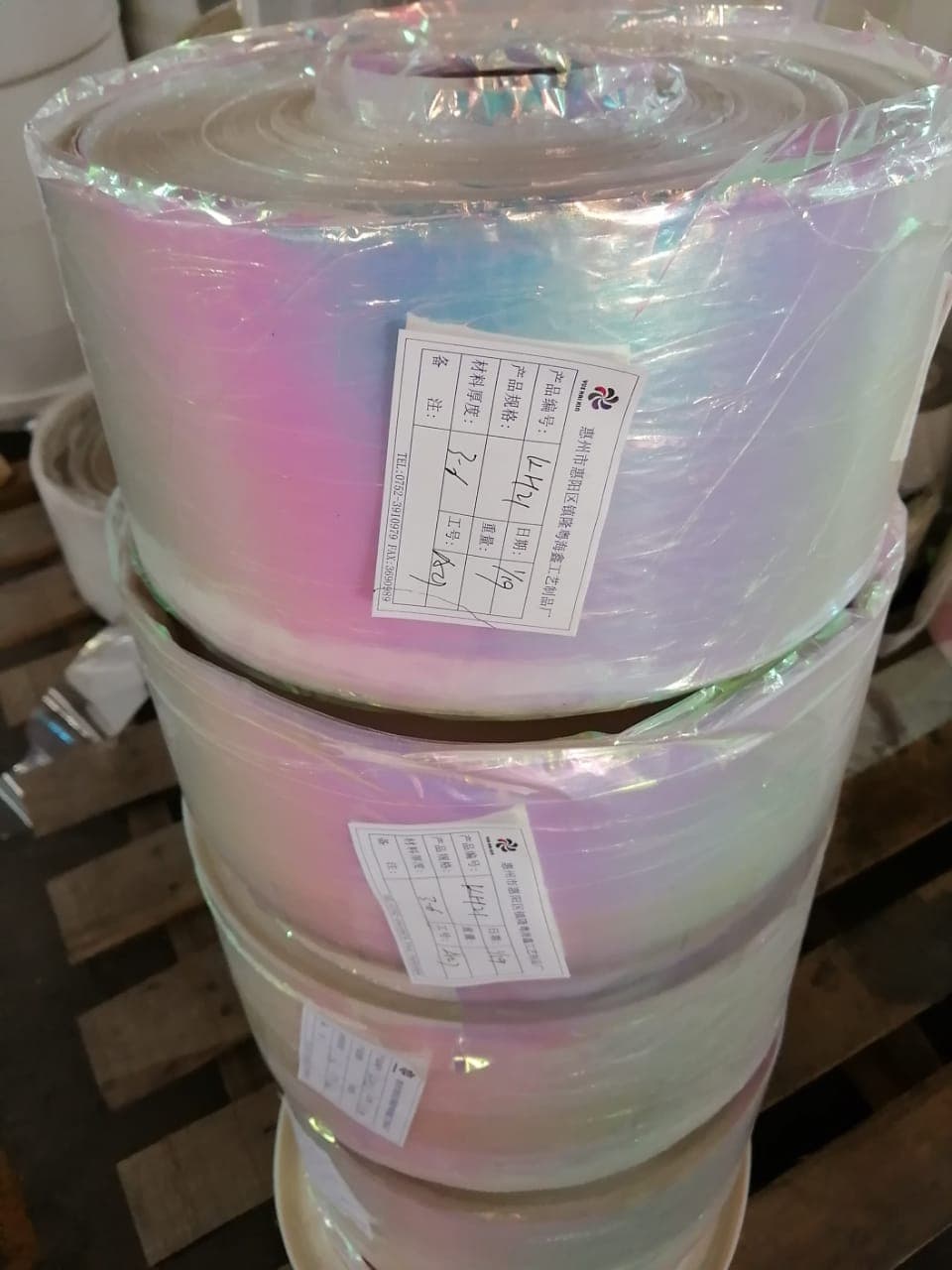
Whether formulating eyeshadow palettes, lip glosses, nail polishes, or compounding industrial epoxy resin, start with our 1kg low trial MOQ or complimentary 50g qualification sample with complete TDS and batch COA.