
Loading...
⚡ 1kg Low MOQ · Factory Direct Glitter & Mica⚡ Source Factory Direct Wholesale · Custom Loose Glitter & Mica Pigments · 1kg Low Trial MOQ · 48h Free 50g Lab Samples
mlmcustom@mlmcosmetic.com⚡ 1kg Low MOQ · Factory Direct Glitter & Mica⚡ Source Factory Direct Wholesale · Custom Loose Glitter & Mica Pigments · 1kg Low Trial MOQ · 48h Free 50g Lab Samples
mlmcustom@mlmcosmetic.comLoading...
Compare top 6 EU REACH compliant biodegradable glitter manufacturers. Technical audit covering ISO 14851 aquatic degradation, antimony-free testing, 1kg pilot MOQ, and plant cellulose sourcing.

Formulator Advisory & Pilot Testing Notice: Compliance with EU Regulation (EU) 2023/2055 (microplastic restriction) requires verifying aquatic biodegradation (ISO 14851 / OECD 301 B). Lot-specific technical documentation on request (TDS, SDS, and Agilent 7800 ICP-MS antimony-free COA) is provided for benchtop pilot qualification.
Shop-Floor Technical Briefing by the Engineering Team at MLM Cosmetic Pigments (Bao'an, Shenzhen)
When European cosmetic chemists and brand compliance managers contact our Shenzhen production facility, their urgent question is almost always the same: "Is your biodegradable glitter genuinely aquatic-biodegradable under ambient freshwater conditions, or is it another PLA blend that will fail EU REACH microparticle audits?"
With the phased enforcement of European Commission Regulation (EU) 2023/2055 (restricting synthetic polymer microparticles in leave-on and rinse-off cosmetics), conventional cross-linked polyester (BOPET) glitter is actively being phased out. However, the cosmetic supply chain is currently flooded with bioplastics that pose severe regulatory hazards:
The matrix below benchmarks 6 major global biodegradable glitter manufacturers across substrate chemistry, biodegradation standards, antimony control, trial MOQ, and sample turnaround.
| Supplier / Manufacturer | Facility Location | Primary Base Substrate | Biodegradation Standard & Testing | Antimony (Sb) & Heavy Metal Control | Minimum Order Quantity (MOQ) | Lab Sample Speed | Best For / Target Buyer |
|---|---|---|---|---|---|---|---|
| MLM Cosmetic Pigments (Shenzhen Meilianmei) | Shenzhen, China | Regenerated Plant Cellulose (Eucalyptus pulp; INCI: Rayon, Glycerin, Aqua, Urea) | Tested to ISO 14851, OECD 301 B, TÜV Austria OK biodegradable WATER benchmarks (>90% aquatic mineralisation in 28–56 days) | In-house Agilent 7800 ICP-MS; Antimony-free (Sb < 0.5 ppm); lot documentation on request | 1 kg (R&D Pilot Foil Pouch) / 25 kg (UN Drum) | 48 Hours (Complimentary 50g) | Direct cosmetic OEMs, contract labs, and scale brands needing low pilot MOQ & direct factory pricing |
| Ronald Britton Ltd. (Bioglitter) | Cheshire, UK | Modified Regenerated Cellulose (Eucalyptus pulp matrix) | TÜV Austria OK biodegradable WATER certified; ISO 14851 compliant; Flustix plastic-free | Antimony-free base; Third-party certified laboratory testing dossiers | 20–25 kg standard commercial drums (via distributor network) | 1–3 Weeks (subject to regional chemical distributor inventory) | Prestige multinational brands requiring legacy UK patent provenance with high budget tolerance |
| Sigmund Lindner GmbH (SiLiglit / SiLiglam) | Warmensteinach, Germany | Regenerated Cellulose & PLA dual product lines | TÜV OK biodegradable WATER (Pure series); EN 13432 industrial compost (PLA lines) | Strict European Pharmacopoeia compliance; Antimony control via accredited EU testing | 25 kg original fiber drums; select distributor repacks at 5 kg | 1–2 Weeks across EU; 2–4 Weeks export | Western European cosmetic labs, automotive, and technical coatings manufacturers |
| Glitterex Corporation (Elementals) | Cranford, NJ, USA | Cellulose & PLA composite systems | ASTM D6400, ISO 14855 (primarily composting focused); select aquatic lines | Standard US domestic screening; Heavy metal compliance documentation on request | 10–25 kg depending on catalog grade | 7–12 Business Days within North America | US domestic personal care contract fillers seeking localized domestic supply chain inventory |
| Crown Pigment Co., Ltd. | Changzhou, China | Plant Cellulose & Modified Polyesters | EN 13432 industrial compost; transitional testing for aquatic ISO 14851 | External testing reports (SGS / Intertek); low-antimony processing options | 25 kg standard export carton | 3–5 Business Days domestic China; 7–10 Days global air | Large-scale mass-market beauty brands seeking bulk parity pricing across standard lines |
| Meadowbrook Inventions | Bernardsville, NJ, USA | Cellulose formulations & conventional films | Variable by product line; commercial industrial composting focus | Third-party supplier COA passthrough; commercial heavy metal monitoring | 25 kg standard commercial drum | 10–15 Business Days | Decorative craft converters, industrial coatings, and mass-market specialty products |
Converting a cosmetic base from conventional BOPET flakes to regenerated cellulose glitter requires precise formulation adjustments. Cellulosic materials exhibit distinct chemical and mechanical properties on the bench:
Plant-based cellulose is inherently hydrophilic. Unlike PET, which remains chemically inert and hydrophobic, regenerated plant cellulose absorbs ambient moisture:
Biodegradable glitter must withstand typical cosmetic vehicle solvents without optical leaching or colorant migration. Prepare glass scintillation vials with 2.0g of candidate glitter flakes immersed in 10ml of the following solvent systems for 72 hours at 25°C and 45°C:
While polyester glitters withstand heating up to 220°C–250°C during hot-pour processing, regenerated cellulose exhibits a thermal degradation onset at approximately 160°C:
Regenerated cellulose carries a specific gravity of approximately 1.45 g/cm³ (compared to 1.38 g/cm³ for PET). To prevent particulate settling in clear water-based gels, body mists, and shower bases:
Direct Factory Floor: Bao'an District, Shenzhen, Guangdong, China
At MLM Cosmetic Pigments, we operate as an upstream raw material manufacturer and precision film converter. We do not produce or package finished consumer cosmetics. In our Shenzhen cleanroom slitting halls, converting regenerated plant cellulose requires entirely different mechanics than commodity polyester. Because regenerated cellulose lacks the thermoplastic elasticity of BOPET, conventional hardened steel gang-dies generate shear friction that causes edge-burring, micro-tearing, and thermal delamination. To eliminate this defect, we utilize precision rotary slitting lines equipped with sub-micron tungsten carbide tooling. Operating under controlled relative humidity (55% to 65% RH) and continuous static elimination, our slitting process produces crisp 90° hexagonal geometries without fringe curl or agglomeration.
Our biodegradable glitter uses eucalyptus hardwood pulp (INCI: Rayon / Cellulose Regenerated, Glycerin, Aqua, Urea) coated with cosmetic-grade mineral and food colorants. In aquatic respirometry testing conforming to ISO 14851 and OECD 301 B, the material achieves over 90% mineralisation in natural freshwater within 28 to 56 days. Our in-house Agilent 7800 ICP-MS analytical laboratory audits production lots to confirm antimony-free status (Sb < 0.5 ppm) and trace metal limits (Pb < 2 ppm, As < 2 ppm, Hg < 1 ppm, Cd < 1 ppm, documentation on request). We package in 1kg moisture-barrier aluminum foil pouches alongside 25kg UN-rated fiber drums, dispatching complimentary 50g qualification samples within 48 hours.
Ronald Britton represents the historical gold standard in biodegradable glitter technology through its Bioglitter Sparkle, Pure, and Holo platforms. Sourced from sustainable eucalyptus cellulose, Bioglitter Pure achieved an industry milestone by eliminating plastic coatings entirely and securing TÜV Austria OK biodegradable WATER certification. Their analytical documentation is recognized across European regulatory bodies. However, procurement teams face mandatory 20kg to 25kg drum minimums through regional chemical distributors, high price premiums per kilogram, and multi-week sampling lead times. For indie brands testing pilot runs, Ronald Britton's distributor channels present significant friction compared to MLM's direct factory 1kg pouches.
Operating from Germany, Sigmund Lindner (SiLi) is one of Europe's most established precision effect particle manufacturers. Their SiLiglam Pure Bio series utilizes cellulose matrices that comply with European cosmetic guidelines and TÜV aquatic biodegradation standards. Their engineering tolerances produce exceptionally clean flake cuts with minimal dust. However, SiLi operates primarily through tiered distributor networks with standard 25kg fiber drums. Lead times for non-stock shades frequently extend 3 to 5 weeks for export destinations. Formulators requiring rapid direct-factory color matching at primary manufacturing pricing will find MLM's responsive sampling and 1kg trial flexibility more practical for active formulation sprints.
Glitterex is a prominent US domestic manufacturer serving the personal care and cosmetic compounding sectors. Their Elementals line incorporates biodegradable cellulose and modified biopolymer substrates. While effective for North American contract manufacturers seeking localized domestic supply chain redundancy, formulators must review grade-specific technical datasheets carefully: certain Elementals SKUs are certified for ASTM D6400 / EN 13432 industrial composting rather than ISO 14851 ambient freshwater biodegradation. Sourcing minimums typically range from 10kg to 25kg, with technical documentation focused primarily on US MoCRA rather than full EU REACH Annex XVII dossiers.
Crown Pigment is a large-volume effect pigment and glitter slitter in East China. While historically focused on high-speed commodity PET glitter for craft and festive applications, Crown has expanded into plant-cellulose and modified polyester alternatives. Their volume capacity is substantial, and standard bulk pricing is economical. However, batch-to-batch consistency in cellulose slitting can vary, and lots require careful auditing to confirm that residual polyester coatings or antimony catalysts have been fully excluded. Standard packaging is 25kg export cartons, suited for high-volume decorative lines rather than prestige clean-beauty formulations requiring lot-specific ICP-MS digestion certificates.
As the historical pioneer of precision-cut commercial glitter, Meadowbrook produces extensive decorative flake options for industrial, textile, and cosmetic industries. Their biodegradable offerings explore cellulose formulations, though their commercial catalog remains predominantly weighted toward traditional metallic foils and polyester substrates. Sourcing minimums are oriented toward industrial bulk compounding (25kg drums), and laboratory sample acquisition requires established vendor accounts. Formulators focused on strict EU REACH microplastic audits benefit from specialized cleanroom cellulose processors like MLM.
Polylactic acid (PLA) is a bio-based aliphatic polyester synthesized via ring-opening polymerization of lactide. Under European Commission Regulation (EU) 2023/2055, microparticles are exempted only if they prove genuine, rapid mineralisation in open, unmanaged environmental compartments. PLA does not degrade in ambient freshwater or marine environments within the mandated testing window because its ester linkages require high temperatures (>58°C) to induce hydrolysis. Consequently, PLA is classified as a persistent synthetic polymer microparticle under EU environmental enforcement.
EN 13432 is an industrial packaging standard evaluating material disintegration within controlled industrial composting reactors operating at elevated temperatures (58°C ± 2°C) over 180 days. In contrast, ISO 14851 is an aquatic respirometry standard that measures the biochemical oxygen demand (BOD) of microparticles in ambient freshwater inocula maintained at 20°C to 25°C. To satisfy EU microplastic exemptions under Regulation (EU) 2023/2055, cosmetic ingredients must document biodegradation under aquatic frameworks (such as ISO 14851 or OECD 301 B/C/D/F), not industrial composting standards.
During the polycondensation synthesis of polyethylene terephthalate (PET) plastic film, antimony trioxide (Sb2O3) is routinely added as a catalyst at concentrations ranging from 150 to 300 ppm. Over time, residual antimony can migrate from the polymer matrix. When applied via cosmetic products to mucosal membranes or broken skin, elevated antimony exposure can provoke contact dermatitis, ocular irritation, and systemic heavy metal accumulation. MLM avoids this hazard entirely by manufacturing without heavy metal catalysts, producing a final cellulose flake with antimony concentrations below 0.5 ppm, as confirmed by our Agilent 7800 ICP-MS analytical suite.
Yes, but it requires specialized cross-linked surface protection. Uncoated cellulose absorbs ethyl acetate, butyl acetate, and nitrocellulose solvents, leading to particle curl or softening. When formulating for nail coatings, specify solvent-resistant, mineral-coated cellulose flake grades. These are treated with food-grade barrier coatings that withstand volatile organic solvent immersion without colorant bleed or loss of specular reflectivity.
Conduct a rapid, direct benchtop laboratory screening using Fourier-Transform Infrared Spectroscopy (FTIR). Regenerated cellulose displays a broad, dominant hydroxyl (-OH) stretching band between 3300 cm-1 and 3500 cm-1, accompanied by primary C-O-C glycosidic ether peaks at approximately 1020–1050 cm-1. Polyester (PET) exhibits an intense carbonyl ester peak (C=O) at 1715 cm-1 and aromatic ring vibrations at 1410 cm-1 and 725 cm-1, with an absence of prominent hydroxyl broad peaks. If an FTIR scan of your core substrate reveals a strong 1715 cm-1 carbonyl peak, the material contains synthetic polyester chemistry.
Transitioning high-volume cosmetic formulations away from synthetic polymer microplastics requires transparent manufacturing infrastructure, verifiable lot documentation, and rapid testing turnaround.
MLM Cosmetic Pigments (Shenzhen Meilianmei Technology Development Co., Ltd.) provides chemical engineering support and direct-from-factory pricing to contract cosmetic manufacturers, global beauty brands, and private-label laboratories worldwide.
Request Technical Sample Kits & Lot Dossiers:
To order complimentary 50g qualification sample sets (dispatched within 48 hours) or to schedule a direct consultation with our plant manufacturing engineers, contact our procurement department directly:
MLM Cosmetic Pigments (Shenzhen Meilianmei Technology Development Co., Ltd.) is an upstream manufacturer and precision converter of biodegradable plant-cellulose effect glitters and pearlescent pigments. The European Commission and national competent authorities do not certify individual pigment manufacturing facilities. Finished cosmetic compliance with EU Regulation (EU) 2023/2055 and Cosmetics Regulation (EC) No 1223/2009 remains the legal responsibility of the cosmetic brand's designated Responsible Person (RP). Lot-specific digestion certificates and environmental testing documentation are provided on request to support safety evaluations conducted through benchtop pilot testing.
Target Formulation Material:
EU REACH Microplastic-Free Biodegradable Glitter: Top 6 Compliant Manufacturers (2026 Audit)
Includes 50g sealed lab pouch, lot-specific COA, Technical Data Sheet (TDS), and ISO 22716 regulatory package.
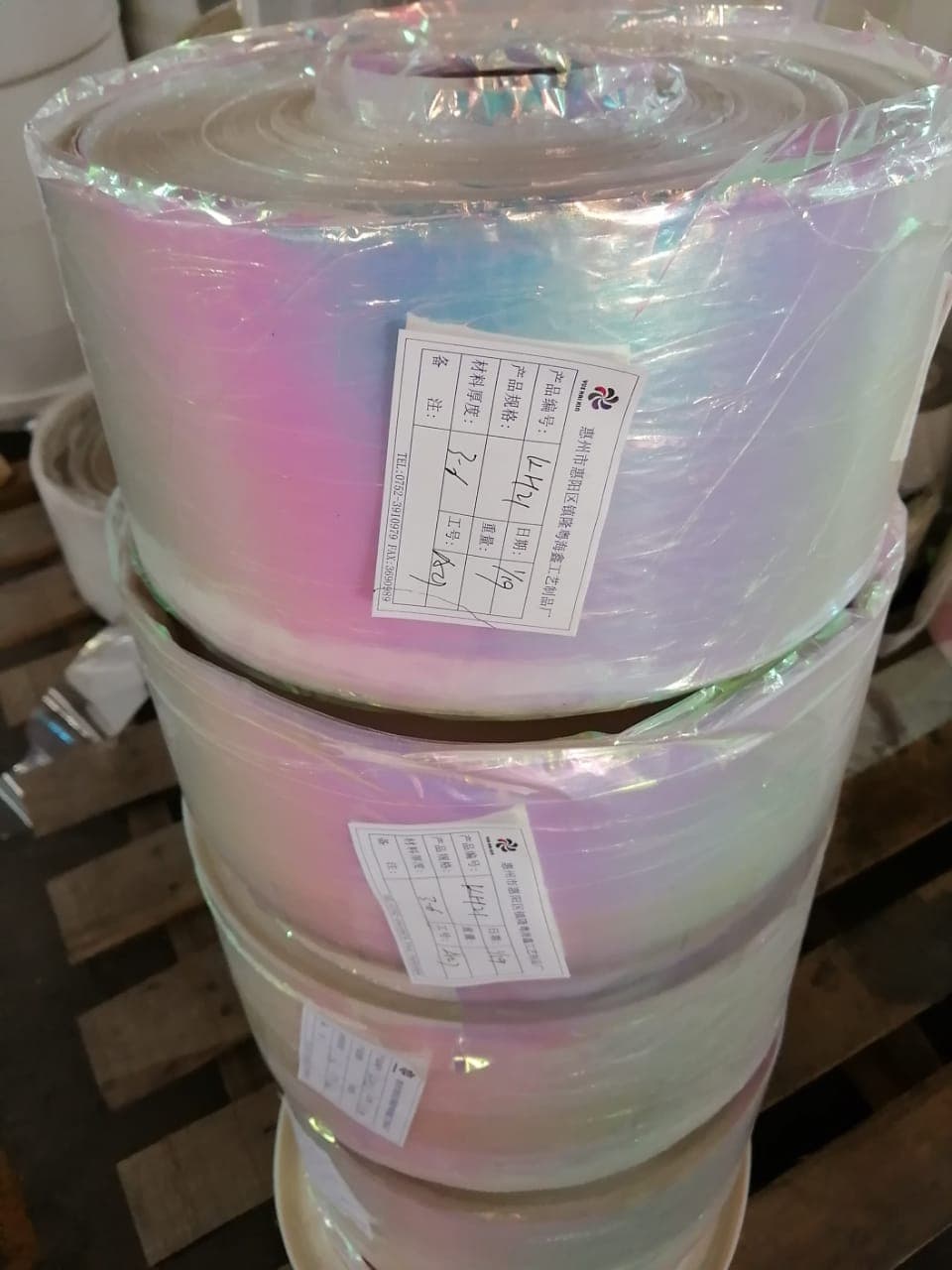
Whether formulating eyeshadow palettes, lip glosses, nail polishes, or compounding industrial epoxy resin, start with our 1kg low trial MOQ or complimentary 50g qualification sample with complete TDS and batch COA.