
Loading...
⚡ 1kg Low MOQ · Factory Direct Glitter & Mica⚡ Source Factory Direct Wholesale · Custom Loose Glitter & Mica Pigments · 1kg Low Trial MOQ · 48h Free 50g Lab Samples
mlmcustom@mlmcosmetic.com⚡ 1kg Low MOQ · Factory Direct Glitter & Mica⚡ Source Factory Direct Wholesale · Custom Loose Glitter & Mica Pigments · 1kg Low Trial MOQ · 48h Free 50g Lab Samples
mlmcustom@mlmcosmetic.comLoading...
Technical sourcing guide for FDA-reviewed color additives cosmetic mica: ICP-MS limits, solvent bleed data, substrate specs, and benchtop qualification protocols.
Author: Senior Chief Formulation Chemist & Materials Quality Director, MLM Cosmetic (Shenzhen, China)
If you are reading this, you have probably already dealt with one or more of the following in the last twelve months:
This document is written peer-to-peer. I run the formulation lab and materials quality program at MLM Cosmetic, an OEM cosmetics raw material factory in Shenzhen. We manufacture and supply cosmetic-grade mica powders, synthetic fluorphlogopite substrates, and coated effect pigments to brand formulators, contract manufacturers, and procurement teams across 40+ countries. I am going to walk through the substrate chemistry, the failure modes we have engineered around, the hard testing numbers we hold ourselves to, and a benchtop qualification protocol you can run before committing to a 25kg drum order.
No throat-clearing. Let us get into the material science.
Chemical formula: KAl₂(AlSi₃O₁₀)(OH)₂. Mined material. The issue is not the mica itself — muscovite is listed under 21 CFR 73.1496 (for drugs) and is generally recognized for cosmetic use. The issue is what comes with it. Natural mica deposits carry variable trace heavy metals depending on geological origin. Indian Jharkhand-origin mica has a different arsenic and lead fingerprint than Brazilian or Finnish sources. Every lot is a new conversation with your ICP-MS.
Natural mica also has inherent platelet thickness variability. You get a broader aspect ratio distribution, which means less predictable interference color in pearlescent applications and inconsistent light scattering when you are trying to hit a specific luster target in a pressed powder.
Chemical formula: KMg₃(AlSi₃O₁₀)F₂. Manufactured via high-temperature crystallization (typically above 1350°C). The fluorine substitution for hydroxyl groups is the key engineering advantage: it eliminates the water of crystallization that causes delamination and opacity loss in natural mica when processed above 350°C. For hot-pour lipstick bases running at 85–95°C, this is academic. For baked powder eyeshadows where the substrate sees 160–200°C in a radiant oven, it is the difference between a stable interference color and a dull, shifted mess.
Synthetic fluorphlogopite also gives you a cleaner heavy metal baseline. Our typical lot analysis on synthetic mica substrate before coating:
These are well inside the limits that matter for US FDA compliance and EU Regulation 1223/2009 Annex II restricted substance thresholds.
For cosmetic glitter specifically, the EU microplastic restriction under REACH Annex XVII Entry 68 (the so-called "microplastic ban," with transitional provisions running through October 2029 for rinse-off cosmetics) has forced a substrate reckoning. Traditional PET glitter — biaxially-oriented polyethylene terephthalate film, metallized with aluminium vapor deposition and coated with colorant layers — falls squarely within the microplastic definition when particles are between 1µm and 5mm.
MLM Cosmetic supplies both regenerated cellulose-based glitter (which is excluded from the microplastic definition as a natural polymer that has not been chemically modified beyond what occurs in nature — per the regulation's carve-out) and synthetic fluorphlogopite-based effect pigments as alternatives.
A practical note on BOPET film glitter that your procurement team should understand: the crystallinity of the biaxially-oriented film directly affects how cleanly it shears on a rotary slitting knife. Low-crystallinity PET film produces micro-burrs on the cut edge. Those burrs create two downstream problems — they act as nucleation points for dye migration in solvent-rich formulas, and they increase the effective surface area, which accelerates any leaching of the metallization layer. If you are still sourcing PET glitter for non-EU markets, ask your supplier for the film crystallinity spec (DSC method, target > 35% crystallinity) and inspect cut edges under 40x magnification. Burrs longer than 15µm are a reject criterion in our QC.
| Substrate | Continuous Use Temp | Onset of Optical Shift | Structural Failure |
|---|---|---|---|
| Natural muscovite mica (coated with TiO₂/Fe₂O₃) | ≤ 350°C | ~400°C (dehydroxylation begins) | > 500°C |
| Synthetic fluorphlogopite (coated) | ≤ 800°C | ~900°C | > 1000°C |
| Regenerated cellulose glitter | ≤ 150°C | ~170°C (yellowing) | > 200°C (charring) |
| BOPET (PET) glitter | ≤ 160°C | ~180°C (film distortion) | > 250°C (melting) |
For most cosmetic manufacturing, the practical concern is the 80–200°C window. If you are doing a baked gelatin-bound eyeshadow at 180°C for 20 minutes, regenerated cellulose glitter is borderline. You need to run a pilot bake and measure color shift with a spectrophotometer (we use a Konica Minolta CM-26dG, D65/10° observer) before and after. A ΔE*ab > 1.5 is our internal reject threshold for color-critical SKUs.
This is where most supplier relationships break down. A mica or glitter product that looks perfect in a dry powder compact will bleed colorant into a nail lacquer solvent system within days. The mechanism: the colorant layer (often an organic lake pigment or dye) has insufficient cross-link density or barrier coating to resist dissolution by butyl acetate (primary solvent, BP 126°C) and ethyl acetate (co-solvent, BP 77°C).
Our standard solvent bleed test protocol:
If your supplier cannot provide this data or does not understand why you are asking for it, that tells you something about their formulation engineering depth.
| Product Type | Recommended Substrate | Particle Size Range | Key Risk | MLM Cosmetic Product Line |
|---|---|---|---|---|
| Pressed powder eyeshadow | Synthetic fluorphlogopite, TiO₂/Fe₂O₃ coated | 10–60 µm | Electrostatic clumping in hopper; add 0.3–0.5% silica flow aid | Bulk Cosmetic Mica Powder |
| Nail lacquer (solvent-based) | Synthetic fluorphlogopite or BOPET with cross-linked colorant layer | 50–200 µm | Dye migration into BA/EA solvent blend; verify solvent bleed < 0.05 AU | Effect pigments with barrier coating |
| Lipstick (hot pour, 85–95°C) | Synthetic fluorphlogopite, borosilicate | 20–100 µm | Settling in wax phase during cooling; match density, pour at 82–85°C | Pearlescent mica series |
| Liquid foundation (O/W emulsion) | Synthetic fluorphlogopite, surface-treated (dimethicone or lecithin) | 5–30 µm | Flocculation in aqueous phase; verify HLB compatibility, Brookfield RVT viscosity change < 8% over 30 days at 40°C | Surface-treated mica grades |
| Body glitter (rinse-off, EU market) | Regenerated cellulose | 100–500 µm (hex cut) | Microplastic regulation compliance; confirm substrate exclusion documentation | Eco-glitter range |
| Bath bomb / soap embed | Natural mica (acceptable due to lower cost sensitivity) | 10–50 µm | Alkaline pH degradation of lake pigments; use only inorganic oxide colorants (iron oxides, ultramarines) | Natural mica color series |
Instrument: Agilent 7800 ICP-MS with collision/reaction cell (helium mode for polyatomic interference removal on As-75).
Digestion: Microwave-assisted acid digestion (HNO₃/HF/HCl, EPA Method 3052 adapted).
| Analyte | MLM Internal Spec | Typical Lot Result | US FDA / EU Guidance |
|---|---|---|---|
| Lead (Pb) | < 2 ppm | 0.3–0.8 ppm | FDA: 10 ppm (cosmetic lip products guidance); EU: varies by colorant listing |
| Arsenic (As) | < 1 ppm | 0.1–0.4 ppm | FDA: 3 ppm (color additive general); EU Annex II |
| Mercury (Hg) | < 1 ppm | < 0.05 ppm (LOQ) | FDA: 1 ppm (21 CFR 700.13) |
| Cadmium (Cd) | < 1 ppm | 0.05–0.2 ppm | EU Annex XVII entry 23 (restricted) |
| Antimony (Sb) | < 5 ppm | 0.5–2.0 ppm | Relevant for PET substrate leachables |
We report these values on every CoA. If your current supplier gives you a single "heavy metals: pass" line without individual analyte values and instrument identification, you do not have a CoA — you have a marketing document.
Every incoming substrate lot and every finished coated pigment lot gets an ATR-FTIR scan (Thermo Fisher Nicolet iS50, diamond ATR crystal, 4 cm⁻¹ resolution, 32 scans averaged). We maintain a reference library of > 200 spectra. The scan confirms substrate identity (muscovite vs. synthetic fluorphlogopite vs. regenerated cellulose — each has a distinct spectral fingerprint in the 900–1100 cm⁻¹ Si-O stretching region and the 3600–3700 cm⁻¹ O-H region for natural mica) and detects coating anomalies.
This catches substitution fraud. We have seen suppliers ship natural mica labeled as synthetic fluorphlogopite. The FTIR does not lie — natural muscovite shows a sharp O-H stretch at ~3628 cm⁻¹ that synthetic fluorphlogopite (fluorine-substituted) does not exhibit.
For BOPET and regenerated cellulose film substrates, we measure haze per ASTM D1003 Procedure A (using a BYK haze-gard i). Target: < 5% haze for metallized glitter, < 15% for transparent-tinted glitter. Elevated haze indicates surface defects, incomplete metallization, or moisture ingress during storage.
Before scaling to a 25kg drum order, run these three tests on a 1kg sample. We ship 1kg pilot trial quantities in vacuum-sealed aluminium foil barrier bags (measured MVTR < 0.5 g/m²/day per ASTM F1249) to prevent moisture pickup during transit.
Disperse the effect pigment at your target loading (typically 2–15% w/w depending on product type) into your base formula. Measure viscosity with a Brookfield RVT (spindle and speed matched to your SOP — record both). Compare against your control base without pigment.
Pass criterion: Viscosity change < ±12% from control at the same spindle/speed/temperature. A larger shift indicates particle-matrix incompatibility, often due to surface treatment mismatch (hydrophilic pigment in a silicone-heavy base, or vice versa).
For anhydrous and solvent-based systems (nail lacquer, lip gloss, liquid lipstick): perform the 72-hour butyl acetate immersion test described above. For emulsion systems: run a 4-week accelerated stability at 40°C/75% RH and 4°C cycling (1 week each, alternating). Pull samples at T=0, T=2 weeks, T=4 weeks. Measure color (spectrophotometer, ΔE*ab vs. T=0) and check for phase separation, sedimentation, or color bleed into the continuous phase.
Pass criterion: ΔE*ab < 2.0 at T=4 weeks. No visible dye migration. No hard sedimentation cake (a soft sediment that redisperses with gentle shaking is acceptable for some product types).
Send a retained sample from the same 1kg lot to an independent ISO 17025-accredited lab. Request ICP-MS analysis for Pb, As, Hg, Cd, Sb, Cr, Ni, Ba. Compare results against the CoA we provided. Agreement within ±30% for trace-level analytes (< 2 ppm) is normal instrument-to-instrument variation. Disagreement beyond that warrants a conversation.
We encourage this. A supplier who discourages independent verification is a supplier with something to hide.
Let me be direct about scope of responsibility, because this is where the industry gets sloppy.
What MLM Cosmetic provides:
What MLM Cosmetic does not do:
| Parameter | Pilot Trial | Production |
|---|---|---|
| MOQ | 1 kg | 25 kg |
| Packaging | Vacuum-sealed aluminium foil barrier bag, MVTR < 0.5 g/m²/day | UN-rated fibre drum, PE liner, silica gel desiccant sachet |
| Lead time (ex-works Shenzhen) | 3–5 business days | 10–15 business days (standard); 5–7 days (stocked shades) |
| Documentation included | CoA (ICP-MS, PSD, color), TDS, SDS | CoA, TDS, SDS, FTIR scan, lot-specific regulatory compliance statement |
| Shelf life | 24 months from manufacture (sealed, < 25°C, < 60% RH) | 24 months |
Our full product catalog for Bulk Cosmetic Mica Powder is available on our website. Technical consultation is available before you order — we would rather spend 30 minutes on a call discussing your formula matrix and application method than ship you a material that does not work in your system.
Three things I want to leave you with, from fifteen years of running pigment QC in this factory:
Electrostatic clumping is a process problem, not a material defect — usually. If your mica is clumping in the powder hopper, check your ambient humidity first (target 40–55% RH in the press room). Below 30% RH, triboelectric charging on synthetic fluorphlogopite platelets becomes significant. A grounded stainless steel hopper and 0.3% fumed silica (Aerosil 200 or equivalent) in the blend will solve 90% of cases.
Ask for the digestion method, not just the ICP-MS result. Incomplete acid digestion — especially skipping HF for silicate matrices — will underreport lead and arsenic because they remain locked in the silicate lattice. If your supplier's CoA shows Pb at "< 0.1 ppm" on a natural mica, and they used a nitric-only digestion, that number is fiction. Demand the digestion protocol.
Color is physics, not magic. The interference color of a mica-based pearlescent pigment is determined by the optical thickness of the metal oxide coating layer (TiO₂, Fe₂O₃, or combinations). A 5nm variation in coating thickness shifts the reflected color. If you are seeing lot-to-lot color inconsistency from a supplier, they have a coating process control problem. Ask for their ΔEab lot-to-lot specification. If they do not have one, find a supplier who does. Ours is ΔEab < 1.0 within the same shade code.
MLM Cosmetic — OEM Cosmetics Raw Material Factory, Shenzhen, China Technical inquiries: mlmcosmetic.com Product catalog: Bulk Cosmetic Mica Powder
Disclaimer: Technical data and regulatory references provided herein (including EU Regulation 2023/2055, EU Regulation 1223/2009, and US FDA MoCRA) are based on current legislative texts and laboratory test parameters for raw materials manufactured by MLM Cosmetic. This documentation is intended solely to support independent brand formulators and Responsible Persons in compiling their Cosmetic Product Safety Reports (CPSR) and product filings. Final formulation compliance, toxicological risk assessment, and finished product registration remain the responsibility of the brand owner.
Looking for custom formulation or laboratory testing samples? Contact our MLM Cosmetic technical engineering team or request a free sample kit directly.
Target Formulation Material:
FDA Color Additive Mica Supplier: Technical Sourcing Guide
Includes 50g sealed lab pouch, lot-specific COA, Technical Data Sheet (TDS), and ISO 22716 regulatory package.
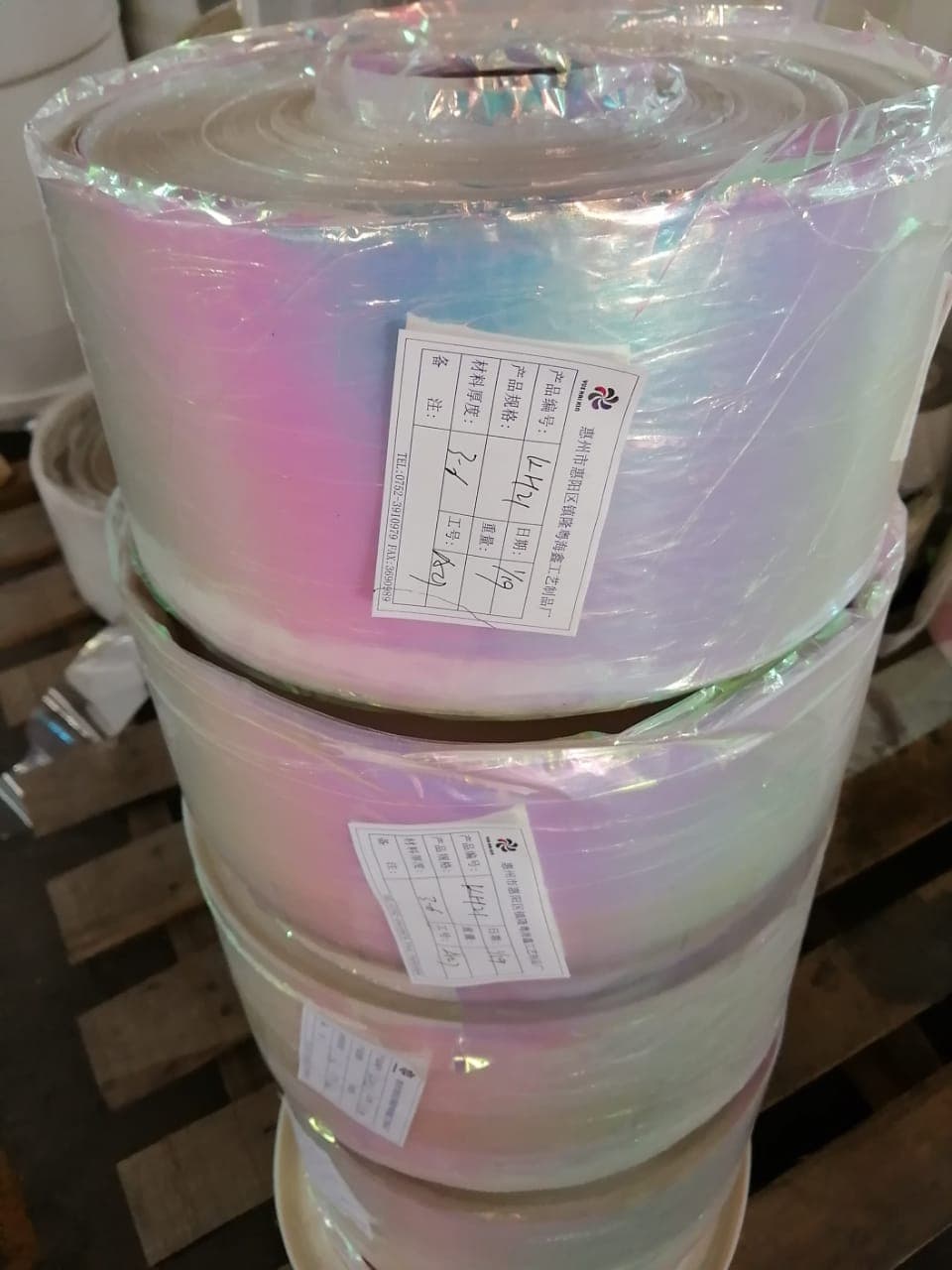
Whether formulating eyeshadow palettes, lip glosses, nail polishes, or compounding industrial epoxy resin, start with our 1kg low trial MOQ or complimentary 50g qualification sample with complete TDS and batch COA.