
Loading...
⚡ 1kg Low MOQ · Factory Direct Glitter & Mica⚡ Source Factory Direct Wholesale · Custom Loose Glitter & Mica Pigments · 1kg Low Trial MOQ · 48h Free 50g Lab Samples
mlmcustom@mlmcosmetic.com⚡ 1kg Low MOQ · Factory Direct Glitter & Mica⚡ Source Factory Direct Wholesale · Custom Loose Glitter & Mica Pigments · 1kg Low Trial MOQ · 48h Free 50g Lab Samples
mlmcustom@mlmcosmetic.comLoading...
Technical sourcing guide for eye-safe cosmetic glitter and mica pigments. Covers corneal safety, FDA 21 CFR 73/74 colorant listings, 1kg pilot MOQ, and ICP-MS testing.

Formulator Advisory & Pilot Testing Notice: Effect pigments intended for the eye area (eyeshadows, eyeliners, and mascara toppers) must utilize colorants listed for eye application under FDA 21 CFR § 73/74 and EU Regulation (EC) No 1223/2009 Annex IV. MLM Cosmetic Pigments is an upstream raw material manufacturer; US FDA and global agencies do not approve raw material factories. Finished cosmetic compliance remains the brand owner's legal responsibility. Lot-specific documentation on request (TDS, SDS, corneal edge safety profile, and Agilent 7800 ICP-MS heavy metal COA) is provided for benchtop pilot testing.
From the slitting halls and cleanroom coating bays of our Bao'an facility in Shenzhen, we evaluate eye cosmetics through the physics of ocular tribology and regulatory toxicology. Ocular cosmetics—pressed eyeshadows, cream pigments, loose toppers, and liquid suspensions—represent the most litigious formulation category in color cosmetics. Sourcing decisions directly dictate product liability, batch yields, and compliance viability.
Formulators engineering eye-area products face three systemic points of failure:
Corneal Micro-Abrasion via Ragged Edge Geometries: Standard craft or industrial-grade glitters are stamped using conventional carbon steel guillotine blades or coarse punch dies. Under cyclical shear, blade micro-notching transfers ragged burrs, hooked corners ("flags"), and jagged stress fractures to the flake edges. When placed adjacent to the palpebral conjunctiva, a 25 µm thick, rigid, irregular flake acts as a microscopic scalpel during blinking (which exerts approximately 10 to 15 mmHg of shear pressure over the cornea). MLM minimizes this mechanical shear risk by utilizing ultra-sharp, micro-honed tungsten carbide rotary cylinder dies operating under closed-loop web tension. This process cuts precision hexagonal geometries (0.004" / 100 µm and 0.008" / 200 µm) from ultra-thin 12–16 µm biaxially oriented polyethylene terephthalate (PET) or synthetic fluorphlogopite matrices. The resulting flake features a passivated 90° cut profile with a microscopic dust fraction (<30 µm) controlled below 0.5%, allowing the substrate to flex elastically across the tear film without scratching corneal epithelium.
The 21 CFR § 73/74 vs. EU Annex IV Regulatory Trap: Cosmetic brands frequently fail regulatory audits when cross-formulating eye palettes for transatlantic distribution. Under the US Federal Food, Drug, and Cosmetic Act (FD&C Act), colorants permitted in lip or face formulations are strictly prohibited from periocular applications. D&C Red No. 6 (CI 15850), D&C Red No. 7 (CI 15850:1), D&C Red No. 27 (CI 45410:1), D&C Red No. 28 (CI 45410), and D&C Orange No. 5 (CI 45370) are strictly banned from the eye area under 21 CFR § 74 Subpart C. Marketing a "pressed pigment" palette containing these lakes without explicitly labeling it as "not for use in the immediate eye area" exposes the brand to FDA Warning Letters, port-of-entry import detentions, and MoCRA adverse event liability. For compliant eye-area formulations, formulators must formulate exclusively with permitted inorganic pigments and lakes, including Ultramarines (CI 77007), Chromium Oxide Greens (CI 77288), Ferric Ferrocyanide (CI 77510), Iron Oxides (CI 77491, CI 77492, CI 77499), Titanium Dioxide (CI 77891), Manganese Violet (CI 77742), and specifically listed aluminum lakes.
Multinational Broker MOQs and Supply Bottlenecks: Western chemical brokers routinely enforce 20 kg to 25 kg single-drum Minimum Order Quantities (MOQs) with 12 to 16-week lead times. For an R&D team evaluating twelve colorways for a seasonal pan launch, committing to 300 kg of pigment inventory before benchtop pressability trials are complete is economically prohibitive. MLM resolves this friction by operating as a direct primary manufacturer: we package pilot-scale 1 kg moisture-barrier aluminum foil pouches, backed by 48-hour global air dispatch of 50 g qualification sample kits with lot-specific analytical documentation.
| Supplier / Location | Primary Substrate & Technology | Eye-Area Geometric Safety (Cut & Burr Profile) | US FDA & EU Annex IV Colorant Compliance | Heavy Metal Purity Protocol | Minimum Order Quantity (MOQ) | Lab Sample Lead Time | Best For / Target Buyer |
|---|---|---|---|---|---|---|---|
| MLM Cosmetic Pigments<br>(Shenzhen, China) | Thin-gauge cosmetic PET (12–16 µm) & Synthetic Fluorphlogopite (10–60 µm) vacuum-coated | Hexagonal precision cut (0.004"/100 µm, 0.008"/200 µm). Tungsten carbide rotary die cut. Passivated edge profile; dust (<30 µm) <0.5%. | Lot-segregated line runs: Formulated with inorganic colorants listed under 21 CFR § 73/74 (Ultramarines, Ferric Ferrocyanide, Iron Oxides) & EU Annex IV, documentation on request. | In-house Agilent 7800 ICP-MS testing (documentation on request): Pb <2 ppm, As <2 ppm, Hg <1 ppm, Cd <1 ppm, Sb <0.5 ppm. | 1 kg (R&D aluminum foil barrier pouches) | 48 Hours (Complimentary 50g benchtop kits) | Cosmetic CMOs, contract fillers, and indie brands needing agile pilot qualification and clean eye compliance. |
| Sigmund Lindner GmbH / SiLiglam<br>(Warmensteinach, Germany) | High-grade PET, Polyurethane, and Glass flake carriers; multi-layer optical sputtering | Precision mechanical slitting; controlled hexagonal and diamond cuts. Excellent edge profile, low residual fines. | Dedicated cosmetic lines (SiLiglam Cosmetic). Strict compliance with EU Annex IV and US FDA 21 CFR cosmetics listings. | Cleanroom analysis (documentation on request): Pb <2 ppm, As <2 ppm, Hg <1 ppm, heavy metal migration limits per DIN EN 71-3. | 20 kg – 25 kg (Standard factory export drums) | 2–3 Weeks (Via regional chemical distributor networks) | Tier-1 European multinational brands requiring European supply provenance and high-tonnage stability. |
| Glitterex Corporation<br>(Cranford, NJ, USA) | Deep-drawn PET vacuum-metallized and coated with proprietary cosmetic crosslinked resins | Precision micro-cut hexagonal and square flakes (down to 0.002"/50 µm). Excellent burr mitigation. | Cosmetic grades formulated with colorants listed under 21 CFR § 73/74, documentation on request. | Rigorous ICP-OES validation: Pb <10 ppm, As <2 ppm, Hg <1 ppm, total heavy metals within US Pharmacopeia specs. | 5 kg – 10 kg (Standard US warehouse lot packaging) | 5–10 Business Days (Domestic US shipping routes) | North American contract packagers requiring domestic US regulatory documentation and high-shear stability. |
| Ronald Britton Ltd. / Bioglitter<br>(Manchester, UK) | Regenerated modified plant cellulose (eucalyptus-derived) matrix; micro-embossed | Hexagonal rotary precision cut. Softer edge compliance due to cellulose matrix yielding under shear. | Cosmetic-grade formulations evaluated against EU 1223/2009, testing dossiers on request, FDA eye-safe inorganic coloration options available. | Standard atomic absorption spectroscopy: Pb <2 ppm, As <2 ppm, Cd <1 ppm, complies with EN 71-3 limits. | 10 kg – 25 kg (Standard export carton configurations) | 2–4 Weeks (Subject to regional distributor allocations) | Clean-label and eco-conscious brands requiring microplastic-free declarations and evaluated aquatic biodegradability, documentation on request. |
| CQV Co., Ltd.<br>(Jincheon, South Korea) | Synthetic Fluorphlogopite and Alumina-based pearlescent effect pigments | Natural cleavage plate geometry (not cut film). Optimized aspect ratio; edges passivated by liquid polishing. | Documented compliance: Global colorant listings across US, EU, China (CSAR), and Japan (MHLW). | High-resolution ICP-MS: Lot-specific Pb <1 ppm, As <1 ppm, Sb <0.5 ppm. Ultra-low trace elements. | 15 kg – 25 kg (Rigid fiber export drums) | 1–2 Weeks (Through authorized distribution channels) | Premium prestige eye cosmetic lines demanding high-luster synthetic crystal pearlescent bases and silky skin feel. |
| Crown Pigment Co., Ltd.<br>(Hangzhou, China) | Biaxially oriented PET film and coated mica flakes for industrial and cosmetic applications | Standard rotary shear slitting; variable edge quality depending on industrial vs. cosmetic batch selection. | Dual-catalog offerings: Formulator must explicitly request cosmetic batch codes to avoid industrial dyes. | Batch testing upon commercial confirmation: General compliance with GB 7916 / cosmetic safety specs. | 25 kg (Heavy fiber export drums) | 1–2 Weeks (Standard freight forwarder sample lead time) | High-volume budget cosmetic manufacturers prioritizing raw cost per kilogram over low-MOQ pilot flexibility. |
Transitioning raw effect pigments into a high-performance pressed pan or liquid liner formulation requires disciplined physical and mechanical validation. Below are the engineering protocols implemented at MLM's application development laboratories.
Before charging bulk flakes into mechanical powder blenders, the formulation chemist must qualify edge morphology under optical microscopy. Ragged edges tear eye primers, cause flake fallout, and abrade the corneal surface.
High-load glitter and pearlescent mica formulations lack the intrinsic dry compressibility of sub-micron talc or sericite. When compounding flake sizes of 100 µm to 200 µm, an engineered liquid-to-dry binder ratio is essential to prevent drop fracture while mitigating pan "glazing" (the formation of a hard, hydrophobic crust from excess oil pickup).
Suspending 100 µm or 200 µm flakes in low-viscosity liquid eyeliner bases introduces significant challenges: Stokes' law dictates rapid gravitational settling, and flexible eyelids introduce high shear rates during wear, which can cause flake migration into the conjunctival sac.
Plant Director Narrative: "We cut and coat directly from our cleanroom facility in Shenzhen's Bao'an District. We deliberately configured our production around high-precision rotary tungsten cylinder dies rather than reciprocating punch presses. This mechanical setup allows us to monitor web micro-tension, ensuring that every 100 µm and 200 µm hexagonal flake exhibits square, burr-free edges under optical microscopy.
"On the regulatory side, we segregate production lines. Substrates coated with CI 77007 (Ultramarines), CI 77288 (Chromium Oxide), or CI 77510 (Ferric Ferrocyanide) are processed on isolated slitting lines, preventing cross-contamination from lip-targeted Red No. 6/7/27/28 lakes.
"We analyze every production batch using an in-house Agilent 7800 ICP-MS system: Lead (Pb < 2 ppm), Arsenic (As < 2 ppm), Mercury (Hg < 1 ppm), Cadmium (Cd < 1 ppm), and Antimony (Sb < 0.5 ppm), accompanied by hexavalent chromium screening. Because we operate the plant, we do not require cosmetic formulators to buy 25 kg drums just to validate a pressed pan formulation. We package 1 kg R&D moisture-barrier aluminum foil pouches, eliminate distributor markups, and ship 50 g lab qualification samples within 48 hours."
Sigmund Lindner operates an advanced, highly automated manufacturing footprint in Warmensteinach, Germany. The company is recognized globally for its SiLiglam range, which includes glass flake (borosilicate), high-grade polyester, and proprietary polyurethane carriers. Their precision slitting technology produces exceptionally uniform edge profiles with virtually no detectable micro-burrs, making their glitters widely accepted for luxury eye-area cosmetic lines.
From a regulatory stance, SiLiglam represents an industry benchmark: they offer meticulously documented compliance packages satisfying EU Regulation 1223/2009 Annex IV, US FDA 21 CFR standards, and DIN EN 71-3 toy safety heavy metal limits. However, sourcing directly from Sigmund Lindner requires substantial volume commitments. Minimum Order Quantities are typically enforced at 20 kg to 25 kg per SKU, and supply is usually channeled through territorial chemical distributors. This introduces distributor markups and extends lab sampling lead times to 2 to 3 weeks, posing operational hurdles for agile indie brands running iterative R&D cycles.
Based in Cranford, New Jersey, Glitterex is a long-standing domestic manufacturer within the North American effect pigment landscape. Their cosmetic product lines utilize proprietary, crosslinked specialty coatings layered over vacuum-metallized PET. These formulations are engineered to withstand high-shear cosmetic processing, hot-pour applications, and aggressive solvent systems without matrix bleed or interlayer delamination.
Their cutting mechanics are optimized down to micro-sizes (0.002" / 50 µm to 0.004" / 100 µm), delivering high edge consistency and minimal fines. For regulatory compliance, Glitterex provides solid documentation aligned with US 21 CFR § 70/72/73/74 colorant guidelines. However, domestic lead times for custom or made-to-order lots can range from 4 to 8 weeks, and standard industrial packaging options often mandate 5 kg to 10 kg minimums. These minimums can complicate early-stage benchtop trials for small-scale contract manufacturers seeking pilot flexibility.
Operating out of Manchester, Ronald Britton has established a clear technical niche through the commercialization of Bioglitter. Rather than utilizing non-degradable synthetic PET films, their carrier matrix is derived from plant-based regenerated eucalyptus cellulose. This structural composition fundamentally alters ocular friction: the natural modulus of the modified cellulose matrix offers low mechanical hardness, which yields under shear and reduces edge-impact risks.
Their eye-safe product tiers deploy specific cosmetic coatings and inorganic pigments compliant with EU Annex IV and US FDA requirements for the orbital zone. A primary technical consideration for formulators is solvent compatibility: cellulose-based matrices are more hydrophilic than PET, requiring careful formulation in water-rich systems (such as liquid eyeliners) to avoid film softening or premature swelling. Bioglitter carries a cost premium reflecting its specialized biopolymer manufacturing process. Standard orders are managed through international distributors, with MOQs commonly set at 10 kg to 25 kg.
CQV, located in Jincheon, South Korea, is an advanced manufacturer of synthetic effect pearlescent pigments. Rather than mechanical film slitting, CQV specializes in synthetic fluorphlogopite (synthetic mica) substrate synthesis and precision metal oxide nanocoating. Their substrates feature smooth crystal cleavage faces that are chemically passivated, eliminating the burr and flag concerns inherent to poorly slit polymer films. The resulting skin feel is soft and uniform, well-suited for high-end pressed eyeshadow bases and cream pots.
CQV maintains an exhaustive analytical regimen using high-resolution ICP-MS, routinely reporting trace heavy metal thresholds well below 1 ppm across all primary toxicological targets. Their color portfolios are aligned with Korean MFDS, US FDA, and EU Annex IV specifications. Sourcing limitations center on distribution channel controls: procurement is typically routed through designated national distributors enforcing rigid drum-level MOQs (15 kg to 25 kg), which can slow the initial screening of experimental color pathways during concept phases.
Hangzhou-based Crown Pigment operates large-scale production assets dedicated to pearlescent pigments, organic colorants, and industrial/cosmetic effect flakes. Their pricing structure is competitive, making them a common supplier for high-volume, cost-sensitive private-label palette fillers operating in domestic and regional export markets.
From a technical perspective, formulators must exercise diligence when qualifying lots. Crown maintains both industrial-grade and cosmetic-grade manufacturing streams. Procurement teams must verify that material originates from dedicated cosmetic lines to avoid contamination from uncertified industrial dyes (e.g., standard Rhodamine or textile-grade metallization resins) that violate US FDA 21 CFR § 74 and EU Annex IV limits. While high-volume batch consistency meets general Chinese cosmetic requirements, small-batch flexibility remains low, with export orders conventionally requiring 25 kg fiber drums and variable sample delivery timelines.
There is no single statutory global particle size threshold established by the US FDA or EU authorities defining "eye safety." However, physical ocular safety is determined by flake diameter, thickness, and material hardness. The industry standard for eye-safe PET flakes is 0.004" (100 µm) and 0.008" (200 µm) cut across an ultra-thin 12–16 µm substrate gauge. Particles exceeding 0.015" (approximately 380 µm to 400 µm), such as conventional 0.040" craft glitters, cannot flex within the tear film meniscus, which is approximately 7 µm to 10 µm thick. When an eyelid blinks across a rigid 400 µm flake, the mechanical shear concentrates on the flake perimeter, causing micro-scratches in the corneal epithelium. Conversely, a 12 µm thick, 100 µm hexagonal flake flexes under blink dynamics, moving over the tear film without scratching the corneal surface, provided the edges are cut clean and burr-free.
Cross-reference the prospective formulation's International Nomenclature of Cosmetic Ingredients (INCI) listing against US 21 CFR Parts 73 and 74, and EU Regulation (EC) No 1223/2009 Annex IV. Under FDA rules, Carmine (CI 75470) is certified for eye-area use under 21 CFR § 73.2087, but it must be clearly labeled due to allergen considerations. Conversely, lakes such as D&C Red No. 6 Lake, D&C Red No. 7 Lake, and D&C Red No. 27/28 Lake are explicitly excluded from eye applications under their respective CFR listings. In the EU, these lakes are permitted across all cosmetic categories under Annex IV with specified purity criteria. If engineering a single formulation for global release, formulators must avoid these D&C red lakes, relying instead on Ferric Ferrocyanide (CI 77510), Ultramarines (CI 77007), Iron Oxides (CI 77491), Manganese Violet (CI 77742), or specifically permitted FD&C Blue No. 1 Aluminum Lake to ensure compliance on both continents.
Glazing occurs through two primary mechanisms: capillary saturation and lipid re-crystallization under shearing pressure. During application, when a fingertip or sebum-saturated natural hair brush presses into the pressed powder cake, fluid shear transfers human lipids (sebum) into the inter-particle pores of the pressed pan. If the formulation already contains an excessive liquid binder fraction (>8% w/w) or uses polar lipids with high surface energy, the pigment's capillary action draws the liquid phase to the cake surface. This fully wets the metallic or synthetic mica flakes, forming a sealed, hydrophobic, reflective matrix that prevents dry powder pick-up. Formulators can resolve this by adding high-oil-absorption spherical silica (porous silica beads) at 2% to 4%, lowering total liquid ester loading, and balancing the dry binder system with Magnesium Myristate to maintain internal cake porosity.
Traditional toxicological extraction protocols (such as ASTM F963 or EN 71-3 methods) use 0.1 M or 0.07 M hydrochloric acid (HCl) leaching to simulate bioaccessible gastric heavy metal extraction. While useful for ingestion scenarios, it is inadequate for modern cosmetic safety dossiers required under MoCRA and strict retail compliance standards. Coated effect pigments, synthetic fluorphlogopites, and vacuum-metallized PET films encapsulate heavy metal trace impurities (Lead, Arsenic, Cadmium, Antimony) within insoluble silicate, metal oxide (TiO2, Fe2O3), or polyurethane structural layers. Incomplete acid leaching leaves these trace elements unquantified. A closed-vessel microwave digestion using concentrated hydrofluoric (HF) and nitric (HNO3) acids breaks down the refractory matrix entirely, bringing high-precision of the elemental heavy metal load into solution. This ensures precise quantification via ICP-MS down to parts-per-billion (ppb) detection limits, providing defensible, auditable safety substantiation dossiers.
Synthetic fluorphlogopite (synthetic mica) consists of an inorganic fluorinated potassium magnesium silicate lattice that is intrinsically hydrophilic, non-swelling, and structurally rigid. When dispersed in water-based liquid eyeliner bases, it can be wet out rapidly using standard non-ionic or amphoteric surfactants without altering product rheology. However, its high specific gravity (approximately 2.7 to 3.0 g/cm³) drives high sedimentation rates, demanding robust yield-stress rheological thickeners (such as xanthan gum or crosslinked acrylates) to sustain shelf stability. Conversely, PET flakes feature a lower density (approximately 1.38 to 1.40 g/cm³), requiring lower yield stress to suspend. However, PET is hydrophobic; it requires balanced wetting agents to prevent particle agglomeration at the meniscus, and it requires compatible film formers to prevent flake detachment during cosmetic wear cycles.
MLM Cosmetic Pigments eliminates the supply chain intermediaries, high brokerage markups, and multi-week administrative delays typical of traditional chemical distribution channels. We invite contract packagers, color cosmetic formulators, and procurement managers to qualify our eye-safe effect pigments directly from our primary manufacturing facility in Bao'an, Shenzhen:
Direct Factory Engineering Procurement Channel:
Contact our Technical Applications Engineering and Regulatory Affairs team at mlmcustom@mlmcosmetic.com to initiate your pilot evaluation or request custom substrate slitting parameters.
MLM Cosmetic Pigments (Shenzhen Meilianmei Technology Development Co., Ltd.) is an upstream manufacturer, precision coater, and rotary slitter of cosmetic effect pigments, eye-safe glitters, and synthetic fluorphlogopite powders. The US FDA and global regulatory authorities do not certify or approve raw material chemical plants or finished cosmetic formulations. Finished product regulatory compliance (including US MoCRA safety substantiation, FDA 21 CFR § 73/74 colorant listings, and EU Regulation (EC) No 1223/2009) remains the legal responsibility of the cosmetic brand owner. Full technical documentation dossiers, particle size distributions, and in-house ICP-MS heavy metal reports are provided on request to support safety evaluations conducted through benchtop pilot qualification.
Target Formulation Material:
Peri-Orbital Cosmetic Glitter & Mica Powder: US FDA MoCRA & EU Annex IV Qualification Guide (2026 Sourcing Audit)
Includes 50g sealed lab pouch, lot-specific COA, Technical Data Sheet (TDS), and ISO 22716 regulatory package.
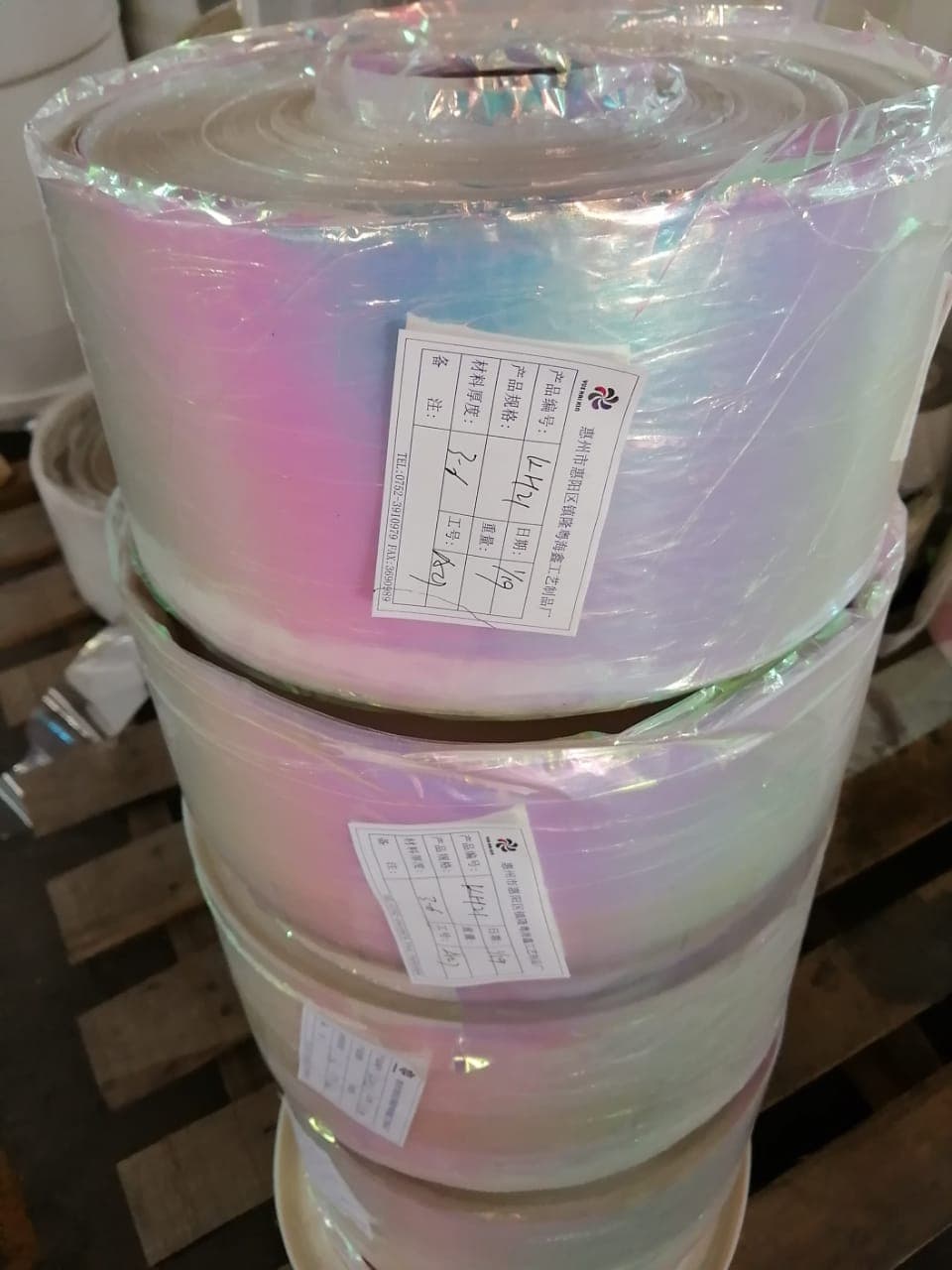
Whether formulating eyeshadow palettes, lip glosses, nail polishes, or compounding industrial epoxy resin, start with our 1kg low trial MOQ or complimentary 50g qualification sample with complete TDS and batch COA.