
Loading...
⚡ 1kg Low MOQ · Factory Direct Glitter & Mica⚡ Source Factory Direct Wholesale · Custom Loose Glitter & Mica Pigments · 1kg Low Trial MOQ · 48h Free 50g Lab Samples
mlmcustom@mlmcosmetic.com⚡ 1kg Low MOQ · Factory Direct Glitter & Mica⚡ Source Factory Direct Wholesale · Custom Loose Glitter & Mica Pigments · 1kg Low Trial MOQ · 48h Free 50g Lab Samples
mlmcustom@mlmcosmetic.comLoading...
Technical guide to wholesale PET glitter hexagon & diamond cuts: solvent resistance data, ICP-MS purity specs, formulation compatibility, and 1kg trial sourcing.
Let me be direct. If you have ever opened a pilot batch of nail lacquer after a 48-hour oven stability test and found the clear base turned into a murky pink soup, you already know why this article exists. That failure cost one of our customers in São Paulo a three-week reformulation delay and roughly $14,000 in wasted raw materials. The root cause was not the lacquer base. It was a PET glitter with an inadequately cross-linked coating that allowed Solvent Red 49 to migrate into a butyl acetate vehicle within hours.
This document is written engineer-to-engineer, chemist-to-chemist. We are not going to talk about how glitter "adds sparkle to your brand vision." We are going to talk about BOPET crystallinity percentages, rotary slitting burr tolerances, electrostatic clumping in powder hoppers, and why your 0.4mm diamond-cut particles keep settling out of your carbomer gel.
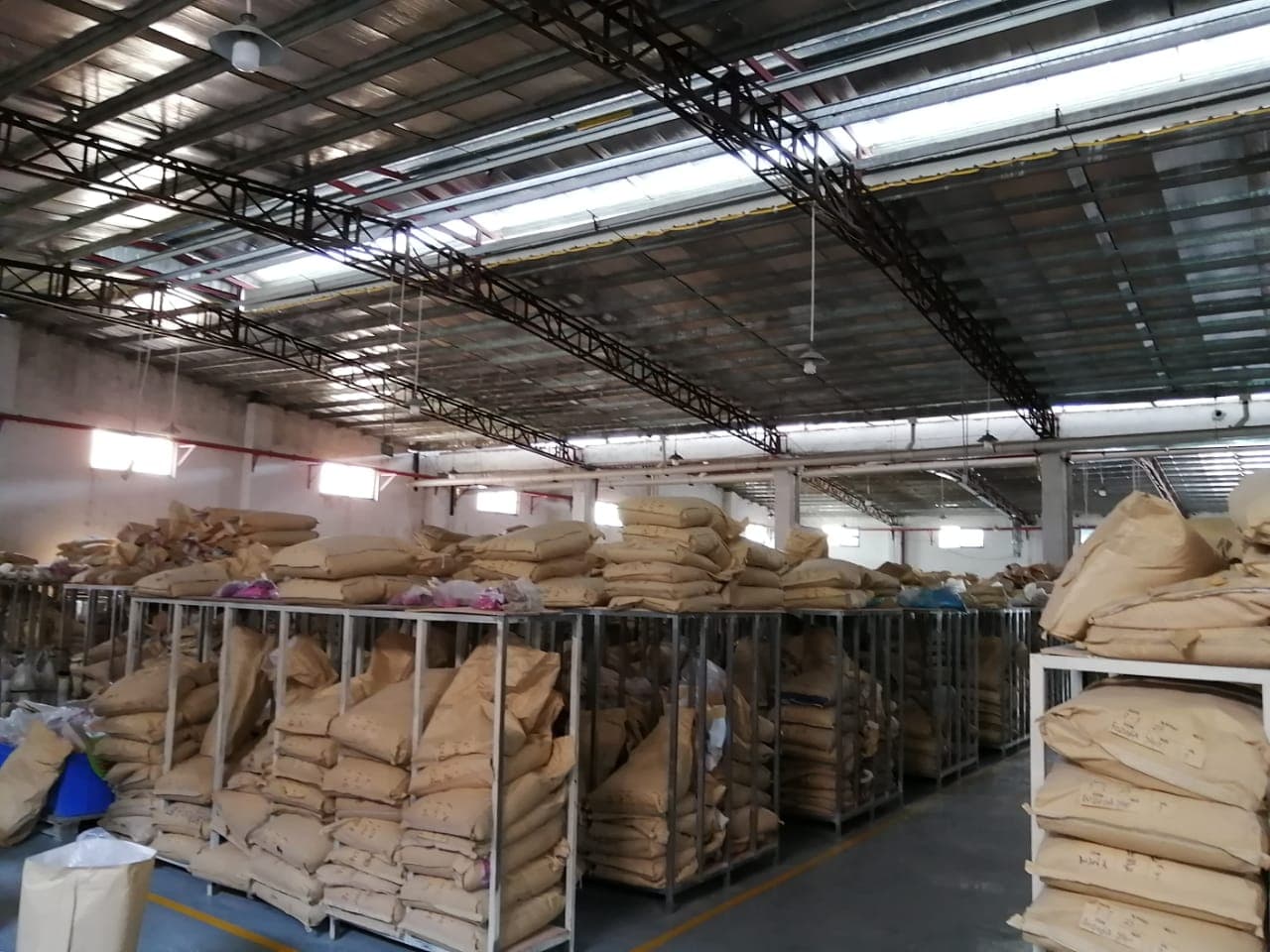
At MLM Cosmetic (mlmcosmetic.com), our Shenzhen facility produces Solvent Resistant Standard Glitter and specialty effect particulates as OEM raw materials. We supply batch-specific CoA documentation including ICP-MS heavy metal panels and FTIR coating verification. What we do not do is make finished product safety claims—that responsibility sits with your brand's qualified safety assessor, as it should.
The carrier substrate for cosmetic-grade PET glitter is biaxially oriented polyethylene terephthalate (BOPET) film, typically 12µm to 25µm gauge. The biaxial orientation process—sequential stretching in machine direction then transverse direction at temperatures between 85°C and 110°C—produces a semi-crystalline film with crystallinity in the 35–45% range (measured via DSC at 10°C/min ramp rate). This crystallinity window matters because it directly governs two things you care about:
Our standard BOPET film runs at 40 ± 3% crystallinity. We verify each incoming film lot by DSC (TA Instruments Q2000) before it enters the metallizing or coating line.
A cosmetic PET glitter flake is not just metalized film. The typical cross-section from bottom to top:
For standard aqueous/oil-phase applications (body lotions, water-based gels), a single-cure polyurethane topcoat at 2–3µm DFT is adequate. For nail lacquer and any formulation containing ketones, esters, or aromatic solvents, we apply a dual-cure silane-modified acrylic/epoxy topcoat. The silane cross-linking produces a Si–O–Si network with markedly higher solvent resistance. We verify cure completion by FTIR: the disappearance of the epoxide ring absorption at 915 cm⁻¹ and the Si–O–Si stretch confirmation at 1020–1090 cm⁻¹.
If your current supplier cannot produce an FTIR spectrum of their cured topcoat on request, that is a red flag worth investigating.
Both hexagon and diamond (rhombic) cuts are produced on rotary die-cutting lines. The distinction matters beyond aesthetics:
Hexagonal cuts (regular hexagon, interior angles 120°) produce particles with a uniform edge-to-face ratio. This geometry packs efficiently in a 2D plane—think honeycomb tessellation—which translates to higher surface coverage per gram in pressed powder applications. Hexagons also exhibit more predictable hydrodynamic drag in suspension because the particle presents a similar cross-section regardless of orientation.
Diamond cuts (rhombic, typically 60°/120° acute/obtuse angles) produce a more elongated particle with a higher aspect ratio. The visual effect is a directional flash—more linear light return, less uniform shimmer. The trade-off: diamond particles are more prone to alignment during flow, which can create streaking in roller-applied or spray formulations. The acute 60° corners are also mechanically weaker; we see higher corner chip rates during pneumatic conveying if the air velocity exceeds 15 m/s.
Slitting knife condition is critical for both geometries. We replace rotary die blades every 800,000 linear meters and inspect edge burr height under 200× magnification. Target burr height is < 5µm. Burrs above 10µm create hook-like projections that interlock between particles, causing clumping in the bag and poor dispersion in your mixer.
| Condition | Standard PET Hex | Solvent-Resistant PET Diamond | Regenerated Cellulose |
|---|---|---|---|
| Continuous service temp | 160°C (320°F) | 180°C (356°F) | 90°C (194°F) |
| Peak short-duration (< 30 min) | 200°C (392°F) | 220°C (428°F) | 110°C (230°F) |
| Onset of visible curl/warp | 210°C | 235°C | 105°C |
| DSC glass transition (Tg) of topcoat | 78°C | 112°C | 62°C |
Practical implication: if you are pouring anhydrous lip balm sticks at 82–88°C, standard PET hex is fine. If you are running a hot-pour wax depilatory at 95°C with a 20-minute hold time, standard PET still works but cellulose-based bio-glitter will start warping. For high-temperature sintered pressed powders (some Korean-method baking processes reach 150–165°C), you need the solvent-resistant grade or you will see topcoat delamination.
Test method: 1.0g glitter immersed in 50mL solvent in sealed borosilicate vial, held at 45°C ± 2°C for 72 hours. Visual inspection at 24h, 48h, 72h. Solvent clarity measured by ASTM D1003 haze meter (BYK haze-gard i) against neat solvent blank.
| Solvent System | Std PET Hex (Haze Δ) | SR PET Diamond (Haze Δ) | Cellulose (Haze Δ) |
|---|---|---|---|
| Ethyl acetate | +18.4% ⚠️ FAIL | +1.2% ✅ PASS | +31.7% ⚠️ FAIL |
| Butyl acetate | +14.1% ⚠️ FAIL | +0.8% ✅ PASS | +28.3% ⚠️ FAIL |
| Isopropanol | +2.3% ✅ PASS | +0.4% ✅ PASS | +4.1% ✅ PASS |
| MEK (methyl ethyl ketone) | +22.6% ⚠️ FAIL | +2.9% ✅ PASS | N/T (substrate dissolves) |
| Water/glycerin 70:30 | +0.1% ✅ PASS | +0.1% ✅ PASS | +0.3% ✅ PASS |
| Dimethicone (5 cSt) | +0.2% ✅ PASS | +0.1% ✅ PASS | +0.5% ✅ PASS |
Pass threshold: Haze increase < 5.0% vs. neat solvent. The data is unambiguous: if your formulation contains ethyl acetate or butyl acetate—and virtually every nitrocellulose nail lacquer does—standard PET glitter will bleed. Full stop. Specify solvent-resistant grade or reformulate your vehicle.
A note on Brookfield viscosity impact: adding 2% w/w of 0.4mm hex PET glitter to a carbomer 940 gel (initial viscosity 45,000 cP at 20 RPM, spindle #6, Brookfield RVT) increased apparent viscosity by roughly 8–12% due to particle-particle interaction. At 5% loading, the increase was 22–28%. If you are targeting a specific viscosity window for filling, account for this and adjust your carbomer neutralization or polymer loading accordingly. Do not blame the glitter when your filling line backs up because the viscosity shifted 15,000 cP.
| Application | Recommended Cut | Size Range | Grade | Key Risk | Mitigation |
|---|---|---|---|---|---|
| Nail lacquer (nitrocellulose) | Diamond 0.4mm | 0.2–0.8mm | Solvent-Resistant | Dye migration into BA/EA vehicle | Verify SR topcoat FTIR; 72h immersion test |
| Lip gloss (polybutene base) | Hexagon 0.2mm | 0.05–0.4mm | Standard PET | Settling in low-viscosity base | Yield stress ≥ 1.8 Pa via fumed silica or organoclay |
| Pressed eyeshadow | Hexagon 0.1mm | 0.05–0.2mm | Standard PET | Electrostatic clumping in hopper | Ground hopper, ionizing bar, 40–55% RH |
| Body gel (carbomer) | Hexagon 0.4mm | 0.2–1.0mm | Standard PET | Viscosity shift at >3% loading | Pre-calibrate Brookfield at target loading |
| Hot-pour lip balm (85°C) | Hexagon 0.2mm | 0.1–0.4mm | Standard PET | Thermal curl if hold time >45 min | Keep melt temp ≤ 90°C, pour within 30 min |
| Wax depilatory (95°C) | Hexagon 0.4mm | 0.2–0.8mm | Solvent-Resistant | Topcoat softening near Tg | Use SR grade (Tg 112°C) |
| UV gel nail (acrylate cure) | Diamond 0.2mm | 0.1–0.4mm | Solvent-Resistant | Oxygen inhibition layer trapping particles | Ensure full cure; wipe inhibition layer post-cure |
| Bath bomb (effervescent) | Hexagon 1.0mm | 0.4–3.0mm | Cellulose Bio-Glitter | EU microplastic compliance | Cellulose substrate exempt under EU 2023/2055 |
Every production batch is tested on our Agilent 7800 ICP-MS (single-quad, helium collision mode for polyatomic interference removal). Our release limits:
Antimony deserves specific attention. Sb₂O₃ is used as a polycondensation catalyst in PET resin manufacturing. Residual Sb in the BOPET film typically runs 150–250 ppm in the bulk polymer, but extractable Sb under simulated cosmetic use conditions (sweat simulant, 40°C, 24h) is well below 5 ppm. We report extractable Sb, not total Sb, because that is what matters toxicologically. If your supplier reports total Sb at 200 ppm without specifying the extraction protocol, ask them to clarify. The numbers are not comparable.
We run ATR-FTIR (Thermo Fisher Nicolet iS50, diamond ATR crystal, 4 cm⁻¹ resolution, 32 scans) on every batch of solvent-resistant grade to confirm:
FTIR spectra are included in the CoA package upon request. We strongly recommend that your incoming QC lab overlay our spectrum against their own ATR measurement of the received material as a fingerprint identity check.
We use laser diffraction (Malvern Mastersizer 3000, dry dispersion) for sub-200µm particles and optical image analysis (Microtrac CAMSIZER X2) for particles above 200µm. The CAMSIZER simultaneously reports aspect ratio, circularity, and corner integrity—this is how we catch die wear before burr height becomes a problem.
Typical PSD spec for a 0.4mm (1/64") hexagon cut: D10 = 350µm, D50 = 400µm, D90 = 440µm. If the D90/D10 span exceeds 0.30, we flag the batch for die inspection.
Before you order 25kg drums and commit to a production schedule, run these three tests on a 1kg trial sample. Each test takes less than a day of bench time and will save you from the kind of $14,000 disaster I mentioned at the top.
What you need: 50mL borosilicate vials with PTFE-lined caps, your actual formulation vehicle (not a proxy solvent—use your real nail lacquer base, your real gel matrix), analytical balance, haze meter or at minimum a visual lightbox.
Procedure:
Pass criteria: Haze increase < 5% vs. neat vehicle. No visible color in filtrate. If you see color at 24h, stop the test—that glitter grade is incompatible with your vehicle.
What you need: Aluminum weighing dishes, lab oven, stereomicroscope (40×).
Procedure:
Pass criteria: No visible curling, delamination, or color shift. Compare against an unheated control sample side-by-side. Photograph both for your batch record.
What you need: 100mL graduated cylinder, your finished (or near-finished) formulation with glitter dispersed at target loading, centrifuge (optional for acceleration).
Procedure:
Pass criteria: < 5% clear separation at 72h ambient. If you see >10% separation, your continuous phase yield stress is too low for the particle size and density you are using. Increase your rheology modifier concentration or drop to a smaller particle size. A 0.2mm hex at SG ~1.4 is far easier to suspend than a 1.0mm hex at the same density—the Stokes settling velocity scales with the square of the particle diameter.
The EU microplastic restriction under REACH (Commission Regulation (EU) 2023/2055, Annex XVII) restricts synthetic polymer microparticles < 5mm intentionally added to products. Cosmetic glitter made from PET falls squarely within scope. The transition periods are staggered:
This is not a future hypothetical. If you are developing products for EU market launch in 2026–2027, your formulation timeline needs to account for the rinse-off deadline now. For rinse-off applications targeting EU, consider regenerated cellulose bio-glitter or synthetic fluorphlogopite (synthetic mica) substrates, which are exempt as they are not synthetic organic polymers.
For leave-on applications, PET glitter remains usable until October 2029 under current timelines. But reformulation lead times in color cosmetics are typically 12–18 months. Plan accordingly.
The Modernization of Cosmetics Regulation Act (MoCRA), signed December 2022, requires facility registration and product listing with FDA. It also mandates adverse event reporting and grants FDA mandatory recall authority. MoCRA does not currently restrict PET glitter as a material category, but it does require that brands maintain adequate safety substantiation for every ingredient.
MLM Cosmetic's Shenzhen facility is registered under FDA MoCRA requirements. We provide batch-specific Certificates of Analysis (CoA) including ICP-MS heavy metal panels, FTIR coating identity, and particle size distribution data. These documents are designed to support your brand's safety substantiation files. To be unambiguous: MLM Cosmetic supplies cosmetic raw materials and provides batch test documentation (CoA, ICP-MS, FTIR) upon request to support brand filings. Finished formulation safety assessment and regulatory compliance remain the responsibility of the brand owner and their qualified safety assessor (EU CPSR) or responsible person.
For brands selling into China, glitter used in cosmetic products must comply with the NMPA's Cosmetic Safety Technical Specifications (2015 edition, updated). Heavy metal limits under NMPA are broadly aligned with EU/US thresholds. We can provide Chinese-language CoA documentation formatted for NMPA filing support upon request.
PET film is an excellent electrical insulator. Surface resistivity of BOPET is typically 10¹⁴ to 10¹⁶ Ω/sq. When you cut it into thousands of sub-millimeter particles and try to feed them through a stainless steel powder hopper into a ribbon blender, the triboelectric charging is severe. Particles cling to hopper walls, bridge across orifices, and form clumps that disperse unevenly into your batch.
Practical countermeasures we recommend to our customers:
All shipments include CoA packet. ICP-MS and FTIR data are generated per-batch, not per-SKU—if you order the same SKU across two production batches, you receive two distinct CoA documents.
The decision tree for specifying PET glitter in a cosmetic formulation is not complicated, but it requires honest answers to three questions:
Get a 1kg trial bag. Run the three benchtop tests. Review the CoA. Then scale to 25kg drums with confidence that the material will perform in your production environment the same way it performed on your bench.
For technical questions, sample requests, or CoA documentation, contact the MLM Cosmetic technical team through mlmcosmetic.com. We answer formulation compatibility questions directly—no sales pitch required.
MLM Cosmetic is an OEM cosmetic raw material manufacturer based in Shenzhen, China. We supply effect pigments, glitter, and specialty particulates to cosmetic brand owners and contract manufacturers worldwide. Facility registered under US FDA MoCRA. All technical data presented reflects MLM internal testing protocols and is provided to support customer formulation development. Finished product safety and regulatory compliance are the responsibility of the brand owner.
Disclaimer: Technical data and regulatory references provided herein (including EU Regulation 2023/2055, EU Regulation 1223/2009, and US FDA MoCRA) are based on current legislative texts and laboratory test parameters for raw materials manufactured by MLM Cosmetic. This documentation is intended solely to support independent brand formulators and Responsible Persons in compiling their Cosmetic Product Safety Reports (CPSR) and product filings. Final formulation compliance, toxicological risk assessment, and finished product registration remain the responsibility of the brand owner.
Looking for custom formulation or laboratory testing samples? Contact our MLM Cosmetic technical engineering team or request a free sample kit directly.
Target Formulation Material:
PET Glitter Wholesale: Hexagon & Diamond Sizing for Formulators
Includes 50g sealed lab pouch, lot-specific COA, Technical Data Sheet (TDS), and ISO 22716 regulatory package.
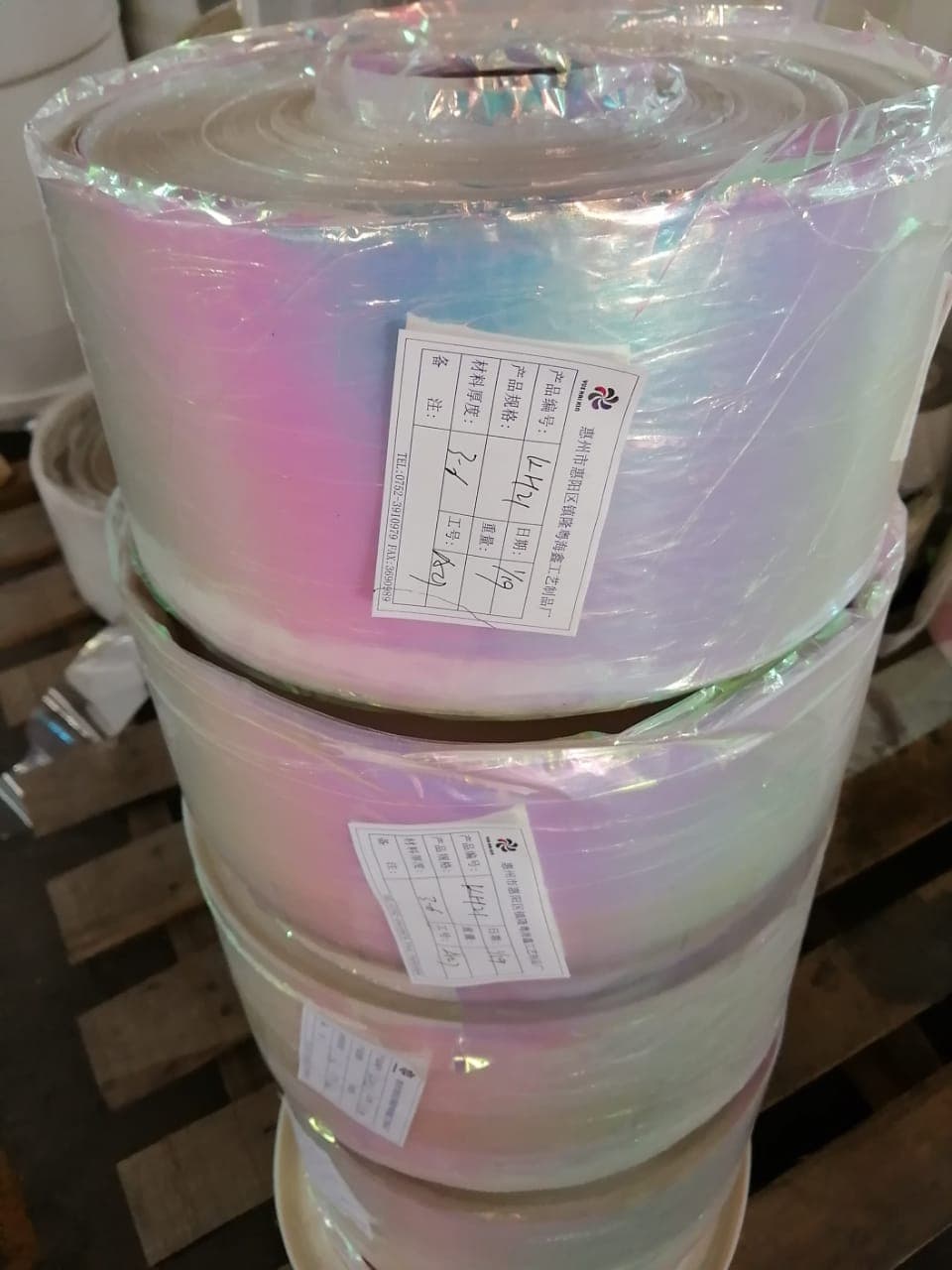
Whether formulating eyeshadow palettes, lip glosses, nail polishes, or compounding industrial epoxy resin, start with our 1kg low trial MOQ or complimentary 50g qualification sample with complete TDS and batch COA.