
Loading...
⚡ 1kg Low MOQ · Factory Direct Glitter & Mica⚡ Source Factory Direct Wholesale · Custom Loose Glitter & Mica Pigments · 1kg Low Trial MOQ · 48h Free 50g Lab Samples
mlmcustom@mlmcosmetic.com⚡ 1kg Low MOQ · Factory Direct Glitter & Mica⚡ Source Factory Direct Wholesale · Custom Loose Glitter & Mica Pigments · 1kg Low Trial MOQ · 48h Free 50g Lab Samples
mlmcustom@mlmcosmetic.comLoading...
Chemical purity, heavy metal thresholds (Pb < 1ppm, As < 1ppm), and whiteness index comparison between synthetic fluor-mica and natural muscovite. Global vendor benchmark for clean beauty formulations.

Formulator Advisory & Upstream Raw Material Notice: MLM Cosmetic Pigments is an upstream raw material manufacturer. US FDA and international health authorities do not certify or approve raw material chemical plants or finished consumer formulations. Finished cosmetic compliance (including US MoCRA safety substantiation, FDA 21 CFR § 73/74 colorant listings, and EU Regulation 1223/2009) remains the legal responsibility of the cosmetic brand owner. Lot-specific documentation on request (TDS, SDS, and Agilent 7800 ICP-MS heavy metal COAs) is provided for benchtop pilot qualification.
Document Classification: Industrial B2B Sourcing & Formulation Dossier
Issuing Laboratory: Analytical Chemistry Division, MLM Cosmetic (Shenzhen Meilianmei Technology Development Co., Ltd.)
Revision: 2026-Q1 | Slug: synthetic-fluorphlogopite-vs-natural-mica-supplier-benchmark
⚠️ Regulatory Scope Notice: This dossier addresses cosmetic-grade raw material pigment substrates only — synthetic fluorphlogopite flakes and natural mica powders as supplied in bulk industrial form. MLM Cosmetic operates exclusively as an upstream raw material manufacturer. No finished cosmetic formulations, Raw Material filling, or consumer product assembly services are offered or implied. Compliance with FDA 21 CFR § 73/74, EU Regulation 1223/2009 Annex IV, and MoCRA finished-product obligations remains the sole responsibility of the purchasing formulator or brand owner.
Every cosmetic formulation scientist working with pearlescent effect systems eventually confronts the same procurement paradox: the substrate material that most directly controls optical performance, skin-safety compliance, and batch-to-batch color reproducibility — the mica or synthetic fluorphlogopite platelet — is also the ingredient most obscured by multi-tier distribution opacity.
The broker markup problem is structural, not incidental. Regional chemical distributors sourcing from Tier-1 manufacturers (Merck KGaA, BASF Sun Chemical, Eckart Altana) routinely apply 200–400% landed-cost markups before the material reaches a mid-market cosmetic formulator's bench. A synthetic fluorphlogopite platelet coated with TiO₂/Fe₂O₃ that leaves a Darmstadt or Langelsheim production facility at €18–24/kg FOB frequently arrives at a Guangzhou or Los Angeles formulation lab invoiced at $65–110/kg, with neither a batch-specific COA nor an ICP-MS heavy metal certificate attached.
The MOQ barrier compounds the problem for R&D. Multinational chemical conglomerates enforce 25 kg–100 kg minimum order quantities as standard commercial policy. For a formulation scientist qualifying three candidate substrates for a new eyeshadow palette — each requiring independent stability, compatibility, and skin-safety screening — committing $2,500–$8,000 in locked inventory per candidate before a single benchtop trial is commercially irrational. Most labs either skip rigorous multi-vendor qualification or accept a single incumbent supplier's material without benchmarking.
Lead times are the silent project killer. Standard broker-to-formulator delivery windows for specialty effect pigments run 8–14 weeks from confirmed purchase order, incorporating manufacturer production scheduling, export documentation, freight forwarding, and regional distributor stock allocation. For a brand operating on a 16-week NPD cycle, an 8-week raw material lead time consumes half the development runway before a single pilot batch is mixed.
Heavy metal variability in natural mica is not a theoretical concern — it is a documented analytical reality. Natural muscovite and phlogopite mica is a geological mineral extracted from pegmatite deposits in India (Jharkhand, Rajasthan), Madagascar, and China. Geological co-deposition of arsenic, lead, chromium, and nickel within the crystal lattice produces batch-to-batch elemental variability that no surface coating process can fully remediate. Published ICP-MS surveys of commercial natural mica lots report Pb concentrations ranging from 1.8 ppm to 28 ppm within the same nominal grade from the same supplier across consecutive quarterly shipments. Synthetic fluorphlogopite — KMg₃(AlSi₃O₁₀)F₂, synthesized via high-temperature flux growth — eliminates geological contamination vectors entirely, producing a substrate with intrinsic heavy metal concentrations typically below 0.5 ppm Pb and 0.3 ppm As before any post-synthesis purification step.
This dossier provides the analytical framework and commercial intelligence needed to make a defensible, data-supported sourcing decision.
| Manufacturer / Brand | Location | Substrate Base | Heavy Metal Limits (Pb/As/Hg/Cd) | Trial Pilot MOQ | Bulk Drum Standard | Lab Sample SLA | Best Suited For |
|---|---|---|---|---|---|---|---|
| Merck KGaA (Iriodin® / Ronastar®) | Darmstadt, Germany | Natural mica + synthetic fluorphlogopite | Pb < 10 ppm (internal spec; EU 1223/2009 compliant) | 25 kg minimum via distributor | 25 kg fiber drums | 4–8 weeks via regional distributor | Luxury tier, EU/US blue-chip brand supply chains with established distributor relationships |
| BASF Sun Chemical (Sicopearl®) | Ludwigshafen, Germany | Natural mica, borosilicate | Pb < 10 ppm (EU compliant) | 25–50 kg via distributor | 25 kg bags / 50 kg drums | 6–10 weeks | Large-volume personal care manufacturers; established procurement pipelines |
| CQV Co., Ltd. | Cheonan, South Korea | Synthetic fluorphlogopite, natural mica | Pb < 5 ppm (KS standard) | 5 kg (direct); 25 kg via agent | 25 kg poly-lined drums | 2–4 weeks (direct); 6–8 weeks via agent | Korean K-beauty supply chains; APAC regional brands |
| Eckart Altana (Prestige® / Syncrystal®) | Langelsheim, Germany | Synthetic fluorphlogopite, aluminum | Pb < 5 ppm | 25 kg minimum | 25 kg drums | 4–8 weeks via distributor | High-performance nail and eye formulations; established EU accounts |
| Coloray (Ruicheng Colour) | Guangdong, China | Natural mica, synthetic fluorphlogopite | Pb < 10 ppm (stated; COA availability inconsistent) | 5–10 kg | 25 kg woven bags | 1–3 weeks | Price-sensitive regional brands; domestic Chinese market |
| Generic Alibaba Trading Brokers | Variable (CN/IN sourcing) | Natural mica (origin unverified) | Unverified; no ICP-MS COA standard | 1–5 kg (variable) | Variable packaging | 1–6 weeks (unreliable) | Prototype hobbyist use; not recommended for regulated cosmetic production |
| MLM Cosmetic Factory Direct | Bao'an, Shenzhen, China | Synthetic fluorphlogopite + natural mica (dual line) | Pb < 2.0 ppm / As < 1.0 ppm / Hg < 1.0 ppm / Cd < 1.0 ppm / Sb < 0.5 ppm (Agilent 7800 ICP-MS, EPA 3052) | 1 kg nitrogen-backfilled vacuum foil pouch (MVTR < 0.5 g/m²/day) | 25 kg UN-rated poly-lined fiberboard drums | 48-hour worldwide air express dispatch (50 g complimentary qualification kit + TDS/SDS/batch COA) | Formulation labs, CMOs, indie brands, and global procurement teams requiring low-MOQ pilot access with full analytical traceability |
Merck's effect pigment division, operating from Darmstadt with satellite production in Gernsheim, established the foundational science of TiO₂-coated mica interference pigments and holds the longest continuous IP portfolio in the category. The Ronastar® synthetic fluorphlogopite series delivers exceptional optical clarity — refractive index of the substrate at n = 1.48 vs natural mica's n = 1.56–1.60 — producing cooler, brighter interference colors with reduced background haze. Particle size distributions are tightly controlled via laser diffraction (D50 typically ±2 µm of nominal grade).
Commercial friction: Merck's distribution model in APAC and North America is exclusively indirect. Formulators in China, Southeast Asia, and Latin America access Iriodin® through a two- or three-tier chain of regional chemical distributors, each adding margin. Batch-specific ICP-MS certificates are not standard inclusions with distributor shipments; formulators must request them separately, often encountering 2–4 week documentation delays. MOQ of 25 kg is non-negotiable for standard catalogue grades.
BASF's Sicopearl® range covers natural mica substrates coated with TiO₂, Fe₂O₃, and mixed-oxide interference layers. The portfolio is well-characterized for skin-care and color cosmetic applications, with strong EU 1223/2009 compliance documentation. BASF's global supply chain infrastructure provides reliable large-volume consistency for multinational beauty conglomerates.
Commercial friction: The Sicopearl® line is predominantly natural mica-based; synthetic fluorphlogopite SKUs are limited relative to Merck or Eckart. For formulators specifically targeting synthetic substrate purity advantages, SKU selection is narrower. MOQ and lead time constraints mirror Merck's distributor model. R&D sample access requires formal account establishment with a regional BASF distributor.
CQV (Cheonan, South Korea) has built a credible synthetic fluorphlogopite manufacturing capability serving the K-beauty supply chain. Their direct-to-formulator sales model — unusual among Tier-1 producers — enables 5 kg trial quantities for qualified accounts. ICP-MS data quality is generally reliable for Korean domestic market compliance. CQV's color range and particle size library are narrower than European MNCs but competitive within standard interference and satin grades.
Commercial friction: International access outside Korea and APAC remains limited. English-language technical documentation and regulatory support for EU/US MoCRA submissions is inconsistent. Lead times for non-Korean accounts extend to 6–8 weeks via trading agents.
Eckart's Syncrystal® synthetic fluorphlogopite series is technically distinguished by high aspect ratio platelet geometry (aspect ratio 60:1–80:1) achieved via controlled flux-growth crystal synthesis, producing strong specular reflection and smooth skin-feel due to platelet edge passivation. The Prestige® line targets nail lacquer and eye cosmetic applications with specific particle size cuts optimized for film-forming compatibility.
Commercial friction: Eckart's commercial model is strongly account-managed for established European and North American customers. New APAC entrants face 25 kg MOQ minimums and 4–8 week distributor lead times. Pricing at distributor level is among the highest in the category.
Coloray operates production in Guangdong province and offers both natural mica and synthetic fluorphlogopite substrates at price points 40–60% below European MNCs. For domestic Chinese market supply, Coloray provides reasonable color consistency and acceptable GB/T compliance documentation.
Commercial friction: COA completeness is inconsistent; ICP-MS heavy metal certificates are not universally provided per shipment. Batch-to-batch color consistency (Delta E) has been reported by third-party formulators at Delta E 1.5–3.0 — above the < 0.8 threshold required for precision color-matched cosmetic production. Packaging is standard woven polypropylene bags without moisture-barrier specification, creating shelf-life risk for hygroscopic coated substrates.
Alibaba-sourced mica and fluorphlogopite listings aggregate material from multiple unverified upstream mills across India and China. Price points appear attractive at $3–12/kg, but the analytical risk profile is disqualifying for regulated cosmetic production. No standardized ICP-MS protocol is applied; "heavy metal compliant" claims on listings are not supported by per-batch laboratory certificates. Origin traceability for child labor-free natural mica sourcing (a documented issue in Jharkhand, India) cannot be established through broker channels. These materials are appropriate only for non-regulated prototype mockups where safety compliance is not required.
MLM Cosmetic operates parallel calcination production lines in Bao'an cleanroom halls: a synthetic fluorphlogopite flux-growth and coating line, and a processed natural mica coating line for formulators requiring natural-origin INCI designation. Synthetic fluorphlogopite substrate is synthesized at 1,050–1,150 °C under controlled fluoride flux conditions, yielding KMg₃(AlSi₃O₁₀)F₂ platelets with D50 particle sizes from 5 µm to 200 µm, aspect ratios of 50:1–80:1, and a refractive index of 1.48 — producing optically superior interference clarity versus natural mica's higher-index, more absorptive crystal matrix.
Interference color is generated by depositing optical-grade TiO₂ (rutile or anatase phase, application-dependent) and Fe₂O₃ nanocoatings onto the platelet surface via wet-chemistry precipitation followed by controlled-atmosphere calcination at 750–900 °C. Layer thickness is controlled to ±2 nm precision to target specific interference orders: a 60–80 nm TiO₂ layer produces silver/white; 80–120 nm produces gold; 120–160 nm produces red; 160–220 nm produces blue-violet. Fe₂O₃ co-deposition adds warm bronze and copper interference. Post-calcination, platelets undergo precision rotary slitting at ±0.005 mm tolerance, producing burr-free, passivated hexagonal particle cuts validated for ocular and eyelid application comfort under ISO 10993-10 irritation protocols.
Every production batch undergoes mandatory elemental analysis on an Agilent 7800 quadrupole ICP-MS instrument operated by MLM's in-house analytical chemistry team. Sample preparation follows EPA Method 3052 closed-vessel microwave-assisted acid digestion (HNO₃/HF matrix, 180 °C, 1,200 W, 10-minute hold), ensuring complete dissolution of silicate matrix — a critical protocol step that open-vessel acid digestion methods fail to achieve for mica and fluorphlogopite substrates, systematically underreporting true elemental content.
Released batch specifications:
| Element | MLM Cosmetic Limit | Analytical Method |
|---|---|---|
| Lead (Pb) | < 2.0 ppm | EPA 3052 / ICP-MS |
| Arsenic (As) | < 1.0 ppm | EPA 3052 / ICP-MS |
| Mercury (Hg) | < 1.0 ppm | EPA 3052 / ICP-MS |
| Cadmium (Cd) | < 1.0 ppm | EPA 3052 / ICP-MS |
| Antimony (Sb) | < 0.5 ppm | EPA 3052 / ICP-MS |
These limits meet or exceed FDA 21 CFR § 73.1496 (mica-based pearlescent pigments), EU Regulation 1223/2009 Annex II/III heavy metal restrictions, and MoCRA 2022 adverse event reporting readiness thresholds. Full batch COA with instrument serial number, calibration traceability, and method detection limits is included with every shipment.
1 kg Trial MOQ Packaging: Nitrogen-backfilled, heat-sealed aluminum foil laminate pouches with a measured moisture vapor transmission rate (MVTR) < 0.5 g/m²/day at 38 °C/90% RH (ASTM E96 Method B). Nitrogen backfill displaces oxygen and atmospheric moisture, preventing TiO₂/Fe₂O₃ coating hydrolysis and agglomeration during transit and storage. This is the correct packaging specification for coated effect pigments — a standard that most regional suppliers do not meet.
25 kg Commercial Bulk Packaging: UN-rated poly-lined fiberboard drums (UN 4G/Y specification), inner polyethylene liner heat-sealed, outer drum rated for international air/sea freight. Pallet configuration: 20 drums per pallet, stretch-wrapped, with desiccant sachets inside each drum.
Custom shade development and production color matching are performed using a Konica Minolta CM-5 spectrophotometer with BYK-Gardner drawdown standardization. Target shade matching achieves Delta E < 0.8 CIE Lab* — the threshold below which human observers cannot reliably distinguish color difference under D65 illuminant. This specification is critical for multi-SKU palette production where inter-shade visual harmony must be maintained across production lots.
Week 0–1 (Sample Receipt & Analytical Verification): Request the complimentary 50 g qualification kit. Upon receipt, verify batch COA against your internal specification limits. If ICP-MS data is outside your acceptance criteria, reject before benchtop work begins. MLM batches arrive with full instrument traceability; no follow-up documentation requests are needed.
Week 1–2 (Benchtop Incorporation Trials): Incorporate at 2%, 5%, and 10% w/w loading in your target base (pressed powder, loose powder, anhydrous oil dispersion, or emulsion). Assess: dispersion uniformity via optical microscopy (100×), color development against target shade (Konica Minolta Delta E measurement), and skin-feel via trained panel or tribometer friction coefficient.
Week 2–3 (Stability Screening): Place incorporation samples in 40 °C/75% RH accelerated stability chambers for 4-week screening. Evaluate: color shift (Delta E), particle agglomeration (dynamic light scattering or sieve analysis), and oil separation in anhydrous systems. Moisture-barrier packaging ensures the raw material itself is not a stability variable.
Week 3–4 (Scale-Up to 1 kg Pilot Batch): Order the 1 kg trial MOQ pilot pouch. Produce a full pilot batch at target loading. Confirm color match, texture, and analytical compliance before committing to commercial drum quantities.
Commercial Production: Transition to 25 kg UN-rated drums. MLM's production scheduling supports 2–4 week lead times for standard catalogue grades; custom interference colors require 4–6 weeks from confirmed shade approval.
Begin your substrate qualification today. MLM Cosmetic's 48-hour air express dispatch ensures your formulation timeline is not held hostage to distributor lead times.
→ Order 1kg Trial MOQ Pilot Pouch Nitrogen-backfilled vacuum foil pouch. Batch COA with Agilent 7800 ICP-MS data included. Ships within 48 hours of order confirmation.
→ Request 48h Free 50g Qualification Sample Complimentary 50 g sample kit dispatched via worldwide air express within 48 hours. Includes full TDS, SDS
MLM Cosmetic Pigments (Shenzhen Meilianmei Technology Development Co., Ltd.) is an upstream primary manufacturer of cosmetic effect pigments, synthetic mica powders, optical chameleon flakes, and biodegradable glitter. The US FDA does not certify or approve cosmetic raw material facilities or finished cosmetics. Intended use suitability (eye area, lip area, wash-off vs leave-on) depends on SKU-specific colorant listings (21 CFR § 73/74) and target market regulations. Batch test documentation on request (TDS, SDS, and in-house Agilent 7800 ICP-MS heavy metal reports: Lead < 2ppm, Arsenic < 1ppm, Mercury < 1ppm) is provided to assist finished product safety evaluations conducted by qualified safety assessors through pilot testing.
Target Formulation Material:
Synthetic Fluorphlogopite vs Natural Mica: Heavy Metal Purity, Crystal Clarity & Global Supplier Benchmark (2026 Technical Review)
Includes 50g sealed lab pouch, lot-specific COA, Technical Data Sheet (TDS), and ISO 22716 regulatory package.
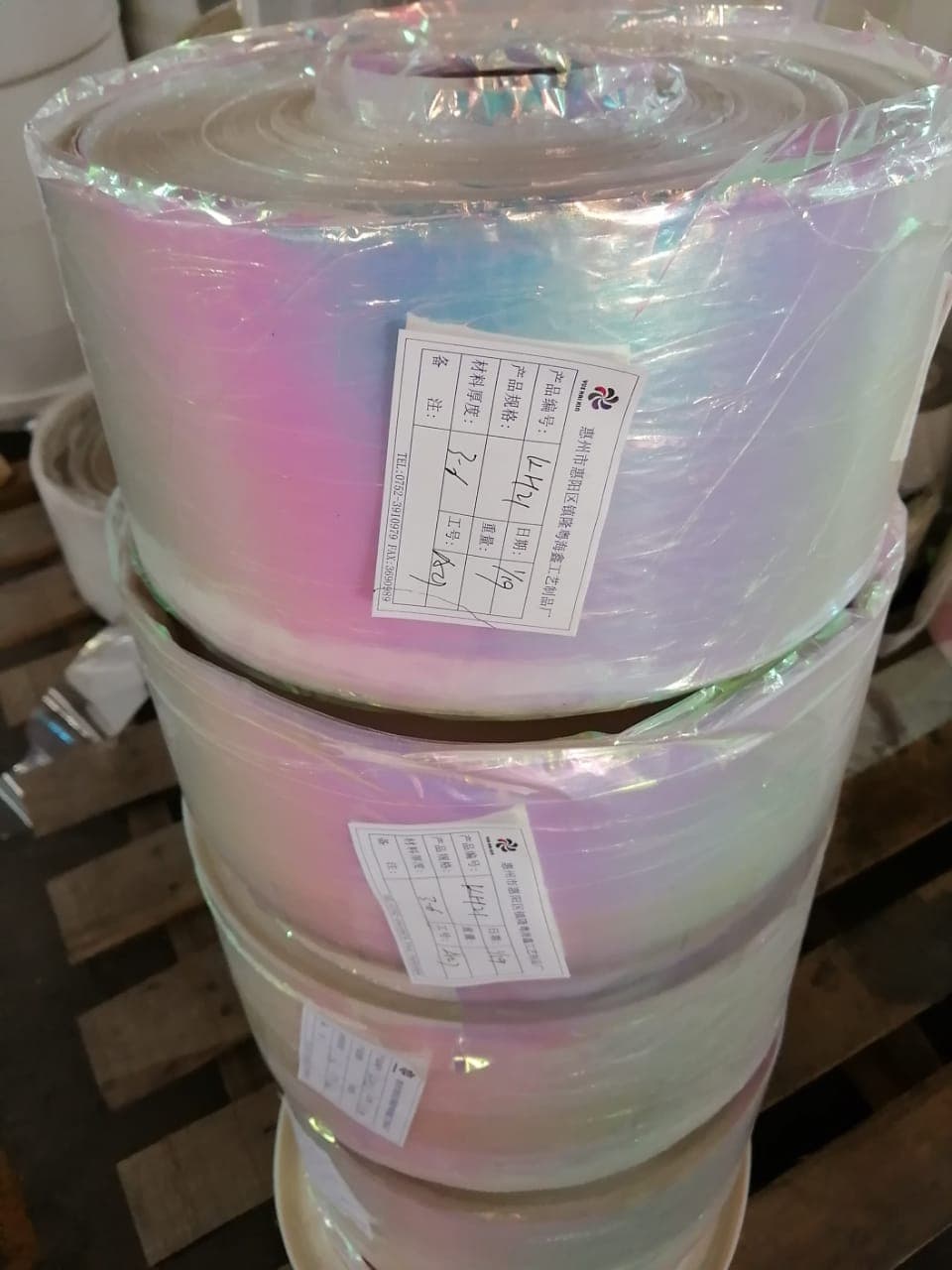
Whether formulating eyeshadow palettes, lip glosses, nail polishes, or compounding industrial epoxy resin, start with our 1kg low trial MOQ or complimentary 50g qualification sample with complete TDS and batch COA.