
Loading...
⚡ 1kg Low MOQ · Factory Direct Glitter & Mica⚡ Source Factory Direct Wholesale · Custom Loose Glitter & Mica Pigments · 1kg Low Trial MOQ · 48h Free 50g Lab Samples
mlmcustom@mlmcosmetic.com⚡ 1kg Low MOQ · Factory Direct Glitter & Mica⚡ Source Factory Direct Wholesale · Custom Loose Glitter & Mica Pigments · 1kg Low Trial MOQ · 48h Free 50g Lab Samples
mlmcustom@mlmcosmetic.comLoading...
B2B technical procurement guide comparing synthetic fluorphlogopite and natural mica. Audits heavy metal ICP-MS limits, supply chain ethics, and benchtop rheology.

Formulator Advisory & Pilot Testing Notice: Synthetic fluorphlogopite (synthetic mica) provides an ethical, high-purity alternative to mined natural muscovite mica, eliminating supply chain child-labor risks and geologic heavy metal background. MLM Cosmetic Pigments is an upstream raw material manufacturer; US FDA and global regulatory authorities do not certify or approve raw material chemical plants or finished consumer formulations. Finished cosmetic compliance remains the legal responsibility of the cosmetic brand owner. Lot-specific documentation on request (TDS, SDS, and Agilent 7800 ICP-MS heavy metal reports) is provided for benchtop pilot qualification.
Cosmetic procurement officers, materials scientists, and color cosmetic formulators face a convergence of regulatory, ethical, and mechanical challenges at the raw material interface. For four decades, natural muscovite mica—hydrated potassium aluminium silicate, KAl2(AlSi3O10)(OH)2—formed the crystalline substrate backbone of pearlescent pigments, highlighters, eyeshadows, and powder foundations. Today, that legacy substrate introduces critical liabilities across brand equity, chemical purity, and bulk mechanical processing.
From our calcination, classification, and surface-treatment facility in Bao'an, Shenzhen, this technical briefing addresses the operational realities of transitioning from natural muscovite to engineered synthetic fluorphlogopite, KMg3(AlSi3O10)F2.
Natural cosmetic mica remains tethered to the pegmatite veins of Jharkhand, Bihar, and Rajasthan in eastern India, as well as artisanal operations in Madagascar. Despite corporate social responsibility audits and industry coalitions, the extraction tier relies heavily on unregulated surface scavenging ("dhibra" collection) and unmapped artisanal pits. For global brands subject to the EU Corporate Sustainability Due Diligence Directive (CSDDD), the US Uyghur Forced Labor Prevention Act (UFLPA) enforcement frameworks, and strict internal ESG covenants, natural mica represents an unmitigated supply chain liability. Auditing multiple tiers of village consolidators, regional aggregators, and unregulated processing sheds presents systemic blind spots.
Synthetic fluorphlogopite bypasses the geological quarry entirely. Synthesized inside high-temperature electric arc furnaces above 1450 degrees Celsius, the crystal lattice is formed by fusing high-purity synthetic mineral oxides: silicon dioxide (SiO2), magnesium oxide (MgO), aluminum oxide (Al2O3), and potassium fluorosilicate (K2SiF6). The chemical reaction produces an ethically unassailable, high-precision lab-synthesized fluoromica crystal. There are no artisanal intermediaries, no child labor risks, and no untraceable extraction paths. Origin tracking is tied directly to industrial energy logs, verified batch chemical lot numbers, and primary factory output.
In finished makeup formulations—notably matte and satin lipsticks, cream-to-powder foundations, and liquid eyeshadows—formulators frequently battle unexplained drag, dry friction, and mechanical grittiness. The root cause is crystallographic.
Natural muscovite exhibits variable cleavage energy along its basal pinacoid (001) planes. Due to irregular geological cooling, mechanical crushing yields platelets with stepped terraces, jagged fracture ledges, and micro-shards across platelet peripheries. When formulated at 5% to 25% concentrations in lipsticks or pressed compacts, these macroscopic cleavage steps slide against the epidermal stratum corneum with high kinetic friction, producing perceptible "drag" and chalkiness. Furthermore, natural muscovite possesses an intrinsic brownish-yellow to iron-gray undertone caused by substitutional ferric and ferrous cations within the octahedral silicate sheet, dulling high-chroma pearlescent formulations.
Synthetic fluorphlogopite features uniform, hexagonal planar cleavage. Synthesized under controlled thermal gradients, the resulting crystal platelets possess atomically flat basal planes without stepped terrace defects. The tactile result is superior glide, a dramatically lower coefficient of friction on the skin, and an optically clear, pure white substrate (refractive index ~1.58). This transparency permits clean, high-intensity color reflection when precision-coated with titanium dioxide (TiO2) or iron oxides (Fe2O3), without the yellow-gray absorption haze inherent to natural mineral sheets.
Natural mica is an open geological sponge. Over millions of years of metamorphic formation, heavy metal cations readily substitute into its crystal matrix: lead (Pb), arsenic (As), mercury (Hg), cadmium (Cd), antimony (Sb), and trace radioactive decay daughters (uranium and thorium). These metals are not surface dust; they are embedded directly inside the aluminosilicate structural lattice. Hydrochloric or nitric acid washing can clean external surfaces, but it cannot leach structural heavy metals without dissolving the mica platelet itself.
Synthetic fluorphlogopite is synthesized from analytical-grade, pre-purified precursors. Heavy metal content is virtually non-detectable at the furnace stage. At MLM Cosmetic Pigments, representative production lots are validated using our in-house Agilent 7800 ICP-MS analytical suite following rigorous microwave acid digestion. Standard lot limits are maintained at Pb < 1 ppm, As < 1 ppm, Hg < 0.5 ppm, Cd < 0.5 ppm, and Sb < 0.5 ppm, with full analytical dossiers provided on request.
Historically, procurement officers seeking synthetic mica were forced to purchase through Western specialty chemical distributors that repackaged materials, inflated prices by 200% to 400%, and enforced rigid 20kg to 25kg fiber drum minimum order quantities (MOQs). For formulation teams conducting agile pilot runs, pre-clinical benchtop trials, or short-run indie manufacturing, a 25kg MOQ per SKU creates dead inventory and burns initial R&D capital.
MLM eliminates this distributor tier. Operating directly from our Bao'an plant, we supply production-grade synthetic fluorphlogopite and chameleon interference powders in 1kg hermetic, moisture-barrier aluminum foil pouches for R&D formulation trials, backed by 48-hour global air dispatch of complimentary 50g qualification sample kits. Contract manufacturers (CMOs) and formulation chemists can now qualify production-spec raw pigments without brokerage hurdles.
The following matrix evaluates the operational, purity, and supply realities of primary synthetic and natural mica manufacturers globally. Testing protocols and regulatory metrics reflect 2026 industrial benchmarks.
| Supplier / Location | Primary Substrate & Synthesis Technology | Supply Chain Ethics & Origin Traceability | Heavy Metal Purity Protocol (ICP-MS Specs) | Optical Transparency & Color Purity | Minimum Order Quantity (MOQ) | Lab Sample Lead Time | Best For / Target Buyer |
|---|---|---|---|---|---|---|---|
| MLM Cosmetic Pigments (Shenzhen Meilianmei, China) | high-precision Synthetic Fluorphlogopite; high-temp electric arc fusion; precision calcination & rotary wet-slitting | Unassailable synthetic audit trail; zero mining inputs; direct plant-floor traceability in Bao'an | Pb < 1 ppm, As < 1 ppm, Hg < 0.5 ppm, Cd < 0.5 ppm, Sb < 0.5 ppm (Agilent 7800 ICP-MS) | Pure optical clarity (whiteness > 92%); zero structural Fe-haze; high interference chroma | 1kg moisture-barrier foil pouch (R&D / Pilot) | 48-Hour international air express dispatch | CMOs, contract fillers, fast-turn indie brands, enterprise formulation R&D teams |
| Merck KGaA / EMD (Darmstadt, Germany) | Natural Muscovite & Synthetic Fluorphlogopite (Timiron, Colorstream lines) | Audited sourcing via RMI (Responsible Minerals Initiative); synthetic lines fully traceable | Meets EU 1223/2009 & FDA 21 CFR § 73; Pb < 2 ppm, As < 2 ppm, Hg < 1 ppm, Cd < 1 ppm | Natural grades show slight yellow/gray shift; synthetic grades show excellent transparency | 20kg - 25kg standard fiber drum | 2 to 4 weeks (via regional distribution brokers) | Multinational cosmetic conglomerates requiring established legacy supply contracts |
| CQV Co., Ltd. (Chungbuk, South Korea) | Synthetic Fluorphlogopite specialist (Magnea, Prominence series); electric furnace fusion | Fully synthetic; unassailable ethics; robust Korean chemical safety compliance | Pb < 1 ppm, As < 1 ppm, Hg < 0.5 ppm, Cd < 0.5 ppm; documentation on request | High transparency, high gloss, optimized particle size distributions | 10kg - 20kg rigid export carton/drum | 1 to 2 weeks via authorized distribution channels | K-Beauty export brands, premium global color cosmetic lines |
| Sun Chemical / DIC (Parsippany, NJ, USA) | Natural Muscovite & Synthetic lines (SunMICA, Reflecks series); specialized coatings | Dual-source portfolio; natural lines audited under strict corporate sustainability programs | Meets strict US FDA/EU cosmetic requirements; ICP-OES/MS verified to global standards | High interference efficiency; natural lines retain mild substrate undertone | 25kg standard commercial packaging | 1 to 3 weeks through North American / EU sales hubs | High-volume industrial and prestige makeup brands with long-cycle procurement |
| Kuncai Chemical (Fujian, China) | Large-scale synthetic fluorphlogopite & natural mica; hydrochlorination TiO2 extraction integration | Fully synthetic high-capacity lines; large automated melting facilities | Meets US/EU/China CSAR cosmetic thresholds; standard industrial trace controls | Strong baseline clarity across synthetic lines; competitive interference coating grades | 25kg commercial drum packaging | 5 to 10 business days via domestic or overseas agents | Enterprise-scale contract manufacturers requiring massive metric-ton batch runs |
| Coloray / Zhejiang Geotech (Zhejiang, China) | Synthetic mica, natural muscovite, and borosilicate glass flake effect pigments | Synthetic portfolio free from mining constraints; standard domestic audit documentation | Compliant with standard global limits; Pb < 2 ppm, As < 2 ppm, Cd < 1 ppm | Good clarity across standard grades; stable cosmetic color shifts | 25kg standard commercial drum packaging | 7 to 10 business days | High-volume mass-market decorative cosmetic fillers and powder compounders |
Transitioning from natural muscovite to synthetic fluorphlogopite is not a simple 1:1 drop-in replacement. Because synthetic fluorphlogopite platelets possess distinct surface energy, lower porosity, and flat crystal geometries, process engineers and cosmetic chemists must recalibrate benchtop compounding parameters.
Natural muscovite exhibits a relatively high oil absorption capacity, typically ranging from 45g to 55g of dibutyl phthalate (DBP) or purified linseed oil per 100g of pigment. This is driven by ragged edge fissures and inter-lamellar surface micro-roughness that trap liquid lipids via capillary action.
In contrast, synthetic fluorphlogopite exhibits an oil absorption of 35g to 45g per 100g. The atomically flat surfaces pack efficiently with less void space.
Formulation Adjustment:
When formulating high-solids fluid systems—such as oil-in-water (O/W) liquid highlighters, water-in-silicone (W/Si) foundations, or aqueous skin-illuminating primers—pigment platelet interactions govern long-term suspension rheology.
Many high-chroma effect pigments utilize synthetic fluorphlogopite coated with metal oxides, such as rutile TiO2, iron oxides, or specialized silica-metal oxide stacks for chameleon color-travel effects.
Achieving drop test resilience in pressed powder palettes while maintaining immediate payoff under a finger swipe is an ongoing engineering trade-off. Natural mica's stepped edges provide mechanical interlocking between compressed flakes, but at the expense of drag and chalkiness. Synthetic fluorphlogopite's smooth, low-friction basal planes slip over one another under impact, which can increase compaction fracture risk if the binder matrix is not properly calibrated.
Operating from our manufacturing and calcination hub in Bao'an, Shenzhen, MLM Cosmetic Pigments operates as an integrated primary producer of high-purity synthetic fluorphlogopite substrates and coated optical interference pigments. Unlike chemical trading operations or contract packaging repackers, MLM controls the calcination, classification, surface functionalization, and rotary slitting stages. Our high-temperature synthesis utilizes precision mineral oxide raw materials, resulting in a synthetic crystal completely devoid of artisanal extraction risks.
Purity characterization is anchored by our on-site Agilent 7800 ICP-MS analytical suite. Our automated digestion protocol delivers batch-level validation showing Pb < 1 ppm, As < 1 ppm, Hg < 0.5 ppm, Cd < 0.5 ppm, and Sb < 0.5 ppm. MLM solves the development-cycle bottleneck: while legacy brokers require multi-drum commitments, MLM supplies 1kg moisture-barrier foil pouches for R&D formulation bench trials, with a 48-hour global air dispatch protocol for complimentary 50g qualification sample kits. MLM operates strictly as an upstream raw material manufacturer, providing bulk pigments and application engineering support to cosmetic CMOs, private-label contract fillers, and color cosmetic brands worldwide.
Merck KGaA is an established leader in cosmetic effect pigments. Its natural muscovite lines (such as Timiron) set initial cosmetic benchmarks, and the company has invested extensively in supply chain auditing through the Responsible Minerals Initiative (RMI) to clean up Indian extraction pipelines. In parallel, Merck offers premium synthetic mica lines (including Colorstream and selected Ronastar portfolios).
From a technical perspective, Merck’s synthetic grades deliver top-tier optical purity, precise interference layers, and full global compliance documentation. However, procurement through Merck typically requires navigating regional distribution agents, which introduces commercial challenges for emerging indie brands and agile CMOs. Standard minimum order quantities are typically locked at 20kg to 25kg rigid drums, lead times for non-stock items can extend to 3 to 6 weeks, and pricing includes substantial distributor markups.
Based in Chungcheongbuk-do, South Korea, CQV is an innovative, dedicated producer of synthetic fluorphlogopite pigments (such as their Magnea, Prominence, and Featheleve lines). CQV was an early adopter of pure synthetic mica chemistry, recognizing that synthetic substrates eliminate the iron-haze contamination inherent to natural muscovite. Their products feature high whiteness, clean reflectivity, and tightly controlled particle size distributions optimized for the high-end K-Beauty decorative market.
CQV’s heavy metal documentation and chemical safety dossiers conform to stringent Asian and international standards. Their procurement model relies on regional distributors across North America, Europe, and Asia. While sampling is generally accessible via domestic agents, trial quantities remain subject to broker lead times, and standard commercial orders typically require 10kg to 20kg box minimums.
Sun Chemical, operating under the global umbrella of DIC Corporation, maintains a massive presence in industrial and cosmetic color solutions. Their cosmetic effect line (including SunMICA and Reflecks) spans natural muscovite, synthetic fluorphlogopite, and borosilicate substrates. Sun Chemical provides robust technical documentation, reliable regulatory alignment with US FDA 21 CFR § 73 and European Cosmetic Regulations, and comprehensive toxicological dossiers.
Their supply chain strategy is tailored for high-volume multinational contracts. For multi-ton annual requirements, Sun Chemical offers immense supply security and regulatory support. However, for rapid product development cycles, prototyping, or agile compounding, procuring Sun Chemical substrates often involves distributor minimum order thresholds (25kg drums), multi-week processing lead times for specialty effect grades, and rigid commercial terms.
Fujian Kuncai is an industrial-scale manufacturer of pearlescent pigments, operating some of the largest synthetic fluorphlogopite calcination operations globally. Kuncai has invested heavily in vertical integration, developing a proprietary hydrochlorination extraction process that yields both high-purity TiO2 and synthetic mica substrates at metric-ton scale. Their synthetic effect pigments supply automotive, industrial coatings, plastics, and cosmetic sectors.
Kuncai's sheer scale provides competitive economies of scale, making them attractive for high-volume, mass-market cosmetic contract fillers. However, because their primary operations are engineered for multi-ton commodity flows, procurement of specialized pilot lots or ultra-low MOQs is challenging. Packaging is standardized around 25kg commercial drums, and direct formulation support for benchtop-level cosmetic troubleshooting is rarely handled directly by factory engineers.
Zhejiang Geotech (operating cosmetic divisions alongside Coloray) provides a wide array of effect pigments, including natural mica, synthetic fluorphlogopite, and glass flake pigments. They have captured a significant share of the mass-market decorative cosmetics sector by providing broad shade catalogs matching global color trends.
Coloray’s synthetic fluorphlogopite lines display good visual whiteness, low heavy metal content that aligns with standard cosmetic regulations, and consistent sheen across mass-volume production runs. However, for specialized brands requiring custom surface coatings (e.g., fluoro-silane or customized cross-linked polymer treatments) or rapid small-batch pilot validation (1kg pouches), procurement is typically routed through commercial sales desks with standard 25kg requirements and commercial batch queues.
No. Synthetic fluorphlogopite, KMg3(AlSi3O10)F2, is an inorganic fluorosilicate mineral crystal. The fluorine atoms are locked deep within the octahedral crystal sheets, ionically coordinated directly to magnesium (Mg) cations. It contains zero carbon-fluorine bonds and is structurally unrelated to Per- and Polyfluoroalkyl Substances (PFAS).
Under standard cosmetic end-use conditions (including body temperature, cutaneous sweat, sebum exposure, and thermal curing up to 100 degrees Celsius), synthetic fluorphlogopite does not release hydrofluoric acid or free fluoride ions. The material is chemically inert, non-bioaccumulative, insoluble in water and organic solvents, and toxicologically non-reactive. Safety dossiers and heavy metal migration analyses confirm its safety across dermal, ocular, and mucosal formulations.
Natural muscovite exhibits an inherent refractive index around 1.58 to 1.61, but it contains structural ferric (Fe3+) and ferrous (Fe2+) ionic substitutions that yield a murky brownish-yellow or greenish-gray absorption profile. In clear oil glosses, water-gels, or clear lip oils, natural mica scatters light irregularly, imparting an undesirable muddy or milky undertone that dulls fine color shifts.
Synthetic fluorphlogopite possesses a pure, clean refractive index (~1.58) with virtually zero iron impurities in its crystal matrix. In transparent glosses, clear suspension bases, or silicone serums, the substrate acts as an optically invisible glass-like carrier. Light passes through the substrate with minimal parasitic absorption, reflecting purely off the engineered titanium dioxide or iron oxide interference layers. This produces pristine, vibrant highlights, diamond-like sparkle, and clean multi-angle color shifts.
Synthetic fluorphlogopite is fully cleared for cosmetic use across all primary global regulatory jurisdictions:
Standard cosmetic acid digestion (such as hot-block nitric acid digestion) is incapable of breaking down the fluorosilicate crystal matrix of synthetic or natural mica; it merely washes the outer surface. To quantify true structural heavy metal limits via Agilent 7800 ICP-MS, MLM employs a closed-vessel microwave digestion protocol:
Approximately 0.10g to 0.25g of homogenized pigment powder is sealed in high-purity PTFE digestion vessels with an acid mixture comprising 65% trace-metal grade Nitric Acid (HNO3), 40% Hydrofluoric Acid (HF), and Hydrochloric Acid (HCl). The samples undergo microwave digestion at temperatures exceeding 200 degrees Celsius at pressures up to 40 bar for 45 minutes, fully dissolving the silicate backbone into liquid solution. The excess HF is subsequently neutralized using high-purity Boric Acid (H3BO3) to protect the ICP-MS quartz torch, nebulizer, and spray chamber before internal standard calibration and argon plasma introduction. This total digestion protocol specifys that reported lot data (Pb < 1 ppm, As < 1 ppm, Hg < 0.5 ppm, Cd < 0.5 ppm, Sb < 0.5 ppm) reflects the entire material volume.
During commercial dry-powder makeup manufacture (eyeshadows, bronzers, blushers), raw materials are traditionally processed using intense mechanical shear—such as high-speed ploughshare blenders or post-mix pulverization hammer mills—to break up iron oxide agglomerates. If effect pigments (natural or synthetic) are loaded into the blender during this aggressive phase, the high-energy shear tears the thin platelets (reducing mean particle size D50), shatters the edges, and shears away the interference coating. The bulk turns flat, grayish, and loses its lustrous pearlescence.
The industrial manufacturing procedure:
MLM Cosmetic Pigments eliminates the supply chain opacity, ethical exposure, and commercial friction associated with legacy effect pigment procurement. By operating as a direct primary manufacturer in Bao'an, Shenzhen, we provide end-to-end technical transparency, custom surface treatment engineering, and agile volume flexibility.
Our Bao'an technical center assists formulation engineers with dynamic binder optimization, dispersion troubleshooting, and customized interference coating development. Contact our engineering and supply team directly:
MLM Cosmetic Pigments (Shenzhen Meilianmei Technology Development Co., Ltd.) is an upstream primary manufacturer, precision coater, and rotary slitter of cosmetic effect pigments, high-purity synthetic fluorphlogopite flakes, and chameleon optical powders. The US FDA and global regulatory authorities do not certify or approve raw material chemical plants or finished cosmetic formulations. Finished product regulatory compliance (including US MoCRA safety substantiation, FDA 21 CFR § 73 colorant listings, EU Regulation (EC) No 1223/2009 Annex IV, and China CSAR ingredient safety filing) remains the legal responsibility of the cosmetic brand owner. Full technical documentation dossiers, particle size distributions, and in-house ICP-MS heavy metal reports are provided on request to support safety evaluations conducted through benchtop pilot qualification.
Target Formulation Material:
Synthetic Fluorphlogopite vs Natural Mica: Global Supply Chain Ethics & Heavy Metal Purity Audit (2026 Sourcing Guide)
Includes 50g sealed lab pouch, lot-specific COA, Technical Data Sheet (TDS), and ISO 22716 regulatory package.
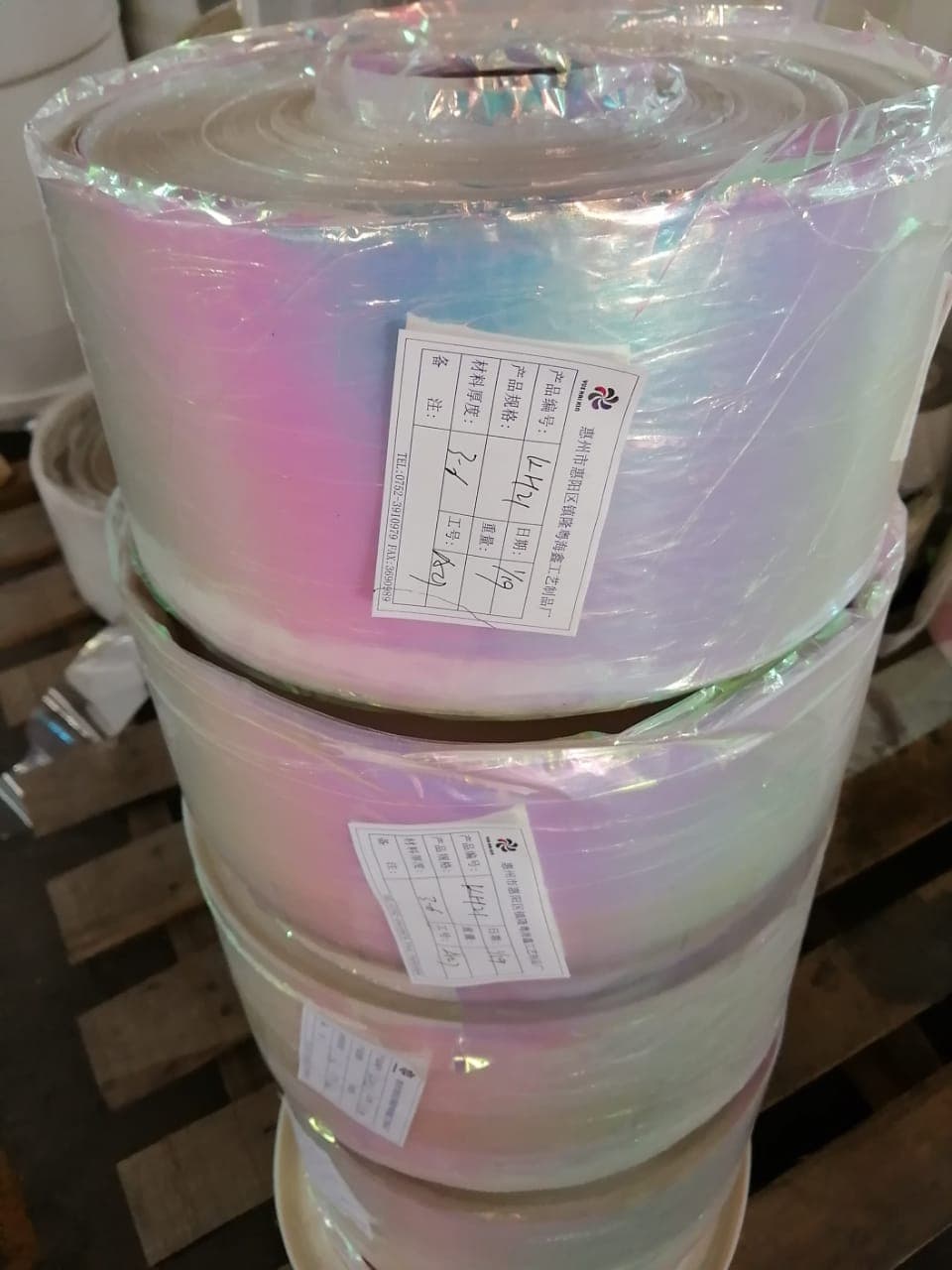
Whether formulating eyeshadow palettes, lip glosses, nail polishes, or compounding industrial epoxy resin, start with our 1kg low trial MOQ or complimentary 50g qualification sample with complete TDS and batch COA.