
Loading...
⚡ 1kg Low MOQ · Factory Direct Glitter & Mica⚡ Source Factory Direct Wholesale · Custom Loose Glitter & Mica Pigments · 1kg Low Trial MOQ · 48h Free 50g Lab Samples
mlmcustom@mlmcosmetic.com⚡ 1kg Low MOQ · Factory Direct Glitter & Mica⚡ Source Factory Direct Wholesale · Custom Loose Glitter & Mica Pigments · 1kg Low Trial MOQ · 48h Free 50g Lab Samples
mlmcustom@mlmcosmetic.comLoading...
Analyze synthetic mica vs natural mica heavy metal ICP-MS test limits, EU Annex XVII compliance, MoCRA specs, and high-performance cosmetic formulation.
When evaluating high-performance color cosmetic ingredients, cosmetic chemists and regulatory affairs managers face an evolving landscape of supply chain transparency, ethical sourcing, and heavy metal impurity constraints. A central question in modern color physics and safety assessment is: Is synthetic mica safer than natural mica heavy metals test performance shows?
From an analytical and structural chemistry perspective, the short answer is yes. Synthetic mica (Synthetic Fluorophlogopite, $KMg_3AlSi_3O_{10}F_2$) offers a controlled, laboratory-synthesized crystalline lattice that eliminates the geogenic heavy metal contamination inherently trapped within mined natural mica (Muscovite, $KAl_2(AlSi_3O_{10})(OH)_2$). For technical teams formulating under strict international standards, utilizing high-purity effect pigments like Bulk Cosmetic Mica Powder ensures predictable physical performance and regulatory ease.
In this technical guide, we evaluate heavy metal ICP-MS testing data, particle morphology, heat and solvent resistance parameters, and international regulatory frameworks including the US FDA MoCRA and EU REACH Annex XVII.
Natural mica is extracted from pegmatite rock formations. During natural geological mineralization over millions of years, heavy metals such as Lead ($Pb$), Arsenic ($As$), Mercury ($Hg$), Cadmium ($Cd$), and Antimony ($Sb$) substitute into the silicate crystal structure or sit embedded within interfacial planar fractures. Standard washing and refining processes can reduce surface impurities, but structural geogenic heavy metals cannot be removed without dissolving the mineral lattice.
In contrast, Synthetic Fluorophlogopite is produced in electric arc furnaces at temperatures exceeding 1,500°C by fusing ultra-pure synthetic raw materials ($SiO_2$, $Al_2O_3$, $MgO$, and $K_2SiF_6$). This closed-loop synthetic process prevents heavy metal infiltration, yielding a uniform substrate with near-zero heavy metal background baseline levels.
When subjected to acid digestion and ICP-MS analysis, synthetic mica consistently outperforms mined natural mica across all standard cosmetic heavy metal assays:
Beyond purity, synthetic mica provides superior optical transparency, higher surface smoothness, and a lower coefficient of friction ($3.2\ \mu m$ vs $8.5\ \mu m$ surface roughness $R_a$), minimizing skin irritation while amplifying chroma.
| Specification / Parameter | Natural Mica (Muscovite Substrate) | Synthetic Mica (Fluorophlogopite) | Biodegradable Cellulose Substrate | Polyethylene Terephthalate (PET) Substrate |
|---|---|---|---|---|
| Lead ($Pb$) ICP-MS | $5.0 - 15.0\text{ ppm}$ | $< 2.0\text{ ppm}$ (Typ. $< 0.5\text{ ppm}$) | $< 1.0\text{ ppm}$ | $< 1.0\text{ ppm}$ |
| Arsenic ($As$) ICP-MS | $1.5 - 5.0\text{ ppm}$ | $< 1.0\text{ ppm}$ (Typ. $< 0.2\text{ ppm}$) | $< 0.5\text{ ppm}$ | $< 0.5\text{ ppm}$ |
| Mercury ($Hg$) ICP-MS | $0.2 - 1.0\text{ ppm}$ | $< 1.0\text{ ppm}$ (Typ. $< 0.05\text{ ppm}$) | $< 0.1\text{ ppm}$ | $< 0.1\text{ ppm}$ |
| Particle Size Range | $5\ \mu m - 150\ \mu m$ | $0.05\text{ mm} - 3.0\text{ mm}$ ($1/128" - 1/8"$) | $0.05\text{ mm} - 2.4\text{ mm}$ | $0.05\text{ mm} - 3.0\text{ mm}$ |
| Thermal Resistance | Up to $800^\circ\text{C}$ | Up to $160^\circ\text{C} - 200^\circ\text{C}$ (Coated) | Up to $100^\circ\text{C}$ | Up to $180^\circ\text{C}$ |
| Solvent Resistance | Excellent | Immune to Ethyl/Butyl Acetate & Glycols | Good (System dependent) | Excellent |
| EU Microplastic Status | Exempt (Inorganic) | Exempt (Inorganic Mineral) | Exempt (Natural Polymer) | Restricted (Microplastic) |
| MOQ (Standard / Custom) | $25\text{ kg} / 100\text{ kg}$ | $1\text{ kg}$ (Stock) / $25\text{ kg}$ (Custom) | $1\text{ kg} / 25\text{ kg}$ | $1\text{ kg} / 25\text{ kg}$ |
| Factory Lead Time | $14 - 21\text{ Days}$ | $3 - 7\text{ Days}$ (Stock) / $10 - 14\text{ Days}$ | $7 - 10\text{ Days}$ | $3 - 7\text{ Days}$ |
Many color cosmetic brands encounter unexpected formulation failures during scaling due to critical blind spots in raw material selection. Addressing these structural gaps is essential for robust product design:
Formulators replacing natural mica with synthetic mica often overlook density and particle thickness differences. Synthetic fluorophlogopite flakes are flatter and more uniform than natural mica fragments. Under Stokes' Law ($v = \frac{2gr^2(\rho_p - ho_f)}{9\eta}$), differences in particle radius ($r$) and effective substrate density ($ ho_p$) dictate settling rates. Because synthetic mica flakes exhibit a higher yield stress threshold requirement in liquid foundations or body oils, failure to adjust the rheology modifier network (e.g., Hectorite clays or Acrylate Crosspolymers) leads to pigment phase separation and hard caking.
In solvent-heavy systems like nail lacquers formulated with ethyl acetate, butyl acetate, and isopropyl alcohol, poorly coated effect pigments release metal oxide layers or organic lake dyes into the liquid vehicle. MLM Cosmetic's synthetic mica substrate utilizes a proprietary multi-layer titanium dioxide ($TiO_2$) and iron oxide ($Fe_2O_3$) calcination technology. This ensures zero solvent leaching, preserving matrix clarity and preventing color shifts over shelf life.
With the European Union enforcing strict restrictions on synthetic polymer microparticles (Commission Regulation EU 2023/2055), formulators using traditional PET glitters face reformulation dead-ends. Mined natural mica often fails ethical audit criteria or trace metal screens. Synthetic mica provides an inorganic, non-plastic alternative that is completely exempt from EU microplastic bans while matching the brilliant brilliance and flake size ($0.05\text{ mm} - 3.0\text{ mm}$) of traditional glitters.
Under MoCRA, safety substantiation requires raw material constituents to undergo rigorous quantitative risk assessment. Batch-level ICP-MS heavy metal certificates of analysis (CoA) are mandatory for safety dossiers. Synthetic mica's baseline purity ensures that finished formulations remain far below FDA action levels for cosmetic products, protecting brands against mandatory recall notices or administrative detention at US ports of entry.
Annex III of EU 1223/2009 restricts heavy metal impurities in cosmetic colorants. Using synthetic mica eliminates lot-to-lot heavy metal volatility, streamlining safety assessments conducted by European Toxicologists (CPSR Part B). Furthermore, synthetic fluorophlogopite is completely free from illegal child labor concerns associated with unregulated mica mining regions, providing full ESG supply chain traceability.
Yes. In addition to lower heavy metal content ($Pb < 2\text{ ppm}$), synthetic mica flakes feature smooth, rounded edges synthesized under controlled conditions. Natural mica flakes possess sharp fracture lines that can cause mechanical micro-abrasions on delicate skin or ocular membranes.
Synthetic fluorophlogopite has a melting point exceeding 1,200°C. In coated cosmetic effect pigment formats, it easily withstands temperatures of $160^\circ\text{C} - 200^\circ\text{C}$ encountered during lipstick molding, hot pouring, and powder slurry baking without losing brilliance or yellowing.
Yes. Synthetic mica pigments sized between $0.05\text{ mm}$ and $3.0\text{ mm}$ deliver vivid pearlescent and sparkling reflection. Because synthetic mica is a mineral substrate ($KMg_3AlSi_3O_{10}F_2$), it is exempt from the EU Annex XVII microplastic ban while offering complete chemical safety.
For standard stock grades, our MOQ is $1\text{ kg}$ with lead times of $3 - 7\text{ business days}$. Custom color matching, specific particle size distributions, or surface-treated powders require an MOQ of $25\text{ kg}$ with a production lead time of $10 - 14\text{ business days}$.
At MLM Cosmetic (Shenzhen, China), we engineer raw materials designed for high-end cosmetic brands demand absolute purity, precise particle size distributions, and total compliance certainty. Explore our complete portfolio of pure mineral pigments and eco-conscious effect particles including Cosmetic Grade Biodegradable Glitter.
For technical documentation, full batch-level ICP-MS test certificates, or custom shade requests, contact our engineering team directly:
Disclaimer: Technical data and regulatory references provided herein (including EU Regulation 2023/2055, EU Regulation 1223/2009, and US FDA MoCRA) are based on current legislative texts and laboratory test parameters for raw materials manufactured by MLM Cosmetic. This documentation is intended solely to support independent brand formulators and Responsible Persons in compiling their Cosmetic Product Safety Reports (CPSR) and product filings. Final formulation compliance, toxicological risk assessment, and finished product registration remain the responsibility of the brand owner.
Looking for custom formulation or laboratory testing samples? Contact our MLM Cosmetic technical engineering team or request a free sample kit directly.
Target Formulation Material:
Synthetic Mica vs Natural Mica: Heavy Metal & Safety Guide
Includes 50g sealed lab pouch, lot-specific COA, Technical Data Sheet (TDS), and ISO 22716 regulatory package.
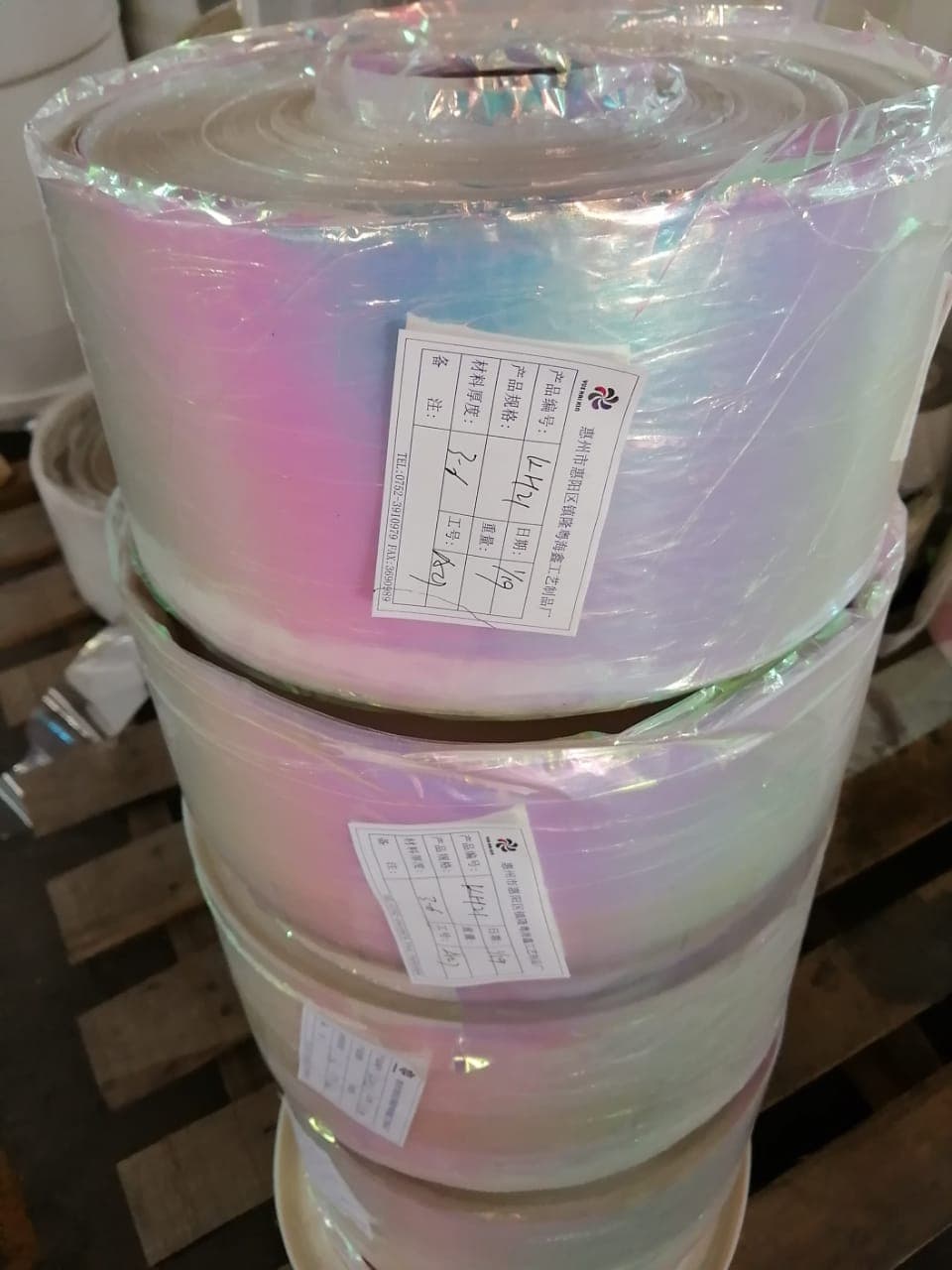
Whether formulating eyeshadow palettes, lip glosses, nail polishes, or compounding industrial epoxy resin, start with our 1kg low trial MOQ or complimentary 50g qualification sample with complete TDS and batch COA.