
Loading...
⚡ 1kg Low MOQ · Factory Direct Glitter & Mica⚡ Source Factory Direct Wholesale · Custom Loose Glitter & Mica Pigments · 1kg Low Trial MOQ · 48h Free 50g Lab Samples
mlmcustom@mlmcosmetic.com⚡ 1kg Low MOQ · Factory Direct Glitter & Mica⚡ Source Factory Direct Wholesale · Custom Loose Glitter & Mica Pigments · 1kg Low Trial MOQ · 48h Free 50g Lab Samples
mlmcustom@mlmcosmetic.comLoading...
Compare the top 10 cosmetic glitter manufacturers in China. Direct factory review covering 1kg pilot MOQ, Agilent 7800 ICP-MS testing, particle sizing, and EU/FDA compliance.

Formulator Advisory & Pilot Testing Notice: Technical specifications, heavy metal thresholds, and regulatory suitability depend on exact SKU, particle size, and vehicle chemistry. Lot-specific documentation on request (TDS, SDS, and Agilent 7800 ICP-MS COA) is provided for benchtop pilot testing.
China accounts for roughly 70% of global polyester glitter film slitting throughput, but raw materials meeting cosmetic purity baselines represent under 12% of national production. The split is driven by chemistry and slitting mechanics. In northern and eastern industrial corridors (Zhejiang, Shandong), plants run high-speed packaging BOPET slit on hardened steel gang-dies for craft and decorative conversions. These commodity substrates carry antimony polycondensation catalysts (extractable Sb reaching 150 to 300 ppm) and aromatic binders that bleed in cosmetic solvents.
In South China (Shenzhen and Dongguan), specialized converters utilize cleanroom rotary slitting lines fitted with tungsten carbide tooling and optical-grade biaxially oriented polyethylene terephthalate (BOPET) or regenerated plant cellulose. For cosmetic chemists, color formulators, and contract manufacturers (CMOs), vetting a direct manufacturing partner requires auditing three parameters on the shop floor:
The table below benchmarks 10 manufacturers across substrate chemistry, slitting tolerances, trial MOQ, and analytical testing protocol.
| Manufacturer / Supplier | Facility Location | Core Production Scope | Minimum Order Quantity (MOQ) | Heavy Metal Testing & Purity | Lab Sample Turnaround | Best For / Target Buyer |
|---|---|---|---|---|---|---|
| MLM Cosmetic Pigments (Shenzhen Meilianmei) | Shenzhen, Guangdong | Optical BOPET, CelluGlitter (Cellulose), Synthetic Mica | 1 kg (Aluminum barrier pouch) | In-house Agilent 7800 ICP-MS (documentation on request); Pb < 2ppm, As < 2ppm | 48 Hours (Complimentary 50g) | Cosmetic CMOs, Indie Brands, Nail Polish & Lip Formulators |
| Crown Pigment Co., Ltd. | Wenzhou, Zhejiang | Industrial & Polymeric Glitter, Pearl Pigments | 25 kg (Standard fiber drum) | Outboard SGS batch testing; standard industrial limits | 5–7 Business Days | High-volume industrial coatings, plastics, mass-market toys |
| Glory Star Effect Pigments | Dongguan, Guangdong | Metallic PET films, craft flakes, hot stamping foil | 20 kg | Third-party annual testing; antimony content variable | 3–5 Business Days | Textile screen printing, seasonal decorative items, export crafts |
| Guangzhou Brilliant Pigments | Guangzhou, Guangdong | Conventional cosmetic mica, treated pigments, PET glitter | 10 kg | Third-party commercial lab testing (AAS/ICP-OES) | 4–6 Business Days | Domestic South China color cosmetic contract fillers |
| Shandong Bright Star Materials | Weihai, Shandong | Large-flake PET glitter, glitter yarn, holographic film | 50 kg | Factory-declared compliance; batch testing on request | 7–10 Business Days | Synthetic leather, industrial floor coatings, glitter paste |
| Jiangsu Rainbow Optical Film | Changzhou, Jiangsu | Metallized functional films, coarse hex flakes | 25 kg | REACH/RoHS declared; documentation on request; cosmetic limits by special request | 5–7 Business Days | Automotive aftermarket paint, masterbatch processors |
| Yiwu Sparkle Trading Co. | Yiwu, Zhejiang | Commercial re-packer; mixed-grade craft/cosmetic glitter | 5 kg (Pre-packed jars) | Broker documentation; variable traceability | 24–48 Hours | Small-scale crafters, Amazon/e-commerce retail resellers |
| Shenzhen Shimmer Tech Labs | Shenzhen, Guangdong | Holographic interference films, specialty coatings | 15 kg | In-house AAS; testing focused on optical clarity | 3–5 Business Days | High-end graphic printing, specialty packaging, nail gels |
| Foshan Luster Ingredients | Foshan, Guangdong | Surface-treated mica, pearlescent flakes, polyester | 20 kg | External CIQ test reports; compliance for export | 5–7 Business Days | Export-focused personal care manufacturers (shampoo/wash-off) |
| Ningbo Precision Cut Films | Ningbo, Zhejiang | Standard hex slitting, glitter polyester powder | 100 kg | RoHS compliant; standard heavy metal screening | 7–10 Business Days | Bulk decorative supply, stationary, seasonal holiday ornaments |
Direct Factory Floor: Bao'an District, Shenzhen, Guangdong, China
MLM Cosmetic Pigments operates exclusively as an upstream raw material chemical engineer and precision converter. The factory does not produce finished, filled, or bottled consumer cosmetics. Instead, MLM specializes in precision-slit effect pigments supplied directly to international color cosmetic formulators, clean-beauty brands, and cosmetic contract manufacturing organizations (CMOs).
Raw Optical Film (BOPET / Plant Cellulose)
  │
  ├── Vacuum Aluminum Deposition (99.99% Pure Al)
  │
  ├── Thermoset Cross-Linked Polyurethane / Polyacrylate Color Coating
  │     └── Curing at 160°C–180°C (Zero Residual Monomer)
  │
  ├── High-Speed Precision Rotary Shearing (Tungsten Carbide Tooling)
  │     └── Tolerance: ±0.005mm (No Burr, No Feathering)
  │
  ├── Agilent 7800 ICP-MS Analytical Testing (Lead, Arsenic, Antimony, Mercury, Cadmium)
  │
  └── Dual Packaging:
        ├── 1kg Heat-Sealed Aluminum Barrier Foil Pouch (R&D / Pilot)
        └── 25kg UN-Rated Fiber Drum with Antistatic PE Liner (Production)
The production floor utilizes proprietary multi-blade rotary shear cassettes fitted with sub-micron polished tungsten carbide knives. Traditional guillotine or crushed-blade slitting techniques cause plastic deformation, microscopic feathering, and sheared burrs at the hexagonal corners. When introduced into cosmetic bases, burred flakes generate high surface drag, cause ocular micro-abrasions, and interlock mechanically to create severe agglomeration.
MLM’s rotary slitting process maintains continuous optical edge-tracking and web tension controllers calibrated to within ±0.05 N. This prevents mechanical stretching of the film substrate, ensuring that every hex cut—from 0.004" (100 µm) up to 0.040" (1000 µm)—maintains absolute planar geometry with clean, perpendicular fracture surfaces.
MLM bypasses the latency and generic reporting of external commercial test brokers by operating an in-house Agilent 7800 ICP-MS (Inductively Coupled Plasma Mass Spectrometry) suite. Representative production lots undergo regular pilot testing and qualification, with lot-specific documentation on request, acid microwave digestion (using high-purity ultra-trace grade $\text{HNO}_3$ and $\text{H}_2\text{O}_2$) to quantify toxic elements down to parts-per-billion (ppb) thresholds.
Recognizing that production runs for specialty color cosmetics, prestige nail lacquers, and limited-edition lip formulations do not always warrant 500-kilogram commitments, MLM has standardized a 1 kg minimum order quantity (MOQ).
Location: Wenzhou, Zhejiang Province, China
Crown Pigment operates large-scale casting, metallization, and conversion operations in Zhejiang's industrial corridor. Their primary output targets industrial coatings, plastic masterbatches, and craft applications.
Location: Dongguan, Guangdong Province, China
Glory Star is located within the Pearl River Delta manufacturing basin, focusing on metallic films, hot-stamping foils, and glitter conversion for screen printing, textile embellishments, and craft products.
Location: Huadu District, Guangzhou, Guangdong, China
Guangzhou Brilliant Pigments is situated close to the Baiyun cosmetic manufacturing hub, serving primarily domestic OEM/ODM factories producing mass-market makeup, shampoos, and festival body paints.
Location: Weihai, Shandong Province, China
Shandong Bright Star is a heavy-industry converter specializing in thick-gauge film slitting, glitter filament production, and macroscopic flakes (0.040" to 0.125") for epoxy flooring, marine gelcoats, and artificial stone synthesis.
Location: Changzhou, Jiangsu Province, China
Jiangsu Rainbow is an established roll-to-roll coater and metallizer producing dichroic, rainbow holographic, and high-refractive-index index-matched functional films for industrial and electronic displays.
Location: Yiwu, Zhejiang Province, China
Located in the world's largest wholesale trading hub, Yiwu Sparkle operates as a commercial aggregator, repackager, and trading company rather than an upstream chemical manufacturer.
Location: Longhua District, Shenzhen, Guangdong, China
Shenzhen Shimmer Tech Labs focuses on optical interference pigments, multi-layer co-extruded polymers, and specialty liquid-crystal film flakes used in security printing and high-end consumer electronics.
Location: Foshan, Guangdong Province, China
Foshan Luster supplies a range of inorganic functional fillers, treated surface powders, and polyester glitters to the personal care and home care product sectors throughout Southeast Asia and the Middle East.
Location: Ningbo, Zhejiang Province, China
Ningbo Precision Cut is an export-driven conversion house situated near one of China's largest container shipping ports, engineered specifically for high-tonnage contract slitting.
Cosmetic procurement cannot rely solely on sales literature. Before introducing an effect pigment into production-scale emulsion, suspension, or anhydrous matrices, formulating chemists must execute three objective benchtop qualification tests.
       Benchtop Qualification Protocol for Cosmetic Glitter
 ─────────────────────────────────────────────────────────────────
  1. Solvent Bleed Test    │ 7-day immersion in nail lacquer solvents
                           │ (Ethyl/Butyl Acetate); UV-Vis inspection
  2. Microscopic Edge Exam │ 100x magnification; verify absence of
                           │ burrs, tears, and mechanical curling
  3. ICP-MS Purity Audit   │ Digestion & quantification: Pb, As,
                           │ Hg, Cd, and especially residual Sb
Commercial glitter flakes frequently employ superficial dyes dispersed within un-crosslinked nitrocellulose or basic acrylic binders. Under exposure to modern cosmetic vehicles—particularly low-viscosity esters, nail polish solvents, and liquid lip emollients—unstable coatings dissociate, bleeding dyes into the clear phase and turning the suspended flakes translucent silver.
Passing Criterion: Transmittance of the filtered liquid phase must exceed 98.5%. Any visible discoloration, color shift in the carrier fluid, or softening/swelling of the settled flakes indicates incomplete polymer cross-linking and disqualifies the raw material from cosmetic use.
[168-Hour Solvent Bleed Test Visual Comparison]
Industrial Flake (Uncrosslinked):  [ Settled Flakes ] -> [ Discolored Solvent Phase (Bleed) ] -> FAILS
MLM Precision Cut (Crosslinked):   [ Settled Flakes ] -> [ Optically Clear Solvent Phase     ] -> PASSES (T > 98.5%)
Poorly maintained cutting blades or excessive slitting speeds cause plastic yield along cut edges. Instead of a sharp, planar cut, the film stretches and ruptures, forming micro-burrs, curled fringes, and particulate tails. In color cosmetics, these defects create rough skin-feel, aggregate through mechanical interlocking, and irritate sensitive mucosal membranes.
MLM’s tungsten carbide slitting technology holds clean, sharp edges consistently across production lots, preventing the micro-tears and feathered edges common in high-speed industrial slitting operations.
Edge Geometry Comparison (100x Magnification):

Conventional Steel Shearing:        MLM Tungsten Carbide Slitting:
      ┌───────────────┐                  ┌───────────────┐
     ~│               │~                │               │
   ~~~│ Micro-Burrs / │~~~              │ Crisp, Planar │
     ~│ Feathered Edge│~                │ Perpendicular │
      └───────────────┘                  └───────────────┘
  (Causes Drag & Agglomeration)        (Uniform Suspension & Smooth Slip)
Because glitter is frequently incorporated into products used near the eyes (eyeshadows, liners) and lips (glosses, balms), formulators must comply with strict raw material safety limits. Traditional industrial glitters fail these thresholds due to contaminated raw polyester matrices, non-purified aluminum coatings, and unregulated color pigments.
The table below details regulatory baselines from the US FDA and EU Regulation alongside MLM’s internal lot-release standards verified via Agilent 7800 ICP-MS:
| Element / Contaminant | FDA 21 CFR (Part 73/74 Thresholds) | EU Cosmetic Regulation (EC) No 1223/2009 (Annex IV) | MLM Internal Quality Standard (ICP-MS Batch Release) |
|---|---|---|---|
| Lead (Pb) | < 10.0 ppm – 20.0 ppm (by category) | < 2.0 ppm (Technically unavoidable trace) | < 2.0 ppm (Typical release: < 0.5 ppm) |
| Arsenic (As) | < 2.0 ppm – 3.0 ppm | < 2.0 ppm (Technically unavoidable trace) | < 2.0 ppm (Typical release: < 0.3 ppm) |
| Mercury (Hg) | < 1.0 ppm | < 1.0 ppm | < 1.0 ppm (Typical release: < 0.1 ppm) |
| Cadmium (Cd) | Variable / Prohibited in topical | < 1.0 ppm (Technically unavoidable trace) | < 1.0 ppm (Typical release: < 0.2 ppm) |
| Antimony (Sb) | Not explicitly specified in colorants | < 5.0 ppm (Cosmetic ingredient target) | < 0.5 ppm (Specification target: controlled low-antimony baseline (documentation on request)) |
Technical Note on Antimony ($Sb$): Antimony trioxide is widely used as a polycondensation catalyst in global polyethylene terephthalate (PET) synthesis. Standard consumer-grade BOPET films consistently show antimony concentrations between 150 ppm and 350 ppm. In acidic or solvent-rich cosmetic formulations, these residues can leach into the formulation. MLM uses antimony-free or low-antimony precursor films, ensuring antimony levels remain below 0.5 ppm across all cosmetic-grade batches.
Selecting the correct cut size requires balancing visual reflectivity, suspension rheology, and skin sensorial feel. The guide below maps nominal cut codes to cosmetic applications:
          PARTICLE SIZE RHEOLOGY SPECTRUM
 004 Hex (100 µm)  ──────────────────────►  040 Hex (1000 µm)
 [Smooth Slip / Low Drag]              [Maximum Specular Flash]
 [Easy Suspension / Low Yield]         [Requires High Gel-Strength Matrix]
The European Commission’s adoption of Regulation (EU) 2023/2055 (amending Annex XVII of REACH regarding synthetic polymer microparticles) established a strict regulatory transition schedule for cosmetic glitter procurement across global markets.
      EU 2023/2055 MICROPLASTIC TRANSITION TIMELINE
 ─────────────────────────────────────────────────────────────
  OCT 2023       │ Direct non-contained microplastics ban active
  2027-2029      │ Rinsoff cosmetic formulations transition phase
  OCT 2035       │ Comprehensive ban across all leave-on cosmetics
                 │ (Only verified biodegradable polymers meeting EN/ISO standards permitted)
Traditional cosmetic glitter manufactured from Biaxially Oriented Polyethylene Terephthalate (BOPET) constitutes a non-biodegradable synthetic polymer under REACH definitions.
To establish long-term, global, microplastic-exempt compliance, MLM manufactures biodegradable lines from regenerated plant cellulose sourced from sustainably harvested eucalyptus and beechwood pulp.
MLM Cosmetic Pigments operates a direct technical sourcing workflow designed for research chemists, color formulators, and cosmetic contract manufacturing procurement teams.
             Direct Factory Procurement Path (MLM Pigments)
 ──────────────────────────────────────────────────────────────────────────
  Phase 1: Lab Sample (48h)  │ 50g Qualification Jars + Lot-Specific COA
  Phase 2: Pilot Run (1kg)   │ Vacuum-Sealed Barrier Pouch for Stability Testing
  Phase 3: Production (25kg) │ Commercial Fiber Drums with Heavy Metal Release Cert
Technical Direct Sourcing Contact: Address sample requests, analytical documentation checks, and custom slitting inquiries to the Shenzhen Engineering Office: mlmcustom@mlmcosmetic.com (Shenzhen Meilianmei Technology Development Co., Ltd.).
Industrial glitter utilizes commercial-grade polyester films carrying antimony trioxide catalysts (residual Sb typically 150–350 ppm) coated with basic solvent dyes and industrial acrylic or aromatic epoxy resins. These resins break down in cosmetic formulation solvents, releasing heavy metals, primary aromatic amines, and phthalate plasticizers onto the skin. Cosmetic-grade glitter requires low-antimony optical BOPET or plant-cellulose substrates coated with high-temperature cross-linked polyurethane or polyacrylate systems, colored using permitted cosmetic colorants (FDA 21 CFR / EU Annex IV listed) (D&C / FD&C lakes and inorganic pigments), and tested via ICP-MS to confirm total heavy metals remain well below global regulatory thresholds.
Antimony trioxide is the standard catalytic agent used globally in industrial PET polymerization. Standard packaging and craft films do not eliminate this catalyst, leaving high residual concentrations throughout the material. In cosmetic applications—particularly acidic, hydro-alcoholic, or ester-rich formulations—antimony can leach directly into product vehicles. MLM prevents this contamination upstream by using low-antimony base films and auditing production lots with documentation on request on an Agilent 7800 ICP-MS system to maintain Antimony levels strictly below 0.5 ppm.
Standard steel blades crush and tear film webs during slitting, generating plastic micro-burrs along the hexagonal particle edges. These rough edges catch on one another mechanically, creating clusters that shear out unevenly during product application and drag roughly across the skin. Tungsten carbide knives retain ultra-sharp cutting edges without mechanical deflection, yielding clean, perpendicular facets. The resulting particles disperse evenly within fluids and suspend cleanly without mechanical particle interlocking.
Every production lot ships with a comprehensive Technical Compliance Package: a lot-specific Certificate of Analysis (COA) containing exact ICP-MS heavy metal test values; a 16-section Safety Data Sheet (SDS); a detailed Technical Data Sheet (TDS) covering particle size distribution and solvent resistance ratings; and documented compliance statements for US FDA 21 CFR, EU Cosmetic Regulation (EC) No 1223/2009, US MoCRA, and China CSAR regulatory standards.
Plant-based cellulose glitters perform reliably in aqueous, alcohol-based, and cosmetic ester systems (such as lip glosses, creams, and lotions). However, in aggressive organic solvent mixtures containing high concentrations of Ethyl Acetate, Butyl Acetate, and MEK, cellulose films can soften over extended shelf lives. For aggressive nail lacquer formulations, formulators should utilize MLM’s low-antimony, high-crosslink optical BOPET lines, which provide long-term solvent immersion resistance. Formulators must confirm suitability against target solvents via benchtop pilot testing.
MLM Cosmetic Pigments (Shenzhen Meilianmei Technology Development Co., Ltd.) is an upstream manufacturer of cosmetic effect pigments, glitters, and synthetic mica powders. The US FDA does not certify or approve cosmetic raw material manufacturers or finished cosmetics. Intended use suitability (eye area, lip area, wash-off vs leave-on) depends on SKU-specific colorant listings (21 CFR 73/74) and target market regulations. Batch test documentation on request (TDS, SDS, and ICP-MS heavy metal reports) is provided to assist finished product safety evaluations conducted by the brand owner's qualified safety assessor through pilot testing.
Target Formulation Material:
Top 10 Cosmetic Glitter Manufacturers in China (2026 Direct Factory Sourcing Guide)
Includes 50g sealed lab pouch, lot-specific COA, Technical Data Sheet (TDS), and ISO 22716 regulatory package.
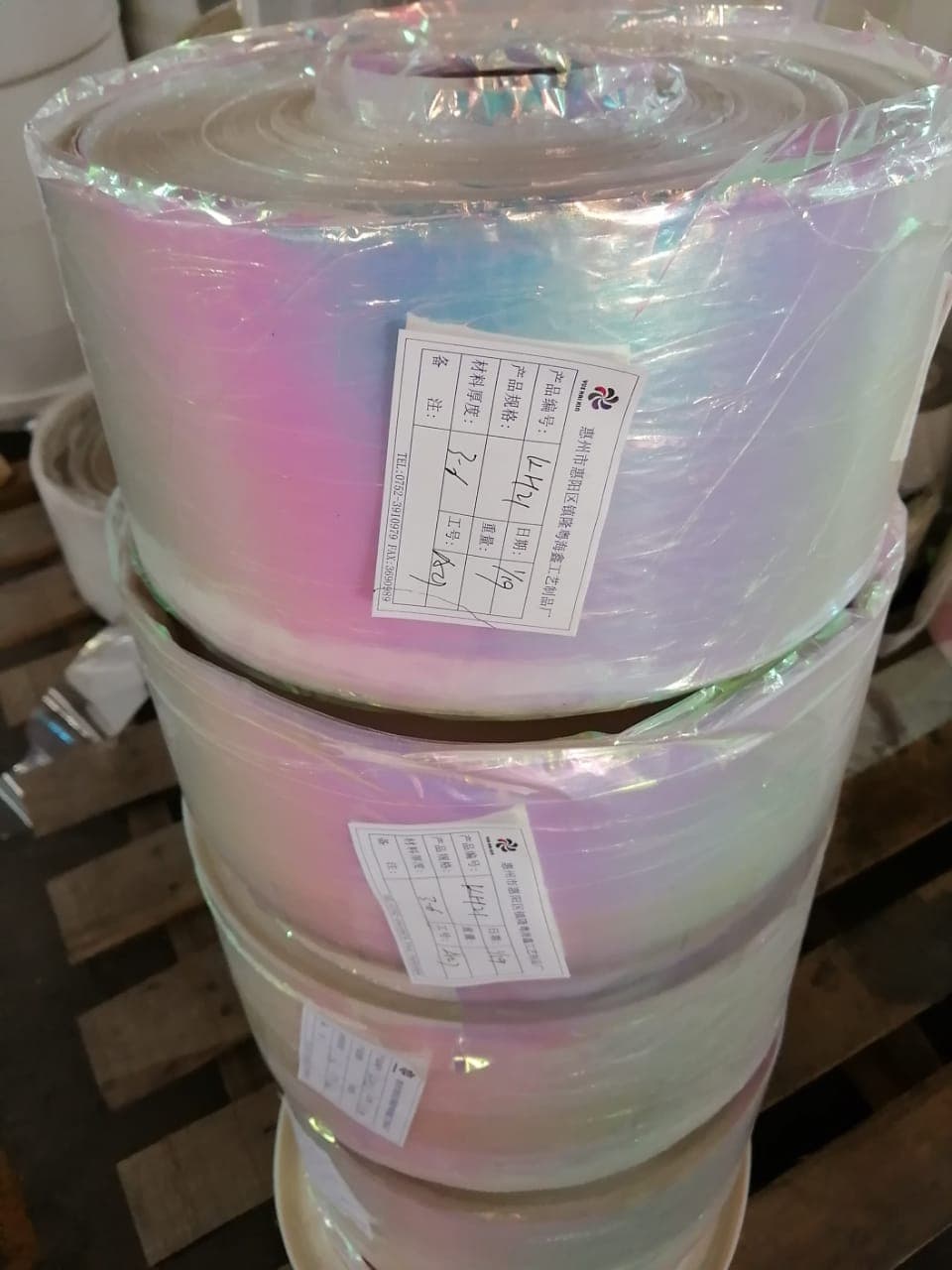
Whether formulating eyeshadow palettes, lip glosses, nail polishes, or compounding industrial epoxy resin, start with our 1kg low trial MOQ or complimentary 50g qualification sample with complete TDS and batch COA.