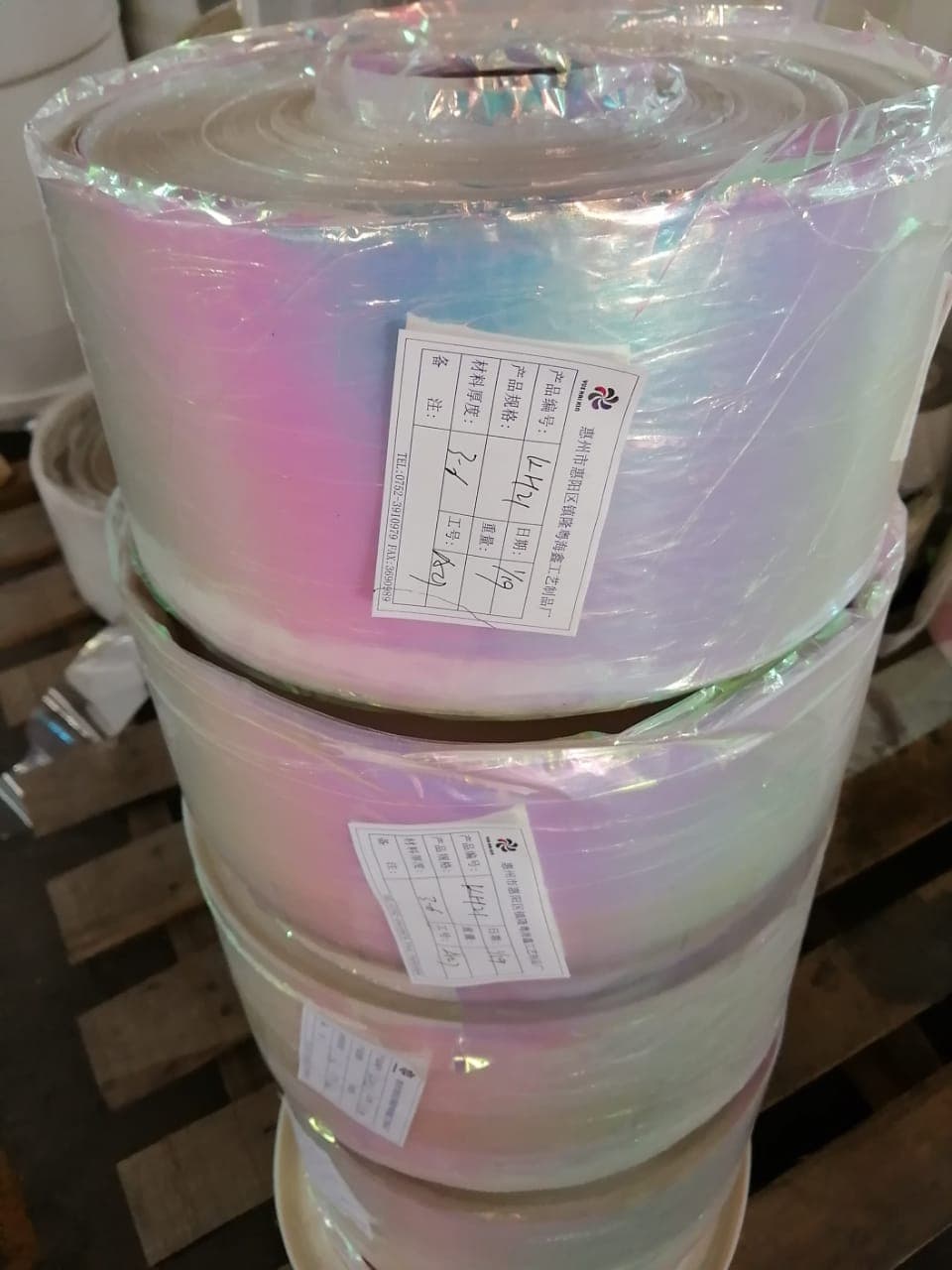
Formulator Advisory & Pilot Testing Notice: Optical chameleon and multi-chrome pigment interference performance, heavy metal thresholds, and cosmetic suitability depend on exact SKU, particle size, and vehicle chemistry. Lot-specific documentation on request (TDS, SDS, and Agilent 7800 ICP-MS COA) is provided for benchtop pilot testing.
Optical Multi-Chrome Pigments: Plant-Floor Sourcing & Nanometer Interference Architecture
Shop-Floor Technical Briefing by the Engineering Team at MLM Cosmetic Pigments (Bao'an, Shenzhen)
When cosmetic formulation chemists and indie color brand directors visit our Shenzhen thin-film coating halls, they usually bring two distinct frustrations from previous suppliers:
First, "Why did our batch turn into dull gray mud when we scaled up from lab beaker to the pilot mixer?"
Second, "Why are European and Japanese chemical conglomerates demanding a 25kg minimum order—over 8,000 for a single shade—just to run stability and patch testing?"
Multi-chrome chameleon pigments represent the most technically demanding sector of cosmetic effect pigments. Unlike standard pearlescent mica coated with a single metal oxide layer, genuine multi-chrome pigments rely on multi-cavity Fabry-Perot optical interference resonators.
On our production floor, achieving a vivid 4-phase color travel (such as Cyan to Deep Blue to Regal Purple to Warm Bronze) requires depositing alternating nanometer layers onto ultra-flat synthetic silica platelets:
- Sub-Nanometer Coating Precision: We control the low-index amorphous silica (SiO2, n = 1.46) spacer layer to an exact thickness between 180nm and 380nm with a tolerance of plus-or-minus 2.5nm. A variance of just 5nm across the platelet surface shifts the constructive interference peak (2nd * cos(theta) = m * lambda), resulting in flat, muddy flop angles rather than dramatic chromatic transition.
- Substrate Flatness & Scattering: Natural muscovite mica exhibits microscopic surface step defects and cleavage ridges (surface roughness Ra > 12nm) that scatter light diffusely. For premium optical chameleons, we synthesize high-purity synthetic silica platelets (Ra < 1.2nm), producing mirror-like specular reflection and vibrant flop dynamics.
- The Low-Shear Manufacturing Imperative: Because multi-layer dielectric stacks have differing thermal expansion coefficients and interfacial shear limits, running a high-shear rotor-stator homogenizer (>3,000 RPM) or three-roll mill shears the nanometer titanium and iron oxide shells away from the silica core. On the formulation bench, chameleons must ALWAYS be incorporated during the final phase using low-shear anchor or marine paddle mixing (<800 RPM).
- Breaking the 10,000 MOQ Barrier: With raw multi-chrome pigments pricing between 180 and 450 per kilogram, traditional chemical conglomerate MOQs of 20kg to 25kg kill creative formulation. At MLM, we package optical chameleon pigments in 1kg vacuum-sealed moisture-barrier aluminum foil pouches, backed by 48-hour dispatch of complimentary 50g qualification samples for benchtop trial batches.
The comparison matrix below audits 7 leading global chameleon and multi-chrome pigment manufacturers across substrate physics, interference stack design, heavy metal screening, trial MOQ, and lab sample turnaround.
2026 Wholesale Chameleon & Multi-Chrome Cosmetic Pigment Manufacturer Comparison
| Supplier / Location | Primary Substrate Technology | Optical Interference Architecture | Color Travel Range (Hue Shifts) | Heavy Metal Purity Protocol | Minimum Order Quantity (MOQ) | Lab Sample Speed | Best For / Target Buyer |
|---|
| MLM Cosmetic Pigments (Shenzhen Meilianmei) | High-Purity Synthetic Silica Platelets (1.0–2.0 µm, Ra < 1.2 nm) & Synthetic Fluorphlogopite | Nanometer Fabry-Pérot: Fe2O3/TiO2 - SiO2 (180–380 nm) - TiO2/Fe2O3 dielectric stacks | 3 to 5 Distinct Shifts (e.g., Cyan-Blue-Purple-Magenta, Green-Gold-Bronze) | In-house Agilent 7800 ICP-MS: Pb < 2, As < 2, Hg < 1, Cd < 1, Sb < 0.5 ppm; lot documentation on request | 1 kg (R&D Pilot Foil Pouch) / 25 kg (UN Drum) | 48 Hours (Complimentary 50g) | Direct cosmetic OEMs, contract labs, and color brands needing low pilot MOQ & direct factory pricing |
| Merck KGaA / Colorstream (Darmstadt, Germany) | Natural Muscovite Mica & Precision Synthetic SiO2 Flakes | Single/Double Multi-Coated Metal Oxides (TiO2 / Fe2O3) | 2 to 3 Subtle Transitions (e.g., Viola Fantasy, Autumn Mystery) | Pharma-grade specification; Full ICP digestion battery dossiers | 25 kg standard fiber drums (via regional chemical distributors) | 2 to 4 Weeks (subject to local distributor inventory) | Prestige multinational beauty conglomerates with extended formulation timelines and high budgets |
| Sun Chemical / DIC Corporation (Parsippany, NJ, USA / Tokyo, Japan) | Borosilicate Glass & High-Purity Mica Platelets | Multi-Layer Metal Oxide Optical Stack Coatings | 2 to 3 Vibrant Shifts with High Sparkle Dominance | Rigorous Corporate Cosmetic Heavy Metal Release Limits | 25 kg (Standard Corporate Distribution) | 2 to 3 Weeks (via corporate sales representatives) | Mass-market cosmetic CMOs with enterprise supply contracts and high baseline volumes |
| CQV Co., Ltd. / Magchrom Series (Jincheon, South Korea) | Synthetic Mica & Alumina Platelets (Rigid Planar Substrate) | High-Density Metal Oxide Deposition (Fe2O3/TiO2 Stacks) | 2 to 4 Clean Shifts (Liquid-Crystal-Like Angle Variance) | High Purity Synthetic Protocol (Korean MFDS Compliant) | 5 kg to 10 kg standard packaging | 7 to 10 Business Days (via regional sales agents) | Premium K-Beauty brands and export pressed powder compounding laboratories |
| Zhejiang Ruicheng / Kolortek (Zhejiang, China) | Natural Mica & Commercial-Grade Synthetic Mica | Industrial Wet-Chemical Precipitation (TiO2/Fe2O3) | 2 to 3 Shifts (High Chroma, Broader Particle Distribution) | Standard General Cosmetic Grade (External Testing Reports) | 25 kg bulk drums | 3 to 7 Days (Domestic & International Express) | High-volume promotional cosmetics, bath bombs, and value-tier makeup lines |
| Spectra FX / Specialty Resellers (USA) | Sourced Imported Substrates (Various Coaters) | Repackaged Vacuum-Deposited Flakes | 3 to 4 Shifts (Curated Colorways for Custom Finishing) | Distributor Pass-Through (Relies on Origin Factory COA) | 100 g to 1 kg boutique packaging (Significant retail markup) | 2 to 5 Days (Domestic US Ground/Air) | Micro-indie formulators, crafters, and rapid single-shade prototypes |
| Guangzhou Jupeng Pigments (Guangzhou, China) | Synthetic Mica & Standard Glass Flakes | Hydrothermal Metal Oxide Deposition Over Standard Bases | 2 to 3 Shifts (Targeted at Mass-Market Color Trends) | Standard Factory Batch Inspection (Third-Party COA) | 5 kg to 25 kg standard pack | 3 to 5 Days (Domestic Courier) | Domestic Chinese CMOs, regional lip gloss and nail polish compounders |
3. Formulator Benchtop Qualification Guide: Technical Integration
Multi-Angle Spectrophotometry & Flop Index Characterization
Evaluating optical chameleon pigments with conventional d/8° sphere spectrophotometers yields invalid formulation data because integrating spheres capture total diffused reflection, collapsing the multi-chromatic angular progression into a single muddy average coordinate. Cosmetic analytical labs must deploy multi-angle spectrophotometers (e.g., BYK-mac i or X-Rite MA-T12) capturing spectral reflectance at specific aspecular detection angles: 15°, 45°, and 110° relative to specular reflection.
Formulators quantify color travel performance using the Multi-Angle Flop Index equation:
Flop Index = 2.69 * (L15° - L110°)^1.11 / (L*45°)^0.86
Where L* represents the lightness coordinate at the indicated viewing angle.
For high-performance optical chameleon pigments:
- 15° Specular Face Angle: Measures primary constructive interference reflection. The L* value should exceed 100 to 120, displaying the initial chromatic apex (e.g., intense gold-green, negative a*, high positive b*).
- 45° Intermediate Shift Angle: Represents typical consumer viewing conditions on the eyelid or lip curvature. As the angle tilts, the chromatic coordinate moves rapidly through the secondary hue phase (e.g., transition through red-orange, positive a*, declining b*).
- 110° Grazing Flop Angle: Measures the shortest wavelength escape path. High-performance silica multi-chromes exhibit an L* dropping to 30 to 40, accompanied by a dynamic inversion of chromatic vectors (e.g., shifting into deep blue-violet, positive a*, strongly negative b*).
If the Delta E* between 15° and 110° is below 45.0, the pigment lacks the optical interference purity required for true multi-chrome categorization, behaving instead as a standard bi-color dual-refractive pearl.
Refractive Index Matching & Binder Optical Hazing
Optical interference pigments rely on the refractive index differential between the outer high-index metal oxide layer (TiO2 n = 2.7, Fe2O3 n = 3.0) and the surrounding cosmetic delivery matrix (vehicle and binders). However, the internal low-index dielectric spacer (amorphous SiO2, n = 1.46) must maintain clean phase separation without optical bleed.
If the cosmetic delivery vehicle exhibits a high refractive index that closely matches the substrate, or if the binder phase causes optical scattering, internal reflections collapse and cause binder clouding:
- Mineral Oils and Esters: Standard low-polarity esters (e.g., Isododecane n = 1.421, Isononyl Isononanoate n = 1.436, Ethylhexyl Palmitate n = 1.446) maintain an optimal optical clearance buffer around the pigment flakes. This preserves crisp Fabry-Pérot phase transitions.
- High-Index Aromatic Emollients: Materials like Phenyl Trimethicone (n = 1.460) or Trimethylsiloxyphenyl Dimethicone (n = 1.480) match the refractive index of the internal silica spacer layer (n = 1.46). When formulating liquid multi-chrome eyeshadows, using high-index silicones as the primary carrier phase can generate visible milkiness, muting chromatic shifts. Formulators should maintain low-refractive-index cyclopentasiloxane (n = 1.398) or isododecane as volatile bases, using high-index silicones sparingly for pigment wetting.
- Film-Forming Resins: High-solid film formers (such as Trimethylsiloxysilicate [TMS] and Polymethylsilsesquioxane) must dry down into optically amorphous films. Partially crystallizing binder resins introduce internal light scattering, diluting aspecular chromatic travel.
Shear Sensitivity & Delamination Warnings
Optical chameleon pigment platelets are mechanically vulnerable composite microstructures. The nanometer-scale metal oxide films (20 to 60 nm) are physically anchored to the core substrate via liquid precipitation or vapor nucleation. Subjecting these pigments to high-shear dispersion equipment can destroy their optical properties.
- The Delamination Mechanism: High-shear processing—such as triple-roll milling, bead milling, or high-velocity rotor-stator rotor homogenizers operating above 3,000 RPM—imposes severe hydrodynamic shear stress and mechanical impingement. This causes micro-cracking and interfacial shear failure, stripping the outer TiO2/Fe2O3 interference coats away from the SiO2 spacer layer. The macroscopic formulation consequence is immediate: the multi-chrome travel permanently collapses, the bulk base transforms into a dull, gray-brown slurry, and loose microscopic metal oxide debris creates significant formulation haze.
- Standard Manufacturing Protocol: Effect pigments must be introduced into the liquid formulation during the post-dispersion phase. First, disperse all organic pigments, functional powders (such as talc, boron nitride, and sericite), and rheology modifiers under high shear. Once the base grind reaches full fineness of grind (Hegman gauge < 15 um), reduce the mixer speed and introduce the chameleon pigment. Blend using low-shear axial flow turbine impellers, planetary paddle mixers, or gentle anchor stirrers at speeds not exceeding 500 to 800 RPM until fully wetted and homogeneously dispersed.
Global Regulatory Compliance: Eye & Lip Safety Protocols
Formulating color cosmetics for global prestige markets requires rigorous compliance with the United States Food and Drug Administration (FDA 21 CFR § 73 and § 74) and European Union Regulation (EC) No 1223/2009 Annex IV colorant allowances.
-
Eye-Area Safety and Ferric Ferrocyanide / Chromium Oxides: When designing optical blue, teal, or violet transitions, some manufacturers introduce trace co-coatings of Ferric Ferrocyanide (CI 77510) or Chromium Oxide Greens (CI 77288). Under FDA 21 CFR § 73.2299, Ferric Ferrocyanide is explicitly prohibited from use in lip products in the United States, although permitted in eye makeup. Conversely, ultramarines and chromium oxides face varying restrictions across global jurisdictions. Pure physical multi-chromes engineered solely from Titanium Dioxide (CI 77891), Iron Oxides (CI 77491), and Silica (CI 77811) avoid these cross-regional regulatory pitfalls, ensuring universal compliance across eye, face, and lip areas in the US, EU, UK, China (NMPA CSAR), and Japan (MHLW).
-
Heavy Metal Screening Standards: Global safety regulations impose strict thresholds on heavy metal contamination in raw cosmetic pigments. Prestige formulation guidelines require far stricter thresholds than standard industrial cosmetic grades:
Direct factory lots must undergo full inductively coupled plasma mass spectrometry (ICP-MS) digestion and analysis before lot release, accompanied by batch-specific Certificates of Analysis (CoA).
4. In-Depth Factory & Supplier Profiles
1. MLM Cosmetic Pigments (Shenzhen Meilianmei Technology Development Co., Ltd.)
Direct Primary Manufacturer & Precision Thin-Film Coater (Bao'an, Shenzhen, China)
Operating from our high-precision thin-film coating facility in Shenzhen, MLM Cosmetic Pigments functions as an engineered raw material manufacturer. We do not manufacture or fill finished color cosmetics. We focus exclusively on the synthesis, precision multi-layer coating, and micronization of high-performance effect pigments for downstream cosmetic CMOs, private-label contract facilities, and prestige color brands worldwide.
- Chemical & Mechanical Processing Architecture: MLM operates continuous liquid-phase hydrothermal sol-gel reactors and high-vacuum physical deposition lines designed specifically for optical thin-film interference. Our core flagship lines utilize synthetic silica platelets with narrow thickness distributions (1.0 to 2.0 um, Ra < 0.8 nm). Over these substrates, we execute automated nanoscale deposition of alternating high-refractive-index rutile TiO2 (n = 2.7) and low-refractive-index amorphous SiO2 (n = 1.46) dielectric spacer layers, topped with high-purity hematite Fe2O3 (n = 3.0) capping shells.
- Spectral Performance: By controlling spacer layer thickness within single-digit nanometer tolerances, MLM multi-chromes achieve 3 to 5 dramatic chromatic travel transitions (e.g., Gold -> Orange -> Red -> Violet; Cyan -> Cobalt Blue -> Deep Purple -> Magenta; Green -> Bronze -> Copper). Chromatic purity is characterized by high Flop Index values exceeding 14.5 under 15°/45°/110° multi-angle analysis, delivering saturated color travel free from milky substrate scatter.
- Analytical Testing Infrastructure: Our Shenzhen quality control facility maintains an on-site Agilent 7800 ICP-MS system. Every production lot undergoes hot acid matrix digestion to confirm compliance with international heavy metal specifications: Pb < 2 ppm, As < 2 ppm, Hg < 1 ppm, Cd < 1 ppm, and Sb < 0.5 ppm. Documentation, including full 16-point SDS, heavy metal batch assays, and micro-particle size distribution (PSD) profiles, is provided on request.
- Commercial Agility: Recognizing the cash flow burden that traditional 25kg minimums place on multi-chrome product development, MLM maintains a commercial pilot program: raw effect pigments are available in 1kg vacuum-sealed, moisture-barrier aluminum foil pouches. Formulators can source precise pilot volumes without intermediary surcharges. Furthermore, 50g benchtop qualification samples are dispatched via priority international express within 48 hours of formulation brief verification.
2. Merck KGaA / Colorstream (Darmstadt, Germany)
Enterprise Specialty Chemical Conglomerate
Merck KGaA is the historical pioneer of industrial and cosmetic effect pigments. The Colorstream line represents their core offering in the multi-chromatic interference space, utilizing silica platelet substrates coated with metal oxides to produce dynamic color-shifting transitions like Viola Fantasy and Autumn Mystery.
- Operational Profile: Merck processes materials under rigorous quality systems. Their production utilizes high-grade synthetic silicon dioxide flakes that provide clean planar surfaces and reliable batch repeatability. Their Colorstream portfolio is recognized globally for regulatory acceptance, backed by comprehensive toxicological dossiers.
- Optical Architecture: While Colorstream pigments provide clean, refined color shifts, their optical interference design is tuned toward subtle, sophisticated pastel-to-medium chromatic transitions (typically displaying 2 to 3 color movements). Formulators seeking radical, hyper-saturated multi-angle flop (such as deep obsidian blacks shifting to intense emeralds and purples) often find Colorstream pigments too translucent for aggressive dramatic payoff.
- Procurement Realities: Merck operates via multinational corporate distribution tiers. Standard minimum order quantities are rigidly maintained at 25kg fiber drums. Lead times for commercial orders often run 6 to 12 weeks, and requesting 50g R&D samples requires navigating multi-tiered distributor validation, taking anywhere from 2 to 4 weeks. This procurement profile suits enterprise-tier personal care conglomerates with 18-month product development cycles, but creates high barriers for indie brands or fast-turn CMOs.
3. Sun Chemical / DIC Corporation / Reflecks Multichrome (Parsippany, NJ, USA / Tokyo, Japan)
Enterprise Multi-National Printing Ink & Pigment Conglomerate
Sun Chemical, operating under the umbrella of DIC Corporation, delivers substantial chemical manufacturing muscle and supplies diverse industrial and cosmetic markets. Their specialized cosmetic effect line, including the Reflecks Multichrome series, targets prestige and mass-market color cosmetic formulations.
- Operational Profile: Sun Chemical leverages borosilicate glass flakes and synthetic mica platforms as their primary optical foundations. By applying specialized metal oxide stacks over calcium sodium borosilicate, Reflecks Multichrome grades produce extreme, glitter-like optical sparkle paired with multi-directional color movement.
- Optical Architecture: The high refractive index and particle size options (ranging from 20 to 150 um) generate high sparkle under direct lighting. However, the use of thicker borosilicate glass substrates limits the density of pure interference saturation compared to planar synthetic silica. The chromatic shift behaves more as an angle-dependent multi-color sparkle than a continuous, saturated metallic liquid shift.
- Procurement Realities: Procurement requires established corporate purchasing channels. Standard order volumes run on 25kg drums. For mid-sized contract manufacturers, securing custom pilot batches is challenging due to Sun's focus on high-volume continuous output. Sample dispatch times through regional US and European sales offices generally average 2 to 3 weeks.
4. CQV Co., Ltd. / Magchrom Series (Jincheon, South Korea)
Regional High-Performance Effect Pigment Specialist
CQV is South Korea's premier pearlescent pigment manufacturer, known for innovative surface coatings and strong penetration into the global K-Beauty market. Their Magchrom series is designed specifically to deliver multi-chromatic color transitions.
- Operational Profile: CQV focuses heavily on synthetic fluorphlogopite (synthetic mica) and engineered alumina substrates. Their modern Jincheon manufacturing facility utilizes precise wet-chemical multi-coating processes that achieve clean, pure chromatic shifts with strong cosmetic aesthetics.
- Optical Architecture: The Magchrom line offers clean, elegant shifts (generally 2 to 4 transitions) with smooth, silky skin adhesion. Their synthetic mica base provides a reliable compromise between optical travel and raw material cost, though it exhibits slightly higher background scatter than pure silica flakes.
- Procurement Realities: CQV operates with greater agility than older European conglomerates, offering standard packaging tiers between 5kg and 10kg. They are an attractive partner for Asian beauty brands and export-driven Korean contract manufacturers. However, securing localized stock within North America and Europe requires working through regional chemical import distributors, which can introduce variable markups and 7- to 10-day sample delays.
5. Zhejiang Ruicheng Effect Pigment / Kolortek (Zhejiang, China)
High-Volume Commercial Export Processor
Zhejiang Ruicheng (and its primary export brand Kolortek) operates large-scale manufacturing facilities in mainland China, producing high volumes of industrial, automotive, and cosmetic-grade pearlescent pigments.
- Operational Profile: Ruicheng focuses on high-volume production, utilizing natural mica and standard synthetic fluorphlogopite substrates. Their multi-chrome and chameleon series target the mass-market decorative cosmetics and promotional cosmetic markets.
- Optical Architecture: Their chameleon pigments offer vivid, high-chroma shifts at initial specular viewing. However, because they rely primarily on wet precipitation across natural mica or wide-distribution synthetic mica, batch-to-batch color travel repeatability exhibits wider tolerances. Flop Index values vary more significantly between lots, requiring cosmetic formulators to adjust base grinds to maintain consistent finished product shades.
- Procurement Realities: Kolortek maintains high commercial visibility and offers flexible packaging for international buyers. Their MOQs typically sit at 25kg drums for direct factory pricing, though small trial quantities can occasionally be obtained via trading partners. Heavy metal protocols meet standard cosmetic releases, but prestige applications (such as low-ppm eye-safe releases) require selective batch verification via external third-party testing laboratories.
6. Spectra FX / Specialty Resellers (USA)
Domestic Value-Add Distributor & Specialty Curated Reseller
Spectra FX, alongside similar boutique cosmetic raw material distributors throughout North America and Europe, acts as an intermediary bridge, sourcing optical chameleon flakes from primary global coaters and repackaging them for the independent formulator ecosystem.
- Operational Profile: Spectra FX does not own primary hydrothermal coating reactors or vacuum deposition plants. Instead, they curate and evaluate pigments from various primary manufacturing partners across East Asia and Europe, warehousing finished powders domestically in North America.
- Optical Architecture: The color shifts offered by specialty resellers are often high-grade, as they selectively curate high-performing visual grades (silica and glass-flake multi-chromes) from primary coaters. Formulators can achieve visually stunning, saturated multi-chrome travel suitable for viral social-media cosmetics.
- Procurement Realities: Resellers excel in logistical convenience for domestic development labs. They offer order sizes down to 100g, with rapid 2- to 5-day domestic shipping. However, this model introduces substantial financial markups: raw pigments that cost 150 to 300/kg at direct factory gate are often sold at 800 to 1,800/kg in repackaged boutique volumes. Furthermore, technical documentation is inherently limited: resellers must pass through factory CoAs, and direct batch-level ICP-MS verification or specialized surface engineering support is rarely available.
7. Guangzhou Jupeng Pigments (Guangzhou, China)
Regional Effect Pigment Factory & Export Compounder
Located in the cosmetics manufacturing hub of Guangdong province, Guangzhou Jupeng Pigments supplies effect pigments directly to domestic Chinese contract manufacturers, color cosmetic brands, and export trading firms.
- Operational Profile: Jupeng maintains an extensive catalog of chameleon, optical variable, and pearlescent pigments based on synthetic mica and glass flake substrates. Their regional proximity to Guangzhou's major makeup filling operations allows them to track rapid, short-run color trends.
- Optical Architecture: Jupeng produces high-impact, dynamic multi-chrome effects optimized for nail polishes, eye glitters, and liquid lip glosses. Their formulations prioritize high initial specular shine and vibrant primary color travel (typically 2 to 3 shifts). The pigment layers tend to be optimized for visual flash rather than narrow-band, high-purity optical flop.
- Procurement Realities: Factory pricing is highly competitive, and the company supports mid-tier MOQs (5kg to 25kg). However, their core focus is on domestic formulation frameworks. Technical documentation and formal regulatory dossiers for FDA 21 CFR or EU Annex IV cross-clearing require targeted validation, and communication requires dedicated technical sourcing representatives fluent in regional manufacturing operations.
5. Technical Frequently Asked Questions (FAQ)
Q1: What is the exact mechanical difference between a true Fabry-Pérot multi-chrome pigment and a standard bi-color dual-chrome pearlescent pigment?
A standard dual-chrome pearlescent pigment consists of a single layer of metal oxide (typically TiO2 or Fe2O3) deposited on a substrate flake. Color shifts in these basic pigments are limited to a simple two-phase interaction: the primary interference reflection color viewed at the specular angle (e.g., gold), and the complementary transmitted absorption color observed against a dark background or off-angle (e.g., violet-red).
A true multi-chrome pigment features an alternating multi-layer Fabry-Pérot resonator architecture: a high-refractive-index absorber/reflector coat, an internal low-refractive-index dielectric spacer layer (such as amorphous SiO2), and a high-refractive-index outer coating. This optical sandwich creates multiple internal optical path differences. As the viewing angle shifts, light waves constructively interfere across multiple distinct phase wavelengths, producing 3 to 5 separate chromatic shifts across the visible spectrum (such as Cyan -> Blue -> Violet -> Magenta) with high color saturation.
Q2: Why do some multi-chrome pigments turn milky or gray when formulated into clear liquid eyeshadow gels?
Optical hazing or milkiness in liquid vehicles typically stems from three factors:
- Refractive Index Misalignment: The cosmetic base contains high-refractive-index aromatic oils or silicones (e.g., Phenyl Trimethicone, n = 1.46) that closely match the internal SiO2 spacer layer (n = 1.46), interfering with internal thin-film phase shifts.
- Substrate Background Scatter: Low-cost chameleon pigments built on thick, irregular natural or synthetic mica flakes introduce internal scattering, which manifests as a milky, translucent haze in unpigmented aqueous or solvent gel matrices.
- Flake Delamination: High-shear mixing during base incorporation can fracture the optical coatings from the substrate. Loose, nanosized metal oxide fragments scatter ambient light, causing the liquid suspension to turn dull, gray, and murky.
To prevent this, use clean, planar silica-based multi-chromes, disperse the flakes under low-shear mixing (< 800 RPM), and select low-refractive-index volatile carriers (such as Isododecane, n = 1.421).
Q3: Are optical multi-chrome pigments approved for use in eye and lip products in the US and Europe?
Regulatory compliance depends entirely on the chemical composition of the deposited thin-film layers. Multi-chrome pigments composed solely of Synthetic Silica (CI 77811), Titanium Dioxide (CI 77891), and Iron Oxides (CI 77491) are globally compliant for cosmetics under both FDA 21 CFR (§ 73.2575, § 73.2250) and EU Regulation (EC) No 1223/2009 Annex IV. These pigments can be used without restriction across eye, lip, and facial areas.
However, some multi-chromes incorporate Ferric Ferrocyanide (CI 77510) to intensify deep blues, or Chromium Oxide Greens (CI 77288) to sharpen emerald shifts. Under FDA regulations, Ferric Ferrocyanide is explicitly prohibited from lip products, restricting those specific pigment grades exclusively to eye-area cosmetics. Formulators must verify the precise INCI breakdown on the manufacturer's Certificate of Analysis prior to designing multi-use cosmetic formulas.
Q4: How does platelet particle size distribution (D50) impact the color flop and pressability of multi-chrome powders?
Particle size distribution (PSD) dictates the balance between chromatic flop, opacity, and mechanical cohesion in pressed powder pans:
- Fine Fractions (D50 = 5 to 25 um): Yield dense, opaque hiding power with smooth, creamy skin feel. However, because edge scattering increases with smaller particle sizes, the crispness of the multi-angle color shift is slightly diffused.
- Standard Color-Flop Fractions (D50 = 10 to 60 um): Represent the optimal balance for prestige color cosmetics. Planar surface area is large enough to sustain continuous, uninterrupted optical interference (maximizing the Flop Index), while remaining small enough to press into pans without fracturing or requiring high binder concentrations.
- Coarse/Sparkle Fractions (D50 = 30 to 150 um): Deliver high-sparkle visual impact. However, the larger platelets are fragile and prone to mechanical fracturing during pressing. They exhibit lower dry skin adhesion and require higher concentrations of wet liquid binders (such as dimethicone or squalane, typically 8% to 14%) to avoid flaking or fallout.
Q5: How can a cosmetic lab verify that a received lot of chameleon pigment complies with low-ppm heavy metal safety standards?
Cosmetic development labs should avoid relying solely on generic or distributor-passed specification sheets. Direct optical emission testing via Inductively Coupled Plasma Mass Spectrometry (ICP-MS) following complete multi-acid pressure-vessel digestion (typically using hydrofluoric, nitric, and hydrochloric acids) is required to dissolve the robust SiO2 and TiO2 crystal lattices.
Prestige eye-area and lip-safe standards require lot-specific confirmation verifying: Lead (Pb) < 2 ppm, Arsenic (As) < 2 ppm, Mercury (Hg) < 1 ppm, Cadmium (Cd) < 1 ppm, and Antimony (Sb) < 0.5 ppm. The testing facility must confirm non-detectable levels of Hexavalent Chromium (Cr VI). Direct primary manufacturers maintain in-house ICP-MS systems (such as the Agilent 7800) and issue trace-metal documentation corresponding to each unique production batch code.
6. Direct Factory Technical Procurement & Sample Program
MLM Cosmetic Pigments (Shenzhen Meilianmei Technology Development Co., Ltd.) is a primary precision coater supplying raw effect pigment powders to the global cosmetic industry. We partner directly with cosmetic contract manufacturers (CMOs), color cosmetic brands, and formulation laboratories. We do not manufacture finished, filled retail products.
Direct Factory Advantages for Formulation Chemists & Sourcing Managers
- 1kg Pilot MOQ Flexibility: Overcome high raw material costs and avoid multi-thousand-dollar R&D commitments. Pilot your multi-chrome lines using factory-direct 1kg vacuum-sealed, moisture-barrier aluminum foil pouches.
- Fast-Turn Technical Samples: Complimentary 50g qualification samples for benchtop R&D are prepared, packaged, and dispatched via priority air express within 48 hours of brief verification.
- Comprehensive Analytical Dossiers: Every sample and production batch includes batch-specific CoAs, complete 16-point SDS, heavy metal ICP-MS scan profiles, and verified global INCI composition breakdowns.
Connect with Our Engineering Team
Submit your target color travel coordinates, particle size requirements, and vehicle system parameters directly to our technical sales and engineering office:
- Technical Sourcing & Pilot Inquiries: mlmcustom@mlmcosmetic.com
- Primary Coater Facility: MLM Cosmetic Pigments, Shenzhen Meilianmei Technology Development Co., Ltd., Bao'an District, Shenzhen, Guangdong, China
- Technical Sample Dispatch: Global express delivery within 48 to 72 hours for verified cosmetic formulators, R&D chemists, and procurement managers.
Regulatory Notice & Formulation Safety
MLM Cosmetic Pigments (Shenzhen Meilianmei Technology Development Co., Ltd.) is an upstream manufacturer of cosmetic effect pigments, multi-chrome chameleons, and synthetic mica powders. The US FDA does not certify or approve cosmetic raw material manufacturers or finished cosmetics. Intended use suitability (eye area, lip area, wash-off vs leave-on) depends on SKU-specific colorant listings (21 CFR 73/74) and target market regulations. Batch test documentation on request (TDS, SDS, and ICP-MS heavy metal reports) is provided to assist finished product safety evaluations conducted by the brand owner's qualified safety assessor through pilot testing.