
Loading...
⚡ 1kg Low MOQ · Factory Direct Glitter & Mica⚡ Source Factory Direct Wholesale · Custom Loose Glitter & Mica Pigments · 1kg Low Trial MOQ · 48h Free 50g Lab Samples
mlmcustom@mlmcosmetic.com⚡ 1kg Low MOQ · Factory Direct Glitter & Mica⚡ Source Factory Direct Wholesale · Custom Loose Glitter & Mica Pigments · 1kg Low Trial MOQ · 48h Free 50g Lab Samples
mlmcustom@mlmcosmetic.comLoading...
Comprehensive B2B MoCRA sourcing checklist for cosmetic effect pigments. Covers heavy metal ICP-MS testing, ISO cleanroom audits, 24h lot traceability, and 1kg pilot MOQ.

Formulator Advisory & Pilot Testing Notice: The US Modernization of Cosmetics Regulation Act (MoCRA) emphasizes safety substantiation and lot-specific trace documentation for cosmetic ingredients. MLM Cosmetic Pigments is an upstream raw material manufacturer; the US FDA does not certify or approve raw material chemical plants or finished consumer formulations. Finished cosmetic compliance remains the legal responsibility of the cosmetic brand owner. Lot-specific documentation on request (TDS, SDS, 24-hour trace records, and Agilent 7800 ICP-MS heavy metal COAs) is provided for benchtop pilot qualification.
(Shenzhen Meilianmei Technology Development Co., Ltd. / 深圳市美联美科技发展有限公司)
From the analytical testing suites and cleanroom slitting halls of our Bao'an facility in Shenzhen, we witness daily how the Modernization of Cosmetics Regulation Act (MoCRA) has transformed technical qualification for cosmetic effect pigments. Formulators and contract manufacturing organizations (CMOs) preparing safety substantiation dossiers face three critical raw material bottlenecks:
MLM Cosmetic Pigments operates strictly as an upstream primary manufacturer of raw effect pigments, synthetic fluorphlogopites, and precision-slit flakes. We do not manufacture or bottle finished retail cosmetics. We provide the chemical purity dossiers, physical engineering data, and supply chain transparency that contract manufacturing organizations (CMOs) and cosmetic brands evaluate when establishing defensible MoCRA safety dossiers.
The following matrix evaluates the operational, analytical, and supply chain capabilities of six primary sourcing tiers available to cosmetic procurement managers seeking MoCRA alignment.
| Evaluation Parameter | 1. MLM Cosmetic Pigments (Shenzhen Direct Factory) | 2. Merck KGaA / EMD Surface Solutions (Germany/USA) | 3. Sun Chemical / DIC Corporation (USA) | 4. Sigmund Lindner GmbH / SiLiglam (Germany) | 5. CQV Co., Ltd. (South Korea) | 6. Standard Unaudited Trading Co. (Generic Broker) |
|---|---|---|---|---|---|---|
| Manufacturing & Sourcing Model | Primary synthesis, vacuum coating, & cleanroom slitting factory | Primary global chemical synthesis & coating | Primary global pigment manufacturer | Primary precision glitter & effect flake manufacturer | Primary synthetic effect pigment manufacturer | Third-party repackager / chemical broker |
| Cleanroom & cGMP Manufacturing Standard | ISO 14644-1 Class 8 (100,000) cleanroom, positive differential pressure | ISO 9001 / chemical plants evaluated under EFfCI cGMP standards | audited under EFfCI cGMP, ISO 9001, and ISO 14001 standards | ISO 9001, cleanroom slitting operations | ISO 9001, ISO 14001, cosmetic-dedicated workshops | Standard non-classified industrial warehouse |
| Elemental Impurity Profiling Protocol | In-house Agilent 7800 ICP-MS; quantitative testing dossiers on request (Pb, As, Hg, Cd, Sb, Ni) | In-house advanced ICP-MS / OES; comprehensive elemental data | In-house advanced spectrometry; full global regulatory dossiers | In-house and accredited external lab ICP-MS testing on request | In-house ICP-MS testing; cosmetic purity validation | Outsourced third-party testing; often relies on old generic COAs |
| Lot Traceability & Audit Response Turnaround | Full digital BMR trace: drum/pouch to substrate run and blade log within 24 hours | Global SAP traceability; documentation delivery in 3 to 7 business days | Global ERP traceability; documentation delivery in 3 to 7 business days | German automated lot logging; documentation in 2 to 5 business days | Korean ERP batch logging; documentation in 3 to 5 business days | Manual paper trails; response requires 2 to 4 weeks (high audit risk) |
| Bioburden & Pathogen Control (USP <61>/<62>) | TAMC <100 CFU/g, TYMC <10 CFU/g; zero pathogens; cleanroom environmental monitoring | TAMC <100 CFU/g, TYMC <10 CFU/g; strict hygienic zoning | TAMC <100 CFU/g, TYMC <10 CFU/g; comprehensive microbial control | TAMC <100 CFU/g, TYMC <10 CFU/g; cosmetic-grade bioburden specs | TAMC <100 CFU/g, TYMC <10 CFU/g; validated clean air controls | Often untested or generic "conforms" without documented method |
| Pilot Evaluation MOQ | 1kg heat-sealed barrier pouch (flexible R&D scale) | Typically 20kg–25kg standard packaging unit | Typically 20kg–25kg standard packaging unit | Typically 5kg–10kg minimum packaging unit | Typically 10kg–25kg standard packaging unit | 25kg rigid drum minimum (or high broker repack surcharge) |
| Lab Sample Dispatch Speed | 48-hour global air dispatch (standard 50g qualification kits) | 1 to 3 weeks via corporate distribution channels | 1 to 3 weeks via regional distribution networks | 5 to 10 business days from European warehouse | 5 to 10 business days from South Korean facility | Variable (1 to 4 weeks depending on local inventory) |
| Target Procurement Buyer | Fast-scaling brands, CMOs, and pilot labs requiring factory agility and pure dossiers | Enterprise global multinationals with legacy supply contracts | Enterprise global color cosmetic manufacturers | High-end precision glitter & decorative cosmetics brands | Mid-to-large color cosmetic formulators seeking alternatives | Low-cost non-regulated novelty manufacturers (not recommended for MoCRA) |
To ensure an effect pigment, synthetic mica, or precision glitter can be incorporated into a retail cosmetic formulation without regulatory impediment, the plant-level quality control team must validate the following five technical stages before raw material sign-off.
Under MoCRA, non-specific heavy metal screening methods (such as the legacy USP <231> colorimetric sulfide precipitation assay) are obsolete. Regulatory toxicologists evaluating safety dossiers require quantitative elemental limits.
Effect pigments—especially those based on synthetic fluorphlogopite (synthetic mica), natural mica, or borosilicate substrates coated with titanium dioxide (TiO2), iron oxides (Fe2O3), or other metal oxides—present analytical challenges during sample preparation. The silicate or aluminosilicate crystal lattice must be digested to release trapped elemental impurities.
Any COA lacking documented quantitative instrument data (e.g., displaying only "Passes" or "< 20 ppm Total Heavy Metals") should be rejected during raw material intake audits.
The US FDA strictly regulates cosmetic colorants under Title 21 of the Code of Federal Regulations (CFR). Color additives are evaluated under batch listing requirements (21 CFR Part 74, such as FD&C Red No. 40 or D&C Red No. 7) or exempt from certification (21 CFR Part 73, such as Titanium Dioxide § 73.2575, Iron Oxides § 73.2250, Ferric Ferrocyanide § 73.2299, or Synthetic Fluorphlogopite § 73.2995).
Formulators must verify the anatomical zoning alignment of chemical constituents within the effect pigment:
Particle size distribution dictates the optical luster, opacity, tactile skin-feel, and dermal safety of an effect pigment or precision flake. Under MoCRA safety evaluations, extreme distribution tails present physical hazards:
Excessive Fines (Sub-micron / Nanoscale Tail, D10 < 1 µm): Sub-micron particulates alter the toxicology profile of the formulation, triggering potential concerns regarding dermal barrier penetration or respiratory deposition (in aerosol/powder formulations).
Oversized Particles (Coarse Tail, D90 > 150 µm for eye-area pigments): Particulates exceeding ocular safety thresholds can cause micro-corneal abrasions or contact lens snagging.
Instrumentation & Measurement: MLM operates Malvern Mastersizer 3000 laser diffraction systems equipped with wet dispersion units (Hydro EV). The measurement protocol complies with ISO 13320:
Span = (D90 - D10) / D50. A narrow span ratio (typically < 1.6) indicates controlled rotary classification or precision cutting, preventing agglomeration during cosmetic suspension compounding.Because mineral pigments and decorative effect flakes are chemically inorganic, uninitiated formulators often assume they cannot harbor microbiological hazards. In reality, hygroscopic raw materials stored in uncontrolled warehouses or cut on non-sanitized machinery can introduce bacterial endospores and environmental fungi.
MLM processes cosmetic effect flakes within our ISO 14644-1 Class 8 (100,000 cleanroom) manufacturing halls. The air handling system enforces:
Every production batch is tested against unified pharmacopeial and international cosmetic microbiological limits:
Finished batch documentation must include the specific test methodology rather than a passive notation of "Microbiologically Clean."
A cornerstone of MoCRA compliance is supply chain traceability. If an adverse event investigation is initiated, the Responsible Person must be capable of tracing the implicated finished product lot number upstream to the exact chemical components.
To audit an upstream supplier's readiness, cosmetic brands should perform an unscheduled "mock trace drill." Provide the supplier with a production batch code from a received 1kg pouch or 25kg drum and require the following manufacturing data package within 24 hours:
At MLM Cosmetic Pigments, our unified digital Batch Manufacturing Record (BMR) architecture indexes each barcode sequence to our manufacturing execution system, allowing full supply chain lineage dossiers to be generated within 24 hours of inquiry.
To construct an audit-ready MoCRA Product Safety Dossier, regulatory compliance managers should index upstream pigment documentation within their central Document Management System (DMS) under the following directory architecture:
Maintaining this documentation structure ensures that if an FDA inspector submits a Form 482 (Notice of Inspection) or requests records, safety substantiation documentation can be retrieved without operational delays.
Direct Factory Floor Narrative: Bao'an, Shenzhen, China
Plant Technical Director Response: Effect pigments consist of refractory substrates—such as synthetic fluorphlogopite (KMg3(AlSi3O10)F2), borosilicate glasses, or aluminum oxide platelets—fused with high-temperature metal oxide coatings (TiO2, Fe2O3, SnO2). Open-vessel hot plate digestion (such as atmospheric nitric acid digestion) only leaches the readily accessible surface layer. It leaves the inorganic crystal lattice largely intact, trapping elemental impurities like Lead, Arsenic, and Nickel inside the silicate matrix.
When analyzed, an open-vessel leach yields an artificially low heavy metal reading, generating a false-negative COA. When the FDA or an independent toxicologist conducts an audit, they use high-pressure, closed-vessel microwave digestion combining concentrated hydrofluoric acid (HF) and nitric acid (HNO3). The HF dissolves the silicate bonds, completely dissolving the pigment matrix into a clear solution. If a brand relies on an open-leach COA, their documented elemental safety data will not match the FDA’s findings. At MLM, all elemental impurity dossiers are generated through closed-vessel microwave digestion to ensure toxicological defensibility.
Plant Technical Director Response: Natural muscovite or phlogopite mica is mined from geological pegmatite deposits. As a natural geological mineral, it intrinsically contains variable levels of trace elemental contaminants, including Lead, Arsenic, Mercury, and free crystalline silica. Mitigating these impurities requires multi-stage acid washing, but baseline variations persist between geological veins.
Synthetic fluorphlogopite is synthetically crystallized in high-temperature electric furnaces from high-purity chemical precursors: magnesium oxide, aluminum oxide, silica, and potassium fluorosilicate. Because we control the purity of the chemical inputs, the synthetic crystal structure is uniform and virtually free of geological heavy metal impurities. Synthetic mica routinely yields baseline Lead and Arsenic levels well below 1 ppm, far cleaner than mined mica.
Furthermore, synthetic fluorphlogopite exhibits an exceptionally flat, smooth surface platelet structure, offering higher transparency, superior skin-feel, and double the luminous reflectivity of natural mica, without the ethical concerns associated with artisanal mica mining.
Plant Technical Director Response: When slitting precision cosmetic flakes from coated polyethylene terephthalate (PET) or polylactic acid (PLA) master rolls, conventional industrial rotary slitters cause blade wear and mechanical tear-out. Worn blades create microscopic burrs, irregular edge flaring, and fractured micro-shards. In ocular or topical cosmetics, these sharp micro-shards cause mechanical skin irritation and micro-corneal abrasions.
At MLM, precision slitting is carried out inside our ISO 14644-1 Class 8 cleanroom using tungsten carbide rotary shear blades operating under strict blade-hour tracking protocols. The slit material passes through specialized centrifugal air classification cyclones that remove fractional fines and electrostatic dust. The output is monitored via high-resolution optical microscopy and laser diffraction to confirm that the geometric cut (e.g., 0.004" x 0.004" / 100 µm hex) maintains straight, passivated edge profile edges and that the coarse distribution tail (D90) matches specification limits.
Plant Technical Director Response: Under MoCRA adverse event reporting and safety substantiation guidelines, if an inquiry is reported or the FDA initiates a facility audit, the Responsible Person must provide an audit trail demonstrating that the finished product and all raw ingredients are safe for their intended use. For an effect pigment, this documentation package must include:
Procuring from suppliers that provide this complete dossier package ensures that the 15-business-day response window is met without supply chain disruption.
Plant Technical Director Response: Many cosmetic effect flakes and surface-treated pigments carry electrostatic charges and possess high surface areas, making them susceptible to airborne particulate attraction and environmental moisture absorption. In a standard warehouse or non-classified packaging area, ambient air contains between 500,000 to over 3,000,000 airborne particles (>= 0.5 µm) per cubic foot, along with ubiquitous mold spores (Aspergillus, Penicillium) and bacterial particulates.
In MLM’s ISO 14644-1 Class 8 cleanroom production and packaging suites, the air is continuously filtered through terminal H14 HEPA filters (99.995% efficiency at 0.3 µm), limiting airborne particles to a maximum of 100,000 particles per cubic foot. The HVAC system maintains a positive differential pressure of 10 to 15 Pascals relative to outer staging corridors. When access doors open, filtered air rushes outward, preventing unfiltered facility air, dust, and airborne microorganisms from entering the processing zone. This mechanical barrier ensures that raw pigments packed into our moisture-barrier foil pouches maintain low bioburden limits (TAMC < 100 CFU/g, TYMC < 10 CFU/g).
Navigating the Modernization of Cosmetics Regulation Act requires color cosmetic brands, contract fillers, and procurement officers to eliminate unverified intermediaries from their supply chains. Relying on trading brokers who cannot supply in-house ICP-MS dossiers, cleanroom production assurances, or 24-hour backward lot traceability represents an unacceptable regulatory risk.
MLM Cosmetic Pigments (Shenzhen Meilianmei Technology Development Co., Ltd.) provides a direct bridge between primary precision manufacturing and dynamic cosmetic innovation:
mlmcustom@mlmcosmetic.comSecure your raw material pipeline with direct factory provenance, precision analytical testing, and defensible MoCRA documentation.
MLM Cosmetic Pigments (Shenzhen Meilianmei Technology Development Co., Ltd.) is an upstream primary manufacturer, precision coater, and rotary slitter of cosmetic effect pigments, high-purity synthetic fluorphlogopites, and precision glitters. The US FDA and international health authorities do not certify or approve raw material manufacturing facilities or finished consumer formulations. Finished product regulatory compliance (including US MoCRA safety substantiation, FDA 21 CFR § 73/74 colorant listings, and EU Regulation (EC) No 1223/2009) remains the legal responsibility of the cosmetic brand owner. Full technical documentation dossiers, particle size distributions, and in-house ICP-MS heavy metal reports are provided on request to support safety evaluations conducted through benchtop pilot qualification.
Target Formulation Material:
US MoCRA Cosmetic Sourcing Checklist: Heavy Metals, Cleanroom Audits & Lot Traceability (2026 Formulator Guide)
Includes 50g sealed lab pouch, lot-specific COA, Technical Data Sheet (TDS), and ISO 22716 regulatory package.
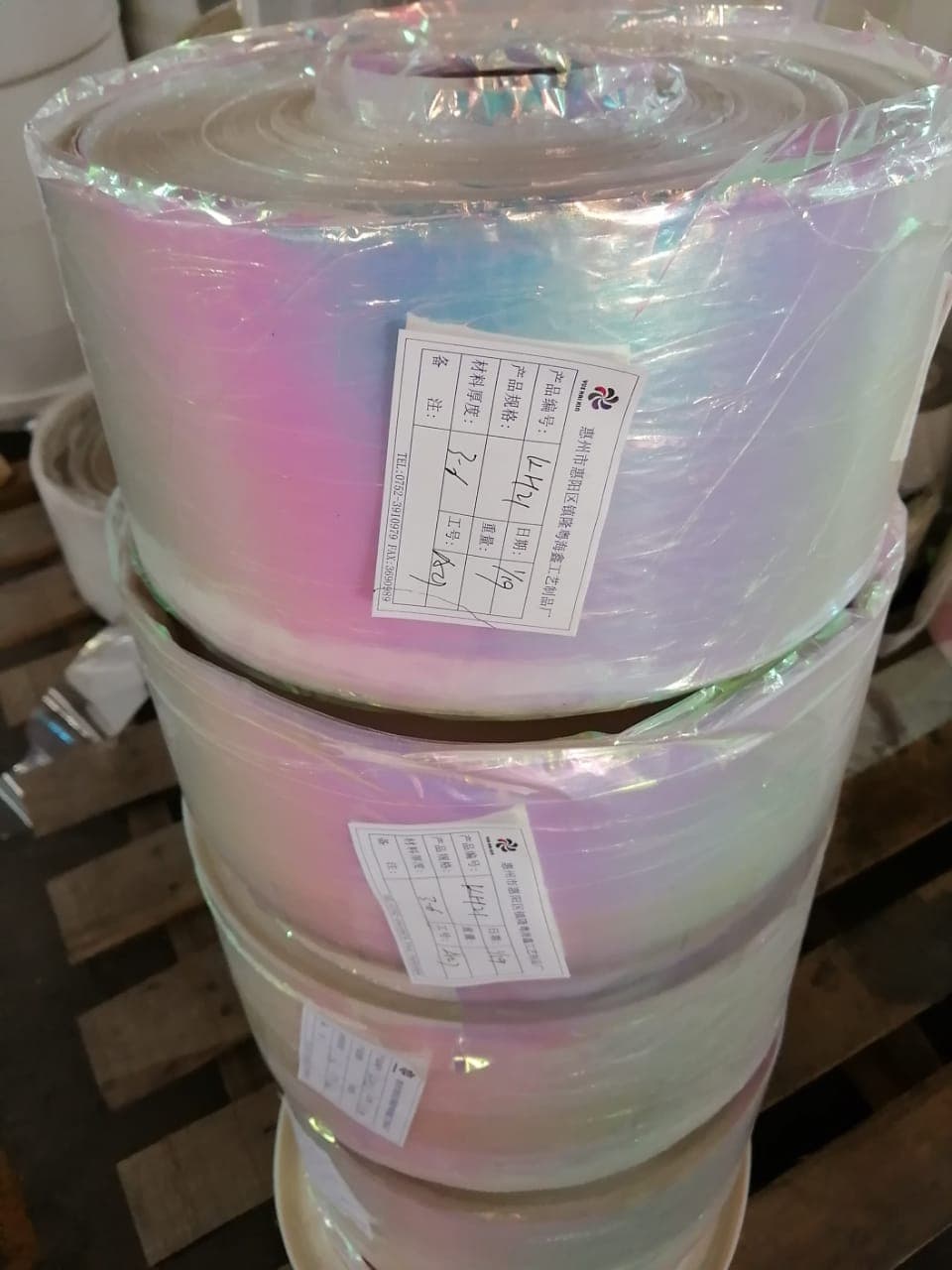
Whether formulating eyeshadow palettes, lip glosses, nail polishes, or compounding industrial epoxy resin, start with our 1kg low trial MOQ or complimentary 50g qualification sample with complete TDS and batch COA.