
Loading...
⚡ 1kg Low MOQ · Factory Direct Glitter & Mica⚡ Source Factory Direct Wholesale · Custom Loose Glitter & Mica Pigments · 1kg Low Trial MOQ · 48h Free 50g Lab Samples
mlmcustom@mlmcosmetic.com⚡ 1kg Low MOQ · Factory Direct Glitter & Mica⚡ Source Factory Direct Wholesale · Custom Loose Glitter & Mica Pigments · 1kg Low Trial MOQ · 48h Free 50g Lab Samples
mlmcustom@mlmcosmetic.comLoading...
Technical formulator troubleshooting guide for preventing glitter sedimentation in clear hydrogels and body wash. Covers yield stress rheology, 1kg pilot MOQ, and ICP-MS testing.
Formulator Advisory & Pilot Testing Notice: Suspending cosmetic effect glitters in clear hydrogels and surfactant washes requires an engineered polymer yield stress exceeding the particle gravitational shear. MLM Cosmetic Pigments is an upstream raw material manufacturer; the US FDA and global regulatory authorities do not certify or approve raw material chemical plants or finished consumer formulations. Finished cosmetic compliance remains the legal responsibility of the cosmetic brand owner. Lot-specific documentation on request (TDS, SDS, rheological suspension guidelines, and Agilent 7800 ICP-MS heavy metal COAs) is provided for benchtop pilot qualification.
Author: Technical Director & Plant Operations Manager
Facility: MLM Cosmetic Pigments (Shenzhen Meilianmei Technology Development Co., Ltd. / 深圳市美联美科技发展有限公司), Precision Rotary Slitting Hall & Analytical Cleanroom, Bao'an District, Shenzhen, China
When formulation chemists email our technical support laboratory in Bao'an with pictures of compacted glitter cakes at the bottom of clear PET bottles, the accompanying note almost always reads: "We do not understand why our flakes are dropping. Our bulk viscosity is over 45,000 cPs on our Brookfield RVT viscometer at 20 RPM."
Here is the immediate plant-floor reality: dynamic viscosity does not suspend macro-particles; true yield stress (tau_0) does.
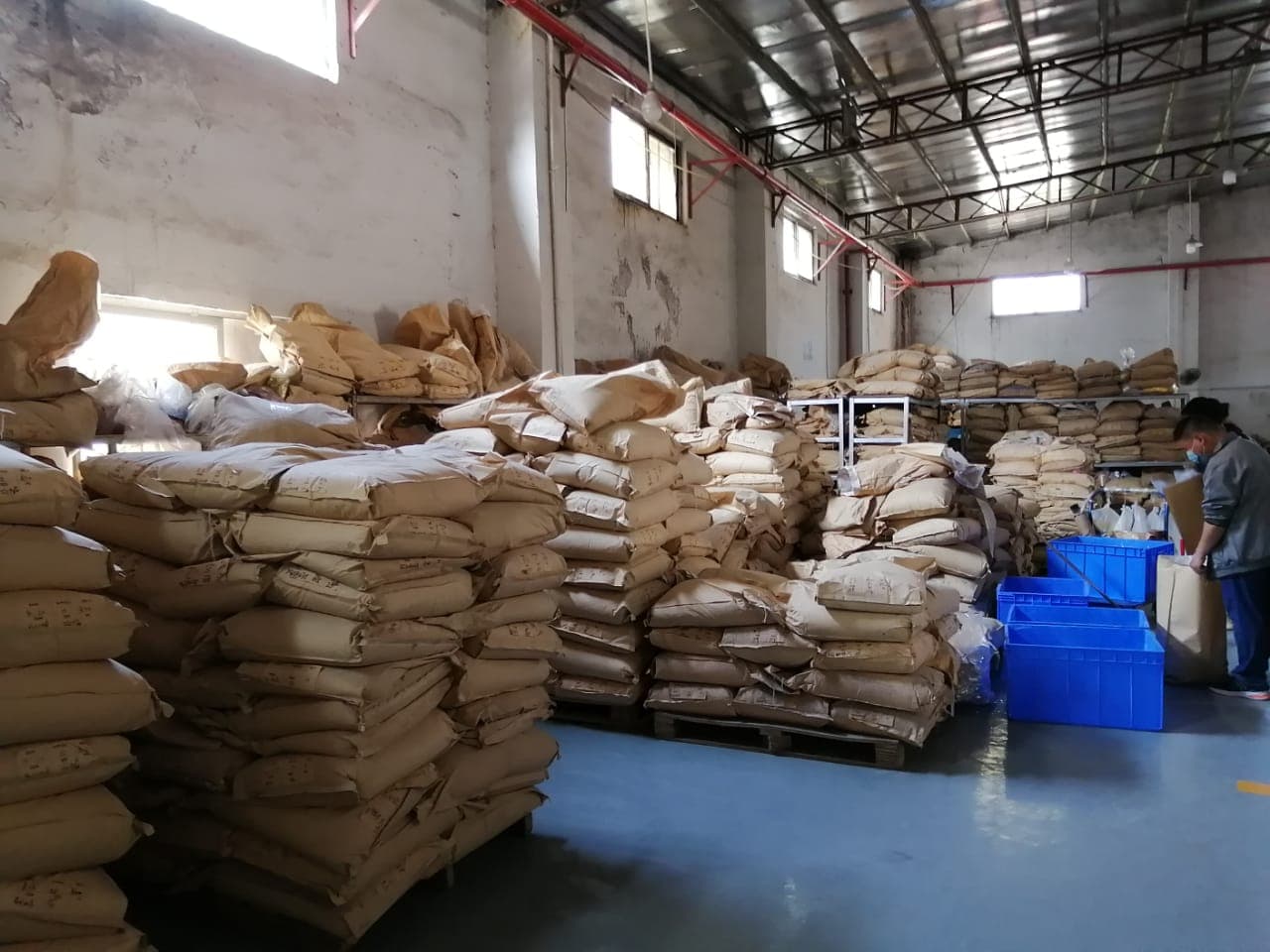
At MLM, our primary manufacturing operation involves precision vacuum metalizing, multi-layer crosslinked polymer coating, and high-speed cleanroom rotary slitting of cosmetic-grade polyethylene terephthalate (PET) flakes, bio-cellulose substrates, and synthetic fluorphlogopite effect pigments. We do not manufacture finished, bottled consumer personal care products. We supply bulk precision-cut effect pigments and raw suspension technical data to contract manufacturing organizations (CMOs), formulators, and indie beauty laboratories worldwide.
Every day, our slitting halls produce precision geometric flakes ranging from ultra-fine 0.002" (50 microns) dusts up to chunky 0.040" (1000 microns) and 0.062" (1575 microns) hexagonal glitters. Polyethylene terephthalate has a true solid skeletal density of approximately 1.38 g/cm³ to 1.41 g/cm³. Synthetic fluorphlogopite (synthetic mica) reaches approximately 2.80 g/cm³. In contrast, an unweighted aqueous surfactant body wash or clear hydrogel base possesses a bulk density of approximately 1.01 to 1.04 g/cm³.
By fundamental physical mechanics, any solid particulate immersed in a continuous liquid phase of lower density will experience a net downward gravitational buoyant force. If your aqueous continuous phase is purely Newtonian, or even highly shear-thinning (pseudoplastic) without an interconnected, crosslinked microgel network capable of supporting an elastic rest state, your glitter will settle. It may take 72 hours; it may take 14 days in a 45°C accelerated stability oven; but it will inevitably sink to the bottom of the container, forming an irreversible, mechanically interlocked sediment cake.
The secondary operational pitfall we observe across international compounding facilities is electrolyte shock. A chemist achieves brilliant clarity and suspension of a 0.015" hexagonal glitter in a pure Carbomer 940 or 980 gel. However, when transitioning that chassis to an exfoliating body wash or shimmer shower gel containing 12% active Sodium Laureth Sulfate (SLES) and 3% Cocamidopropyl Betaine (CAPB)—alongside 0.8% Sodium Chloride to adjust body—the uncoiled, electrostatically expanded polyacrylate polymer chains experience immediate charge screening. The crosslinked network collapses, the bulk yield stress plummets to near zero, and the suspended glitter drops out within 48 hours.
Finally, formulation trials are frequently throttled by raw material supply chain rigidity. Major Western chemical distributors often enforce 20kg to 25kg minimum order quantities (MOQs) on specialty precision pigments. For an R&D chemist running 500g pilot bench batches, committing thousands of dollars for a 25kg export drum of a custom cosmetic-grade shade just to test suspension limits creates an unacceptable procurement hurdle.
MLM operates directly from our Bao'an precision slitting facility to solve these mechanical and sourcing bottlenecks. We supply technical compounding protocols alongside factory-direct 1kg moisture-barrier aluminum foil pouches for bench trials, backed by 48-hour global air dispatch of complimentary 50g benchtop qualification kits.
Below is our technical guide to the rheological physics, polymer selection paradoxes, benchtop screening protocols, and physical mathematics required to keep macro-flakes permanently suspended in clear personal care hydrogels and cleansing formulations.
The following matrix evaluates the primary suspension mechanisms utilized across personal care compounding facilities, contrasting their rheological profiles, light transmittance limits, electrolyte tolerance, and direct procurement realities.
| Rheology Modifier / Polymer Chemistry | Primary Yield Stress Mechanism | Optical Clarity (% Transmittance @ 550nm) | Electrolyte / Surfactant Tolerance | Maximum Suspended Particle Size (MLM Flakes) | Minimum Order Quantity (MOQ) | Lab Sample Lead Time | Best For / Target Formulation |
|---|---|---|---|---|---|---|---|
| MLM PolyFlake Suspension Ready System (Direct Factory Polyacrylate-Crosslinked Matrix Support) | Engineered steric 3D microgel space-filling lattice with high zero-shear elastic modulus (G' > G"). | > 92% (crystal clear in water-white PET packaging). | High. Stable up to 3.5% NaCl and 18% active amphoteric/anionic surfactant blends. | Up to 0.040" (1000 µm) hexagonal chunky flakes. | 1 kg direct factory moisture-barrier pouch. | 48 hours (direct air dispatch from Bao'an plant). | Clear suspended glitter body washes, high-shimmer hydrogels, festival glitter pastes, peel-off masks. |
| Lubrizol Carbopol Aqua SF-1 / SF-2 (Acrylates Copolymer Emulsion) | Hydrophobic association and alkaline swelling forming an entangled associative network. | 82% - 88% (slight natural haze; requires meticulous surfactant pairing to maximize clarity). | High. Engineered specifically for surfactant systems; back-acid thickening compatible. | Up to 0.015" (375 µm) precision-slit flakes. | 20 kg to 25 kg standard industrial pails. | 10 to 14 days (through regional multi-tier brokers). | Mass-market opaque or pearlescent cleansing washes, surfactant shampoos, body washes. |
| Ashland Ultrathix P-100 (Hydrophobically Modified Polyacrylate) | Self-wetting crosslinked polymer chains with steric and ionic microgel domain interaction. | > 90% (excellent optical transmittance in water-rich hydrogels). | Moderate. Resilient to moderate salt, but sensitive to high betaine concentrations. | Up to 0.008" (200 µm) cosmetic glitters and synthetic micas. | 25 kg fiber drums. | 7 to 12 days (via regional distribution centers). | Crystal clear hair styling glitters, sprayable fine-shimmer hydrogels, topical face serums. |
| Seppic Sepimax ZEN (Polyacrylate Crosspolymer-6) | High-density associative microgel network with controlled hydrophobic terminal nodes. | > 93% (ultra-pure optical clarity, neutral refractive index). | Exceptional. Retains yield stress up to 4.0% salt; tolerates extreme botanical active loads. | Up to 0.025" (625 µm) medium-coarse glitters. | 20 kg commercial containers. | 7 to 10 days (standard chemical distribution channels). | Premium clean-label active serums, multi-salt sun care glitters, alcohol-containing body mists. |
| Vanderbilt Minerals Veegum / Hectorite Clay (Smectite / Magnesium Aluminum Silicate) | Electrostatic "house-of-cards" colloidal card-pack mechanical lattice formation. | < 40% (completely opaque / milky beige continuous phase). | High. Stable across a broad pH range (pH 2 - 11) and heavy ionic loads. | Up to 0.040" (1000 µm) heavy synthetic fluorphlogopite. | 25 kg multi-wall paper bags. | 5 to 10 days (mineral aggregate supply chains). | Opaque clay mud masks, heavy scrub pastes, suspension of high-density metallic micas. |
| Standard Unmodified Xanthan Gum (Polysaccharide Biopolymer Baseline) | Weak, non-covalent double-helix rigid polymer chain entanglement. | < 65% (inherent turbidity, marked amber/yellow cast unless chemically bleached). | High. Resistant to thermal variations and ionic charge screening. | < 0.004" (100 µm) ultra-fine shimmer (fails on chunky flakes). | 25 kg industrial multi-wall bags. | 3 to 7 days (commodity food/cosmetic brokers). | Budget certified-organic formulations where synthetic polymers are prohibited and clarity is secondary. |
To understand why a 50,000 cPs formulation can drop its glitter within 72 hours, we must review the fundamental physical mechanics governing particle motion in fluid matrices.
Stokes' Law governs the terminal sedimentation velocity (V_s) of an unhindered spherical particle suspended in an idealized Newtonian fluid:
V_s = [2 * r² * (rho_p - rho_m) * g] / (9 * eta)
Where:
Based on Stokes' Law, formulation chemists often deduce that by increasing dynamic viscosity (eta), sedimentation velocity (V_s) can be slowed toward zero.
However, this assumption has two critical flaws:
Therefore, Stokes' Law only predicts how slowly a flake falls in an uncrosslinked fluid. It confirms that in any liquid without an absolute yield stress, sedimentation is inevitable.
Permanent macroscopic suspension requires an engineered three-dimensional polymeric microgel network with a true Yield Stress (tau_0).
Yield stress represents the finite mechanical stress that must be applied to the fluid to induce plastic deformation and irreversible viscous flow. Below the yield stress threshold (tau < tau_0), the system behaves as a viscoelastic solid. In this elastic rest state, the elastic storage modulus (G') is significantly higher than the viscous loss modulus (G"), and the continuous phase forms a physical "cage" around each suspended flake.
To calculate the theoretical minimum yield stress (tau_crit) required to permanently arrest the descent of a suspended effect flake, we apply the buoyant stress equation adapted for disc-shaped geometries:
tau_crit = [C * (rho_p - rho_m) * g * t]
Where:
However, the most critical parameter in practical compounding is not thickness (t), but the maximum planar cross-sectional dimension (diameter D). When a body wash bottle is handled, tilted, or subjected to thermal convection in a hot bathroom or 45°C shipping container, rotational torque acts upon the edges of the flake.
Through oscillatory stress-sweep rheometry conducted in our Bao'an analytical laboratories, we have mapped the practical minimum yield stress (tau_0) thresholds required to specify zero sedimentation across standard accelerated stability cycles (30 days at 45°C and 3,000 RPM benchtop centrifugation):
If an oscillatory rheological stress sweep demonstrates that your formulation base exhibits an elastic yield point (tau_0) of only 0.8 Pa, an R&D chemist can increase standard Brookfield viscosity to 80,000 cPs and 0.025" glitters will still settle out within a week.
The formulation chemist tasked with producing a suspended glitter body wash faces an immediate paradox: the polymer configurations that generate the highest yield stress in pure water are often chemically incompatible with surfactant systems or destroy the crystalline optical transparency required to showcase high-sparkle pigments.
Traditional crosslinked polyacrylic acid homopolymers rely entirely on electrostatic repulsion for network formation. When dispersed in water, the coiled polymer chains are unneutralized and display low viscosity. Upon neutralization with an alkaline base (e.g., Sodium Hydroxide, Triethanolamine, Aminomethyl Propanol) to pH 6.0 - 7.0, the carboxyl groups (-COOH) ionize into negatively charged carboxylate ions (-COO-).
These identical negative charges violently repel one another, forcing the coiled chains to violently uncoil and expand into an interlocking microgel lattice. This mechanism yields massive, crystalline-clear yield stress (tau_0 easily exceeding 5.0 Pa) in pure deionized water.
The Failure Mechanism in Surfactant Systems: When surfactants (such as SLES, ALS, or CAPB) or residual inorganic salts (NaCl) are introduced, positive counter-ions (Na+) swarm the carboxylate groups. This screen neutralizes the electrostatic repulsion between chains. The polymer coils fold back in on themselves in a process known as "charge-screening collapse." Yield stress drops precipitously, optical haziness or white precipitation occurs, and suspended glitters drop to the bottom of the vessel.
To overcome charge-screening collapse, modern suspension polymers incorporate both hydrophilic carboxylate backbones and long hydrophobic alkyl chains (e.g., C10-C30).
These polymers establish yield stress through a dual mechanism:
Furthermore, liquid emulsion polymers (such as Acrylates Copolymer) allow for "back-acid thickening." The formulator neutralizes the batch up to pH 7.2 to uncoil the polymer, adds the surfactant and glitter components, and subsequently titrates the system back down to pH 5.2 - 5.5 using citric acid. This back-titration drives associative micellar packaging, generating extraordinary yield stress (tau_0 > 3.0 Pa) while preserving clarity.
In natural and clean-label cosmetic formulations governed by COSMOS standards, synthetic crosslinked polyacrylates are excluded. Formulators must rely on microbial fermentation polysaccharides.
To assist compounding laboratories in eliminating flake sedimentation and air entrapment during scale-up, our application engineering team has standardized the following benchtop procedures.
Before initiating compounding, calculate the operational yield stress required for your targeted pigment dimensions. Do not rely on dynamic cPs measurements.
The introduction of macroscopic flakes into a viscoelastic medium creates boundary air-entrainment risks. Micro-bubbles trapped beneath planar flakes act as buoyant ballasts, converting sinking flakes into floating debris. The following addition sequence must be strictly maintained:
Do not wait for 30-day thermal oven reports to determine whether a reformulations' yield stress is adequate. Compounding labs can execute an accelerated mechanical gravitational challenge:
Accelerated thermal testing simulates real-world supply chain stressors across intermodal ocean freight and non-climate-controlled logistics warehouses.
Cosmetic brands deploying high-shimmer hydrogels and cleansing products face intense international regulatory scrutiny regarding heavy metal contamination and colorfastness. Effect pigments processed on non-cosmetic industrial slitting equipment frequently leach prohibited industrial dyes or carry unacceptable levels of residual heavy metals into the formulation base.
At MLM, every master production roll of precision-coated film undergoes rigorous analytical verification in our cleanroom laboratories prior to rotary slitting. Trace elemental analysis is conducted via Agilent 7800 ICP-MS (Inductively Coupled Plasma Mass Spectrometry) following rigorous microwave-assisted acid digestion (HNO3/HCl per EPA 3052).
Our manufactured cosmetic pigments operate within the following specified limits:
To verify colorfastness and prevent the release of dyestuffs into clear hydrogels, our pigment lots are subjected to accelerated solvent and surfactant extraction challenges:
Understanding the manufacturing pedigree, supply chain mechanics, and technical service parameters of your raw material suppliers is critical to maintaining formulation timelines.
No. A standard rotational Brookfield viscometer operating at 10 or 20 RPM evaluates dynamic apparent viscosity under a defined, relatively high shear field. Macro-flake sedimentation is a static, ultra-low shear phenomenon (approaching a shear rate of 10^-4 s^-1) driven by gravity. A hydrogel can register an impressive 50,000 cPs at 20 RPM while possessing an internal elastic yield stress (tau_0) of zero. Without an interconnected 3D crosslinked microgel network exhibiting a measurable yield point (tau_0 > 1.5 to 3.0 Pa), large flakes will overcome fluid friction and sink to the container bottom over time.
This visual defect is triggered by surfactant-polymer charge incompatibilities and phase separation. Traditional carbomers (like Carbomer 940 or 980) are homopolymers with dense, localized anionic charges. When unshielded surfactants or high concentrations of amphoteric surfactants (such as Cocamidopropyl Betaine) are introduced, their cationic head-groups or polar regions interact electrostatically with the polyacrylate chain, forming insoluble coacervates. This complexation drops the polymer out of true colloidal solution, causing light scattering (milky haziness) and triggering catastrophic yield stress collapse.
Air bubbles adhere to precision flakes because untreated cosmetic glitters possess hydrophobic surface energies that resist rapid hydration by water-rich continuous phases. Entrained micro-bubbles lower the effective density of the flake, causing it to float to the surface (flocculation/creaming) rather than remain spatially suspended. To prevent this, never dump dry pigment into a finished high-yield-stress base. Always pre-slurry the flakes in a non-foaming humectant (such as Glycerin or 1,3-Propanediol) at a 1:1 ratio. The humectant completely wets the flake faces and displaces air. Slowly fold this pre-slurry into the bulk matrix using low-shear sweep agitation.
Industrial craft glitters are slit from non-food-grade, non-cosmetic packaging films metalized with unrefined aluminum and colored with industrial solvent dyes. When added to personal care formulations containing surfactants and water, these industrial dyes rapidly bleed, tinting the clear base wash while the flake turns clear or dull silver. Furthermore, industrial PET substrates are synthesized using antimony trioxide catalysts, leading to antimony levels that often exceed 150 ppm—vastly higher than the safe cosmetic limit (Sb < 0.5 ppm). Industrial glitters also lack cleanroom precision slitting, resulting in sharp, barbed burrs that can cause ocular and epidermal micro-abrasions.
Density differential is the key parameter. Standard PET glitter has a solid skeletal density of approximately 1.38 g/cm³, while synthetic fluorphlogopite (synthetic mica) possesses a much higher density of approximately 2.80 g/cm³. Based on the buoyant stress calculation, synthetic mica generates more than three times the downward buoyant stress per unit volume compared to a PET flake. Consequently, a rheology modifier system providing a yield stress of 1.2 Pa might maintain a 0.008" PET flake, but will rapidly fail to suspend a synthetic mica flake of equivalent hydrodynamic radius, requiring the formulator to engineer the yield stress above 2.8 to 3.5 Pa.
Eliminating glitter sedimentation challenges requires pairing sound rheological engineering with precision-slit, certified effect pigments that disperse uniformly without bleeding or chemical interference.
MLM Cosmetic Pigments (Shenzhen Meilianmei Technology Development Co., Ltd.) eliminates the supply chain constraints, inflated broker margins, and prohibitive 25kg minimums imposed by legacy distribution networks. We invite formulation chemists, R&D procurement managers, and contract packaging directors to evaluate our factory-direct capabilities:
Direct Factory Procurement & Engineering Contact:
Technical Applications & Export Logistics Division
MLM Cosmetic Pigments (Shenzhen Meilianmei Technology Development Co., Ltd.)
Bao'an District, Shenzhen, Guangdong Province, China
Direct Engineering Email: mlmcustom@mlmcosmetic.com
Precision Slitting | Cleanroom Vacuum Metalizing | Global Formulation Support
MLM Cosmetic Pigments (Shenzhen Meilianmei Technology Development Co., Ltd.) is an upstream primary manufacturer, precision coater, and rotary slitter of cosmetic effect pigments, precision glitters, and synthetic fluorphlogopites. The US FDA and international health authorities do not certify or approve raw material manufacturing facilities or finished consumer formulations. Finished product regulatory compliance (including US MoCRA safety substantiation, FDA 21 CFR § 73/74 colorant listings, and EU Regulation (EC) No 1223/2009) remains the legal responsibility of the cosmetic brand owner. Full technical documentation dossiers, particle size distributions, and in-house ICP-MS heavy metal reports are provided on request to support safety evaluations conducted through benchtop pilot qualification.
Target Formulation Material:
Why Does Your Glitter Settle to the Bottom? Yield-Stress Rheology in Clear Hydrogels & Body Wash (2026 Formulator Troubleshooting Guide)
Includes 50g sealed lab pouch, lot-specific COA, Technical Data Sheet (TDS), and ISO 22716 regulatory package.
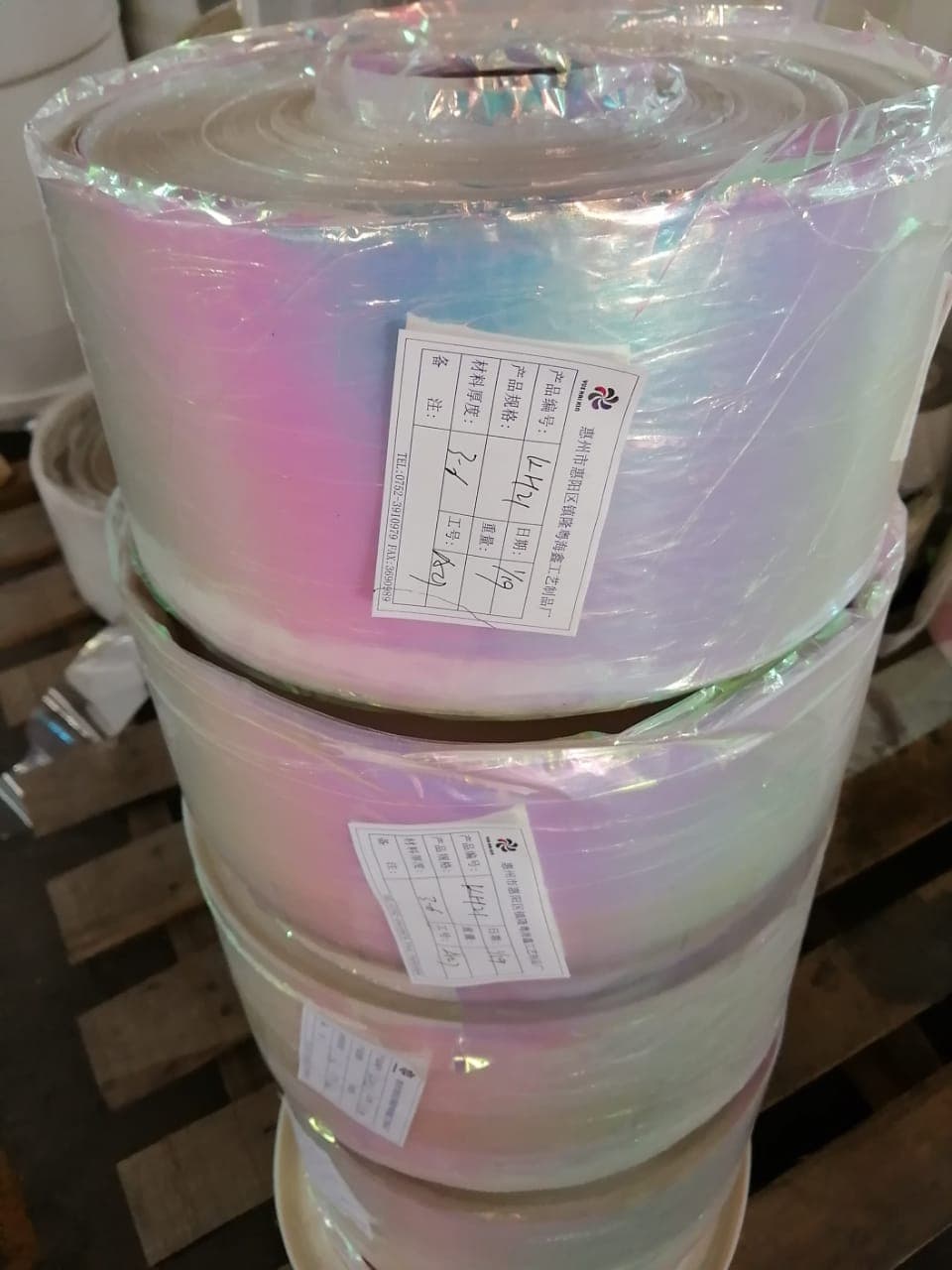
Whether formulating eyeshadow palettes, lip glosses, nail polishes, or compounding industrial epoxy resin, start with our 1kg low trial MOQ or complimentary 50g qualification sample with complete TDS and batch COA.